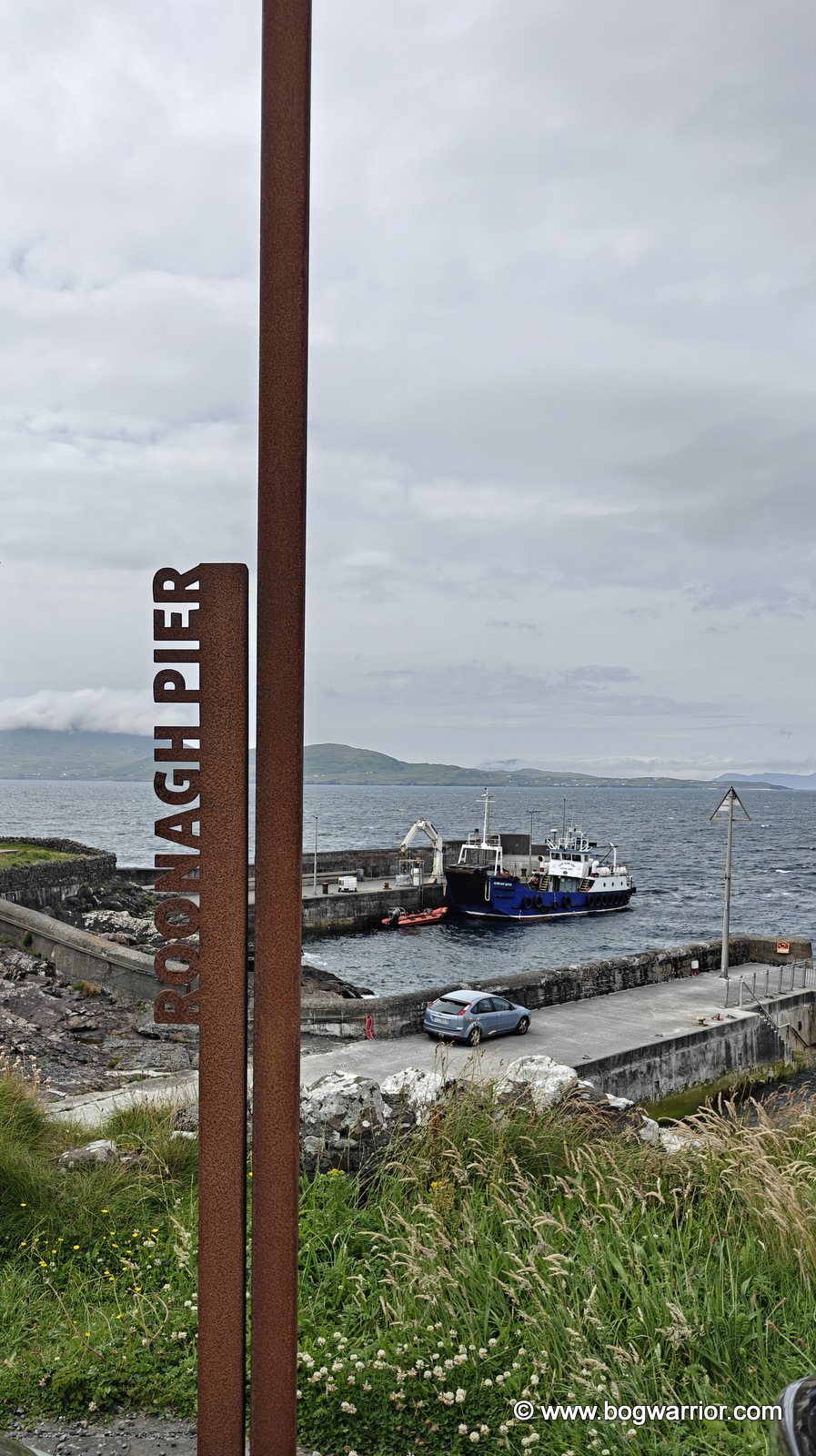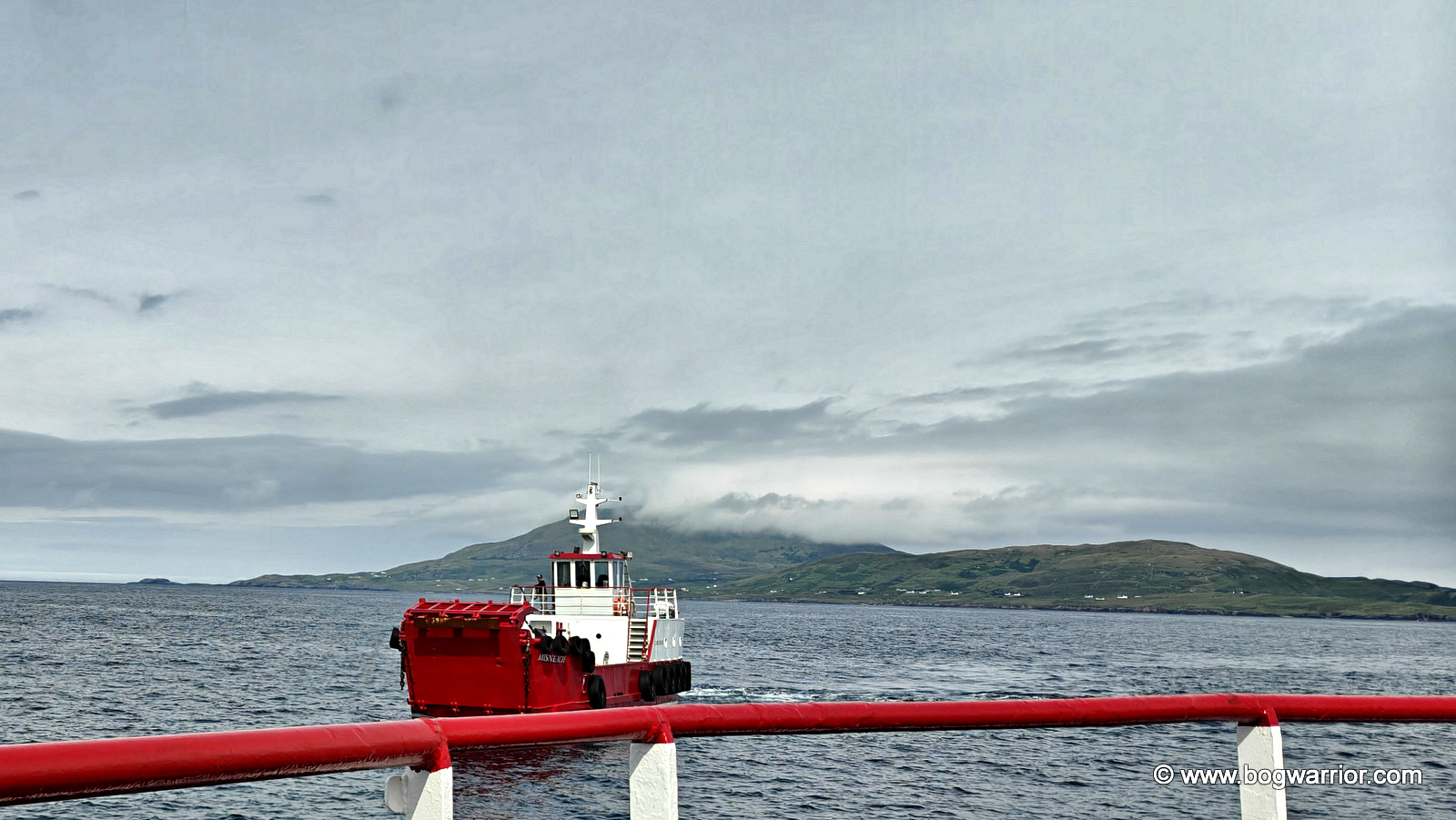
As the ferry pulled away from Roonagh Pier, 1996’s Clare Island by the Saw Doctors was playing on the silent jukebox in my head. The song has a wonderfully carefree feel to it, although I should point out that I had no intention of following all of its characters’ example. They may have gone skinny-dipping; I, thankfully, kept my clothes firmly on.
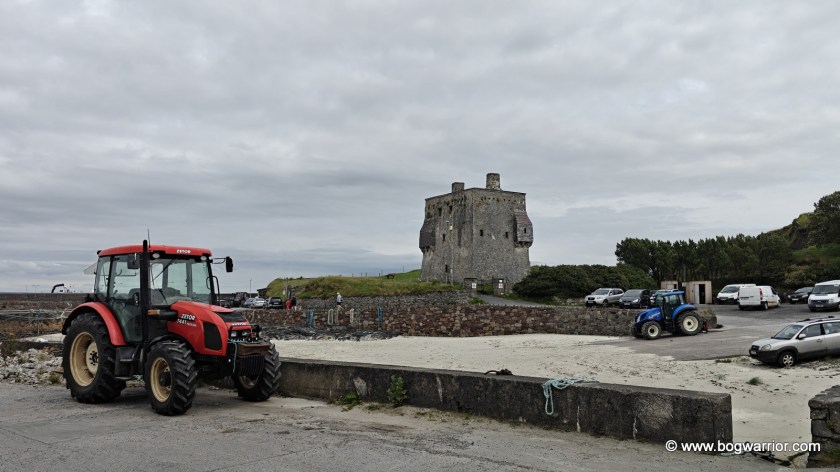
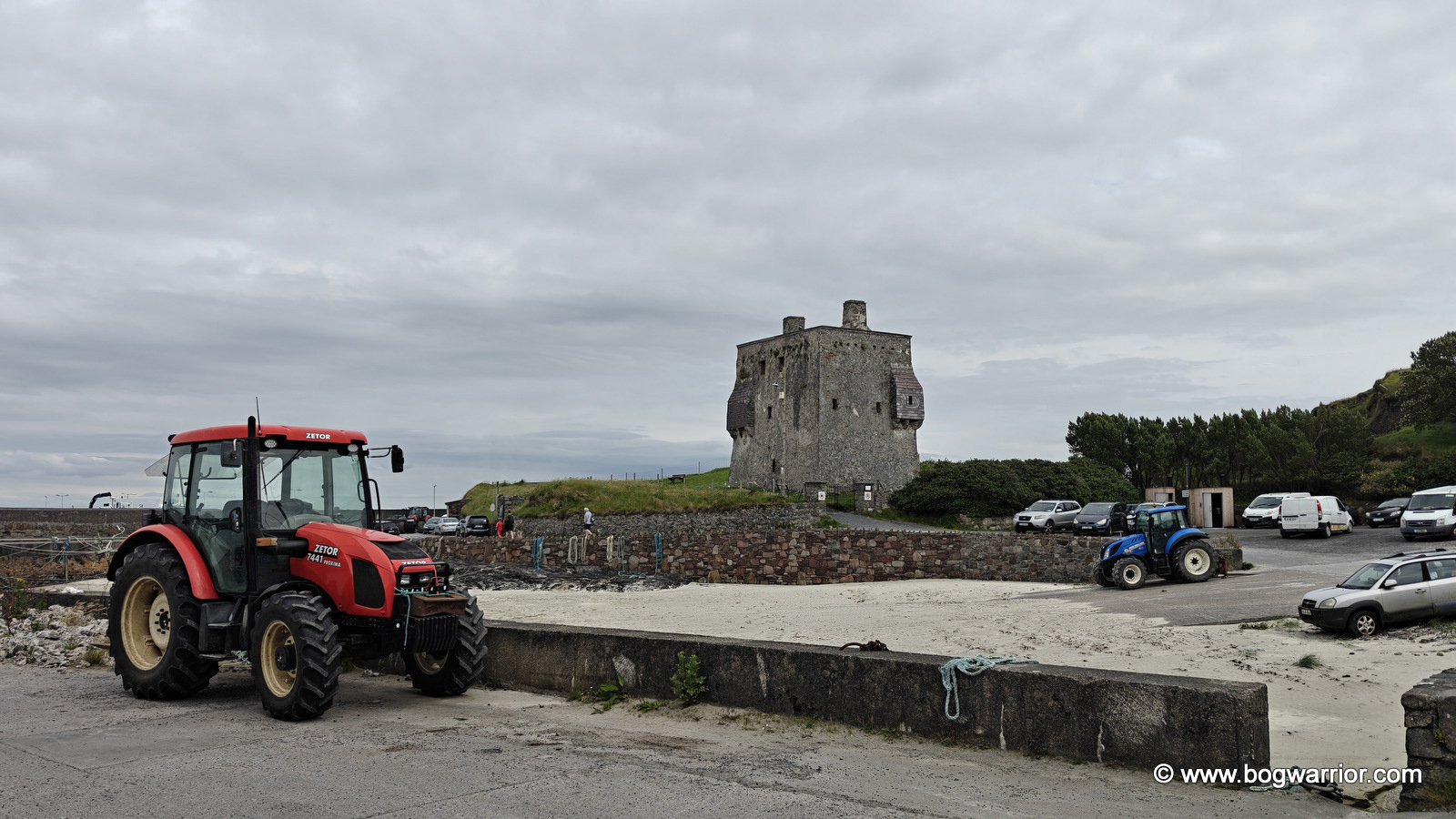
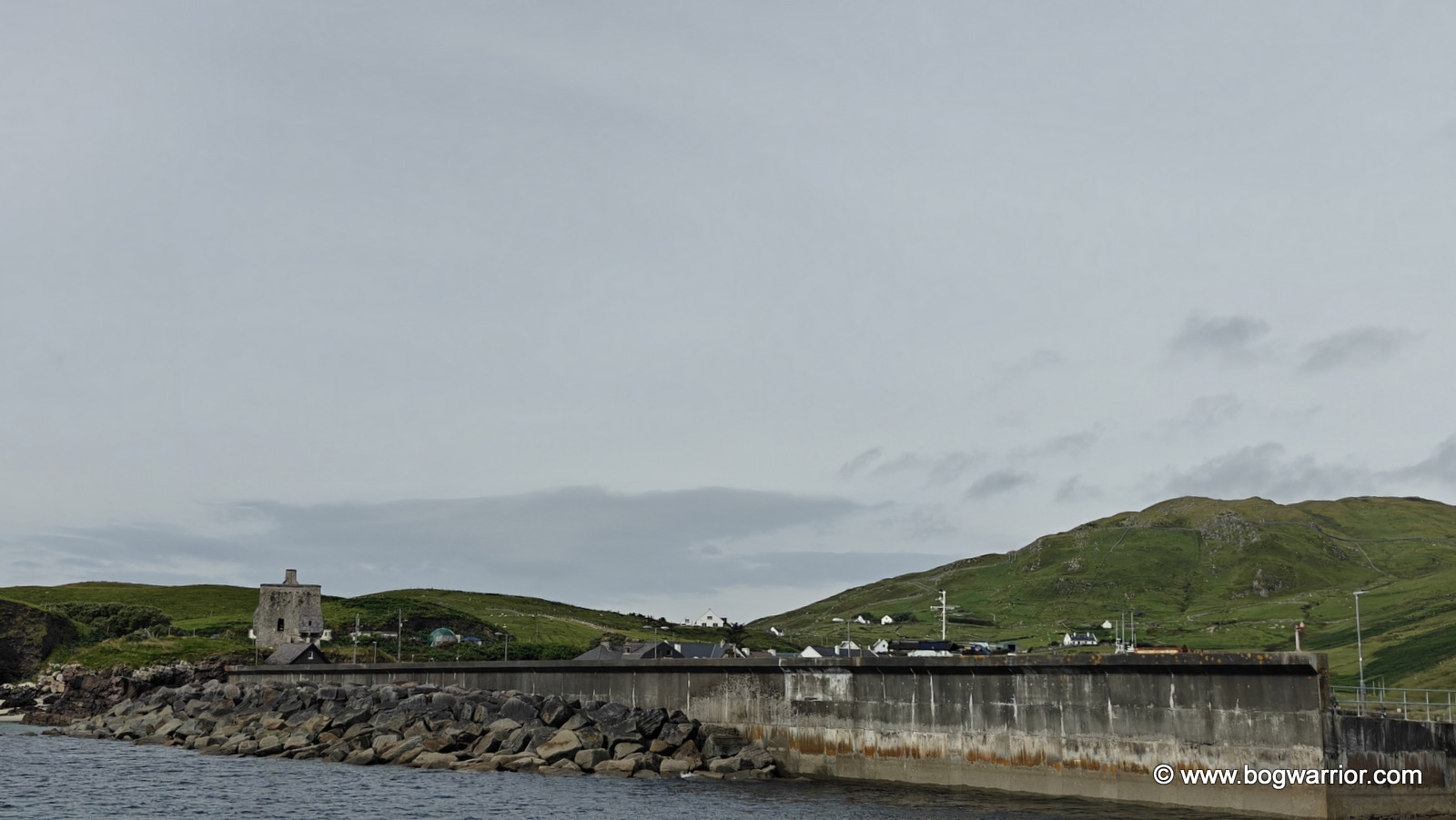
It’s hard to miss the imposing tower house standing beside the pier. Known as Granuaile’s Castle, it is associated with one of the most formidable women in Irish history. Grace O’Malley (c. 1530–c. 1603) was a 16th-century chieftain and seafarer, better known as the Pirate Queen. Her Irish name, Gráinne Mhaol (anglicised as Granuaile), has its own story. According to tradition, she cut off her hair to disguise herself, with mhaol referring to baldness or being bare-headed. Unfortunately, the castle is closed to visitors, so all we could do was peer in through the windows and door. Still, it was a fitting place to begin exploring an island so closely associated with the legendary O’Malley family.
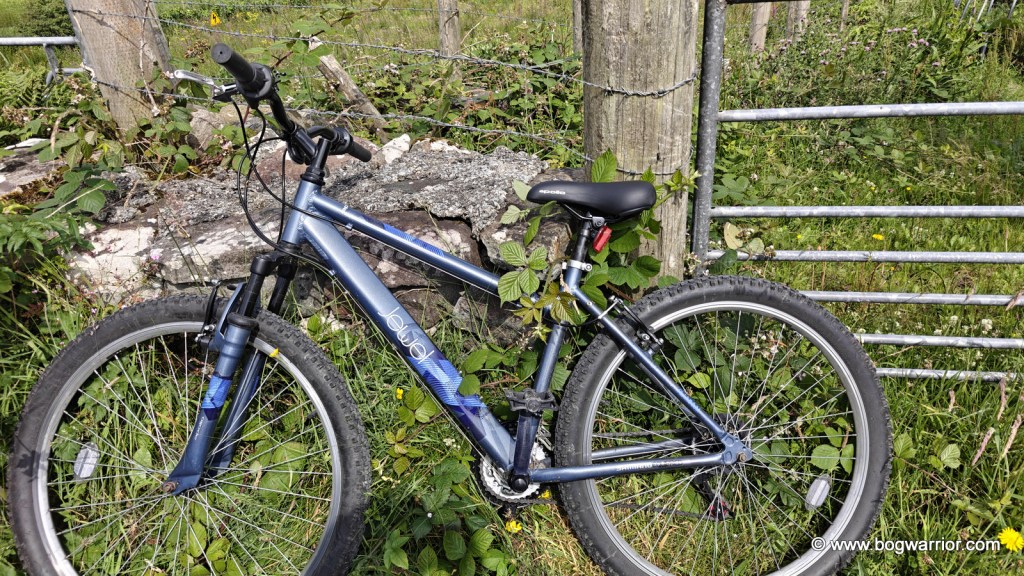
As I was on a day trip, cycling seemed the perfect way to explore the island. It was slow enough to take in the scenery but fast enough to cover some ground — although, as I would discover, Clare Island has a few hills that make you reconsider the definition of “fast enough”.
The Abbey
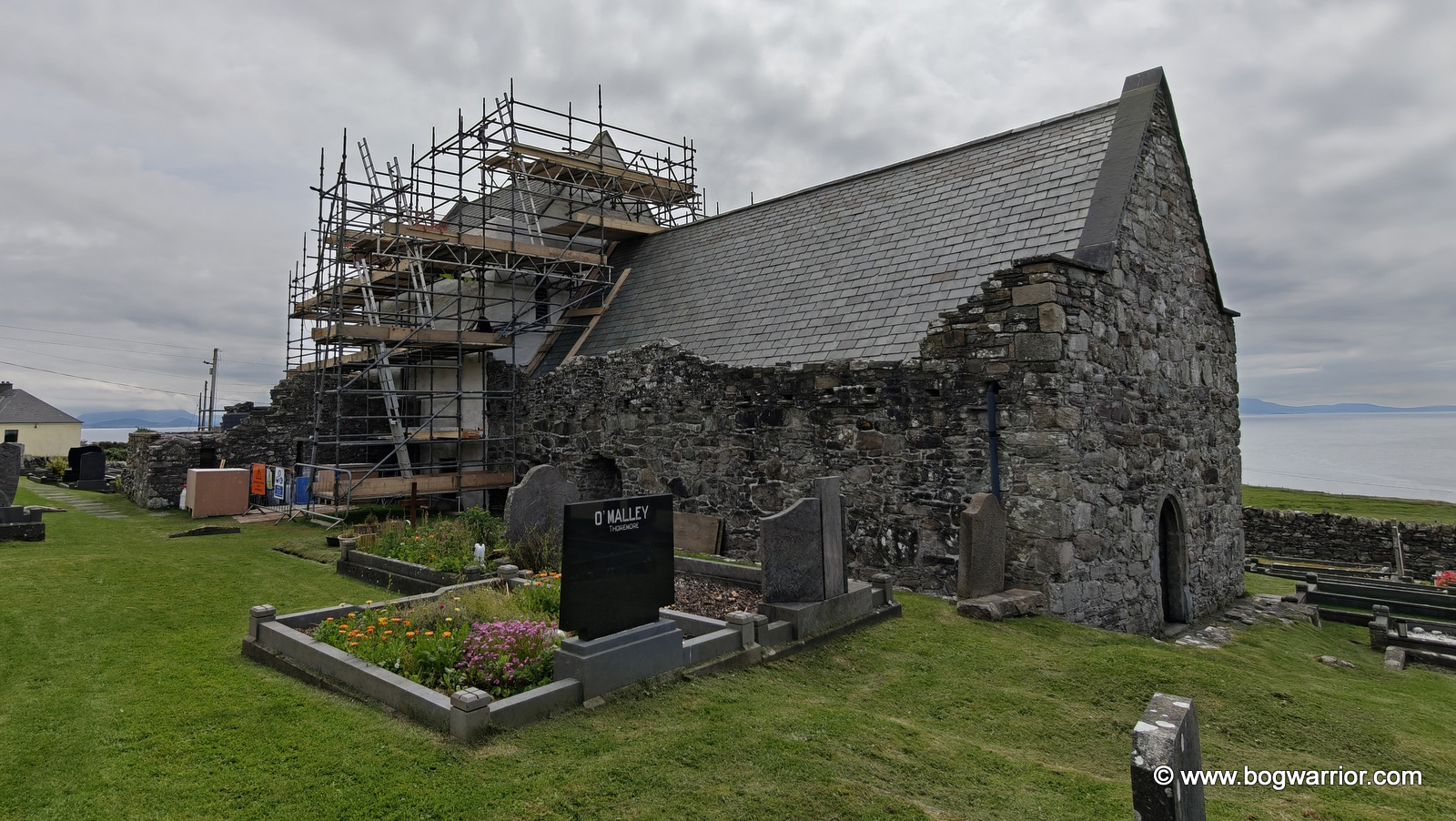
My main destination was Clare Island Abbey, which is thought to date back as far as the 12th century. It is closely associated with Grace O’Malley, whose castle I’d been admiring just 45 minutes earlier. According to local tradition, she was baptised, married and buried here — the auld “hatched, matched and dispatched”.
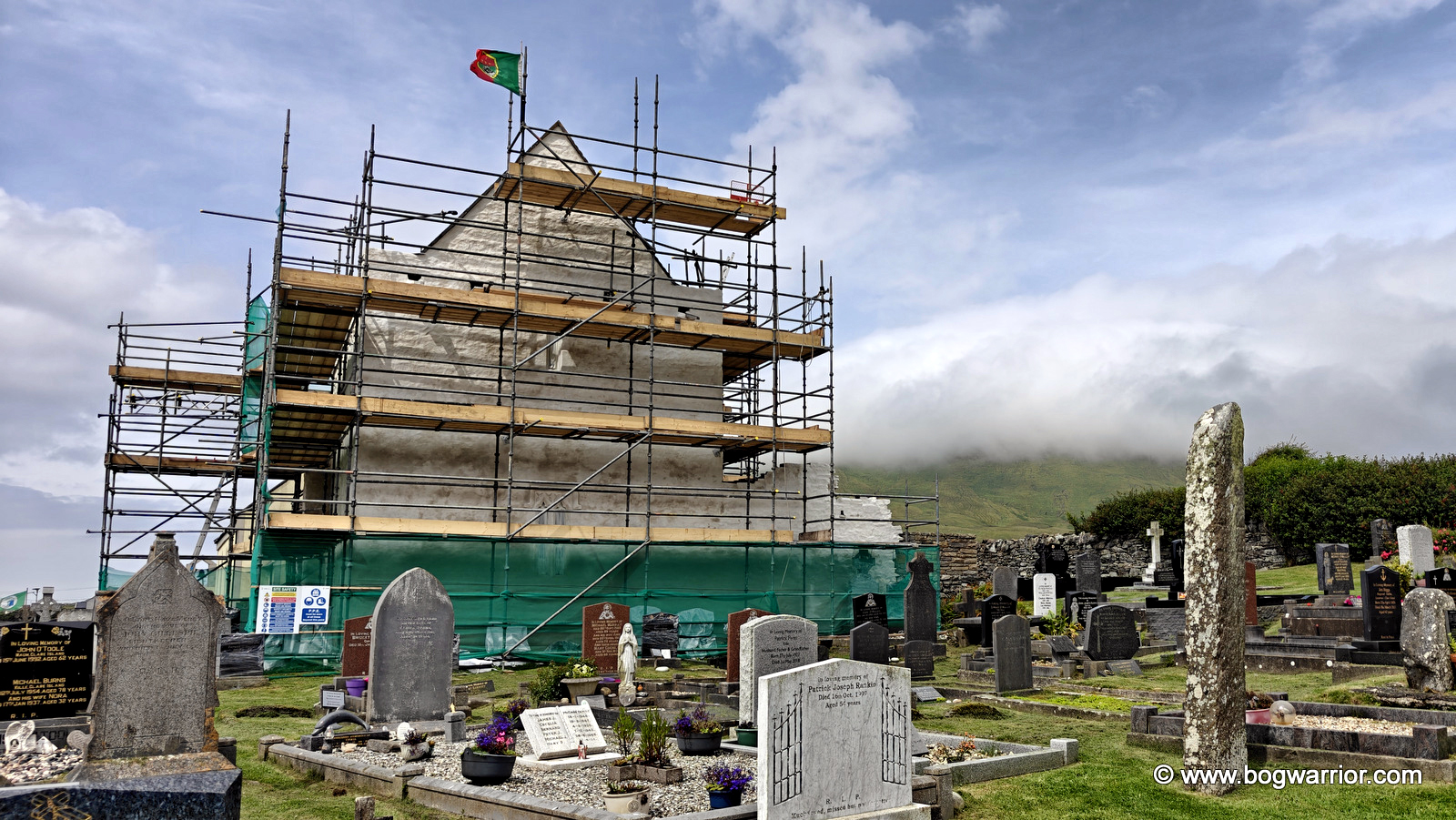
It is possible that she was laid to rest in the O’Malley tomb, which still survives within the abbey. Wandering around the graveyard outside, it’s hard to miss the many headstones bearing the O’Malley name. It certainly brings home just how deeply rooted the family is in the island’s history.
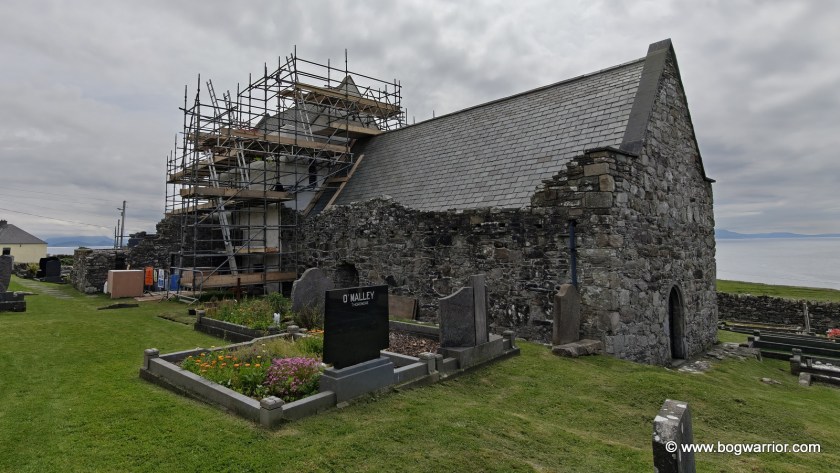
Yet again, my talent for visiting places that are under scaffolding raised its head. Still, it’s good to see an old building being maintained rather than left to the elements.
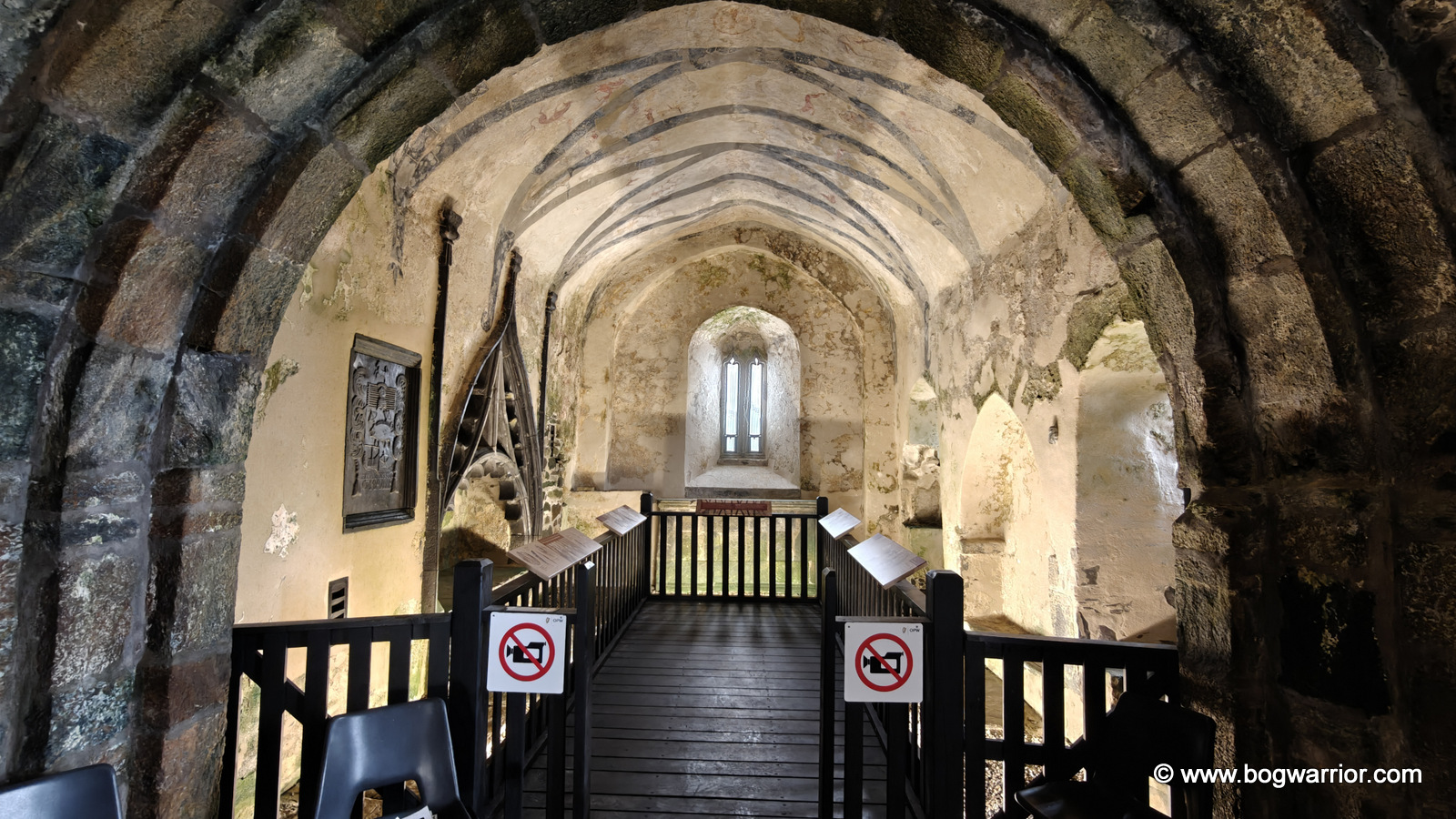
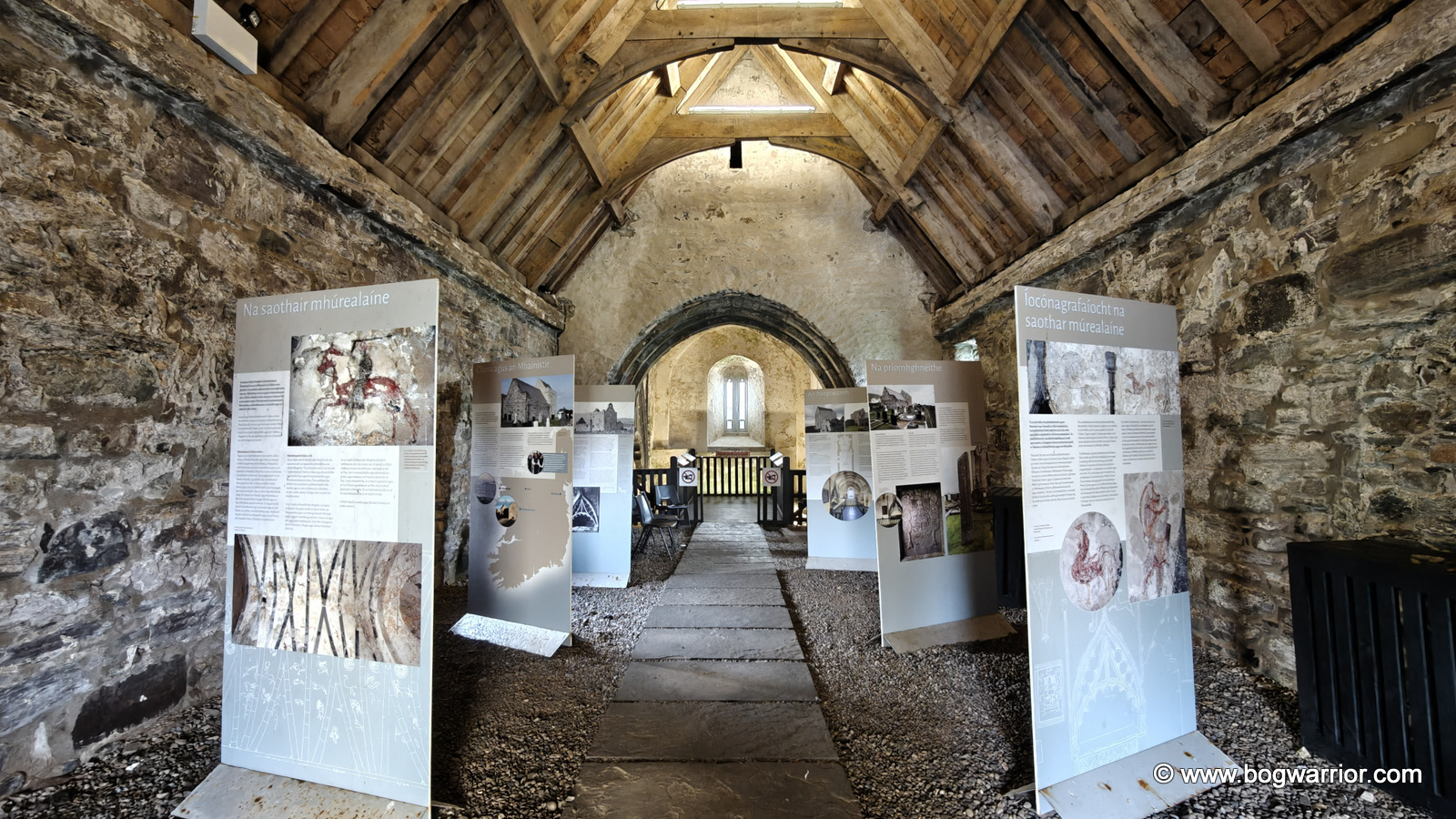
Inside, I spent some time looking at the faded artwork and listening to a conversation nearby. One of the group had visited the abbey many years earlier and recalled that, at the time, the walls had been “weeping”. He wondered aloud about how much of the original artwork had since been lost. Indeed.
The nave contains a number of bilingual signs with interesting information and photographs showing the abbey throughout the years. The highlight, though, is undoubtedly the chancel at the opposite end of the building.
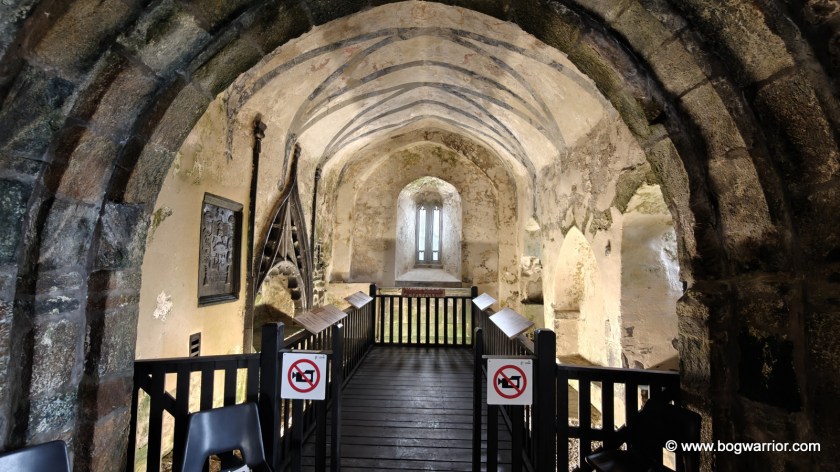
The walls and ceiling are decorated with a wonderfully eclectic collection of mediaeval artwork: dragons, a cockerel, stags, birds and trees, as well as people on foot and horseback and even a harp-playing musician. Some of the paintings are now quite faint and difficult to make out, but thankfully the information panels include diagrams showing what you’re looking at. The O’Malley tomb and coat of arms, on the left-hand side, are particularly striking.
The Old Napoleonic Signal Tower
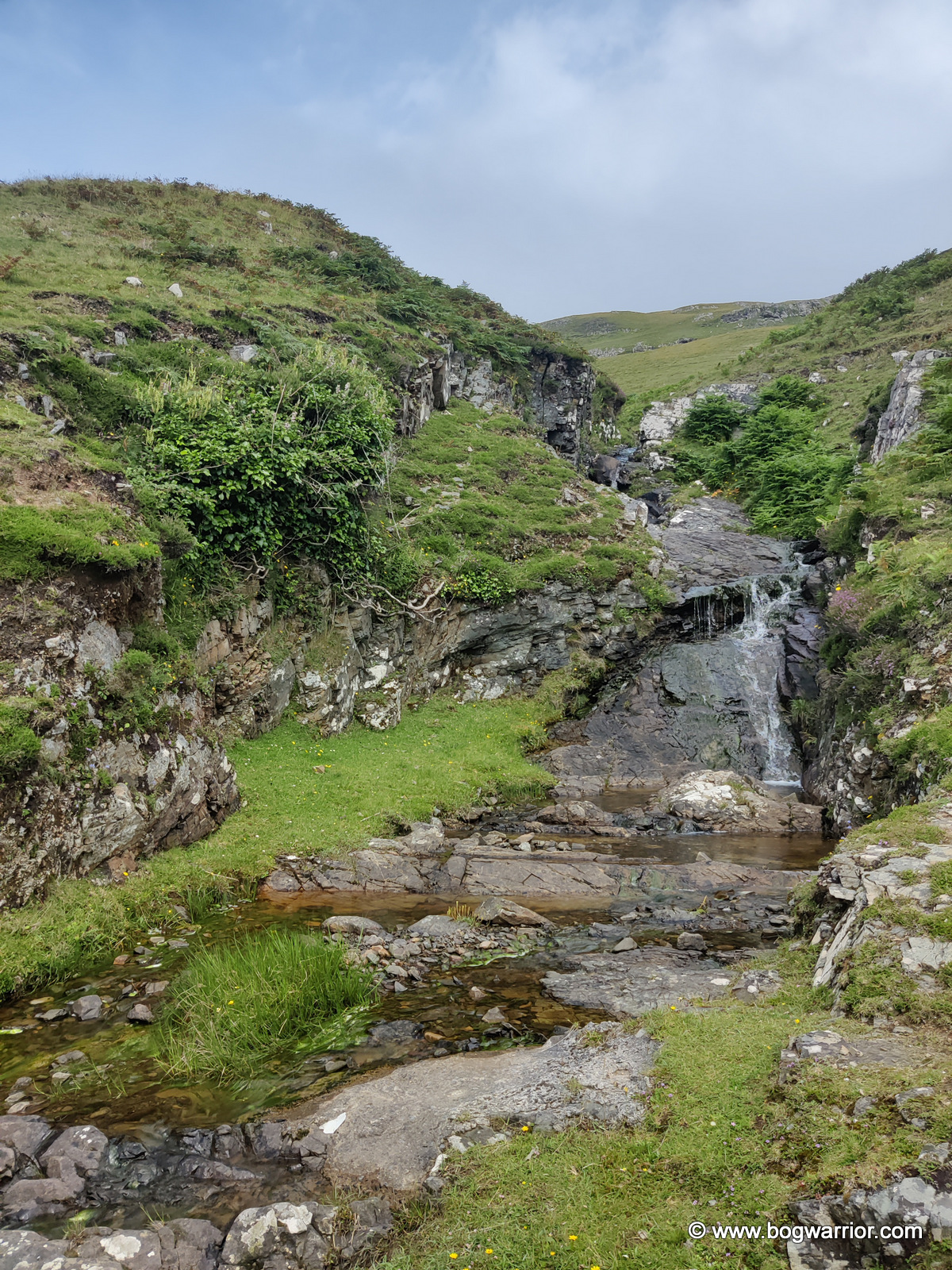
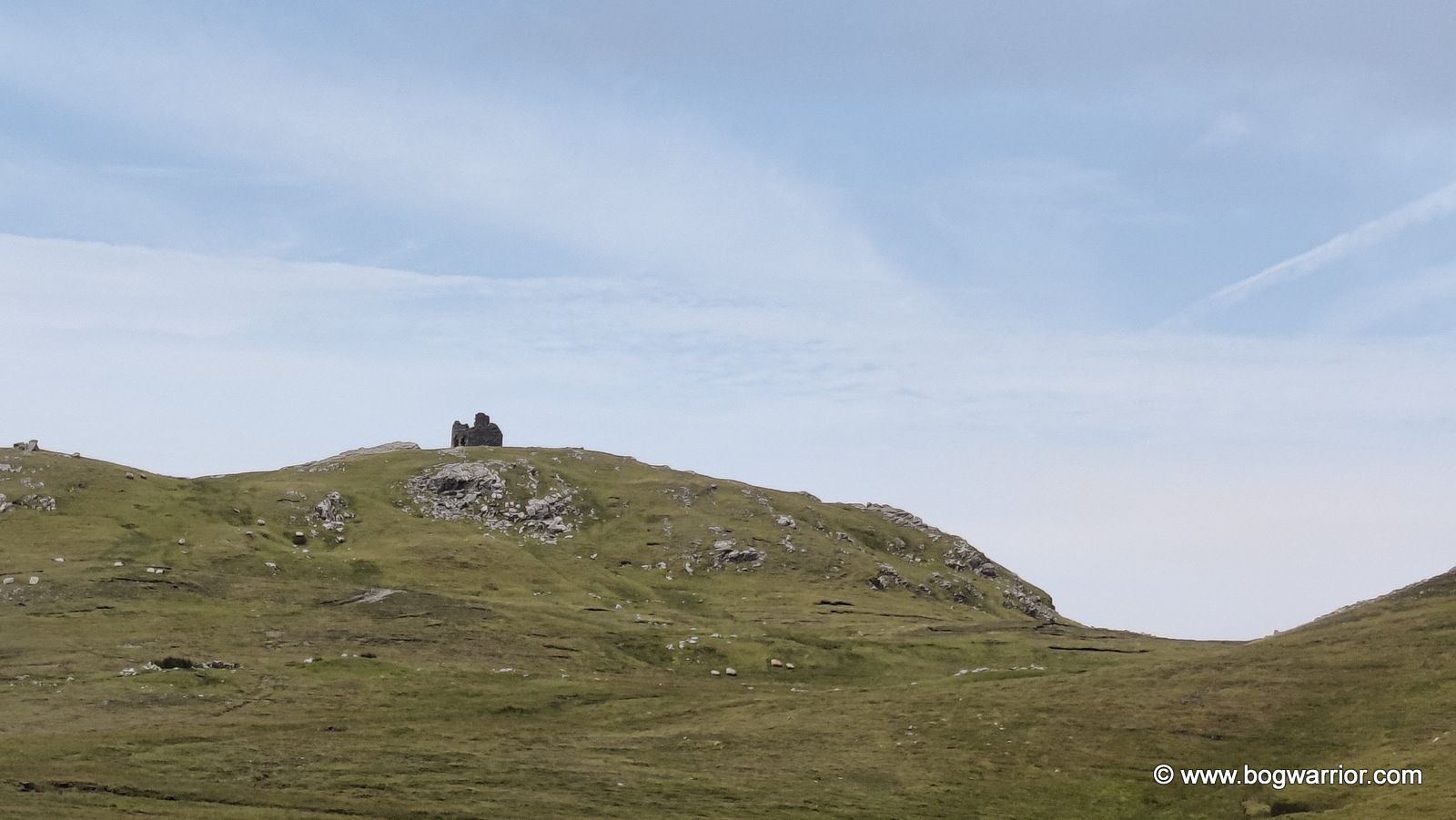
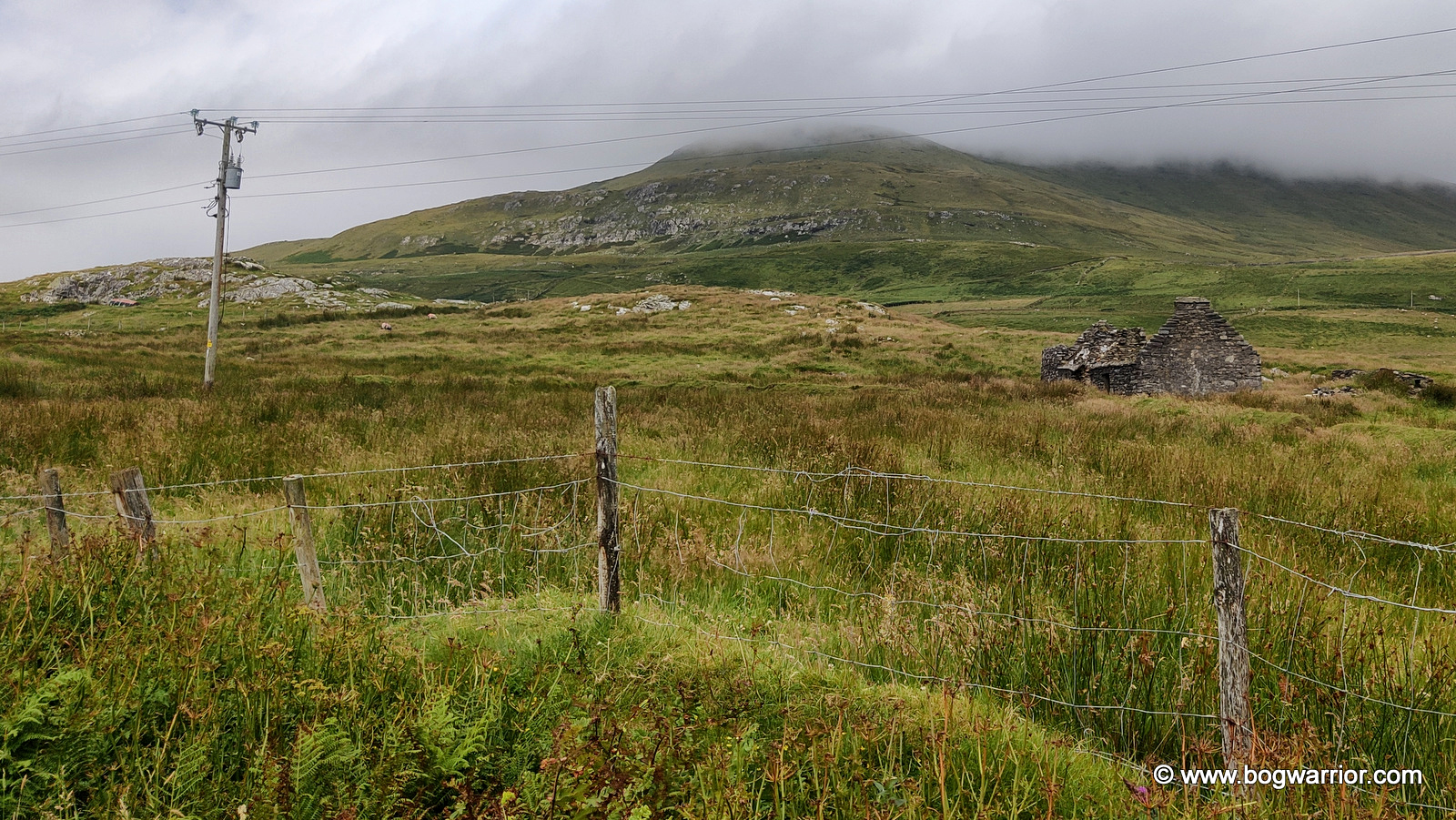
Being something of a tower fiend, I couldn’t leave Clare Island without attempting to find the ruins of the old Napoleonic signal tower, accompanied by the reassuring tones of Google Maps in my ear. It was a scenic journey, taking in sea views, a lovely waterfall, sheep and, looming ahead, a rather large hill with clouds hanging ominously over it.
All went well until the road ended and Google Maps announced that I had reached my destination. I looked at the phone, I looked at the territory, and all I could do was laugh. I was standing at the edge of a bog, looking up at a big hill. The signal tower was at the top of said hill, with no obvious route to reach it. I looked at the landscape. I looked at the bicycle. I looked at the remaining time. I decided that perhaps the signal tower had been quite adequately admired from a distance. At least I can say I saw it.⬇️
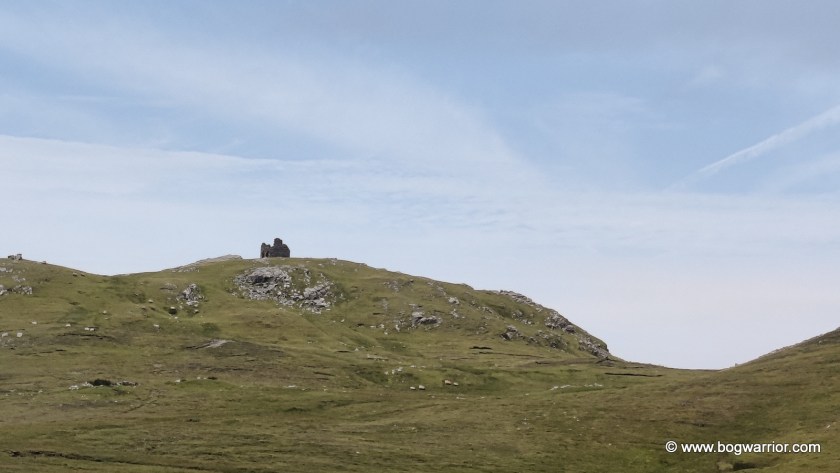
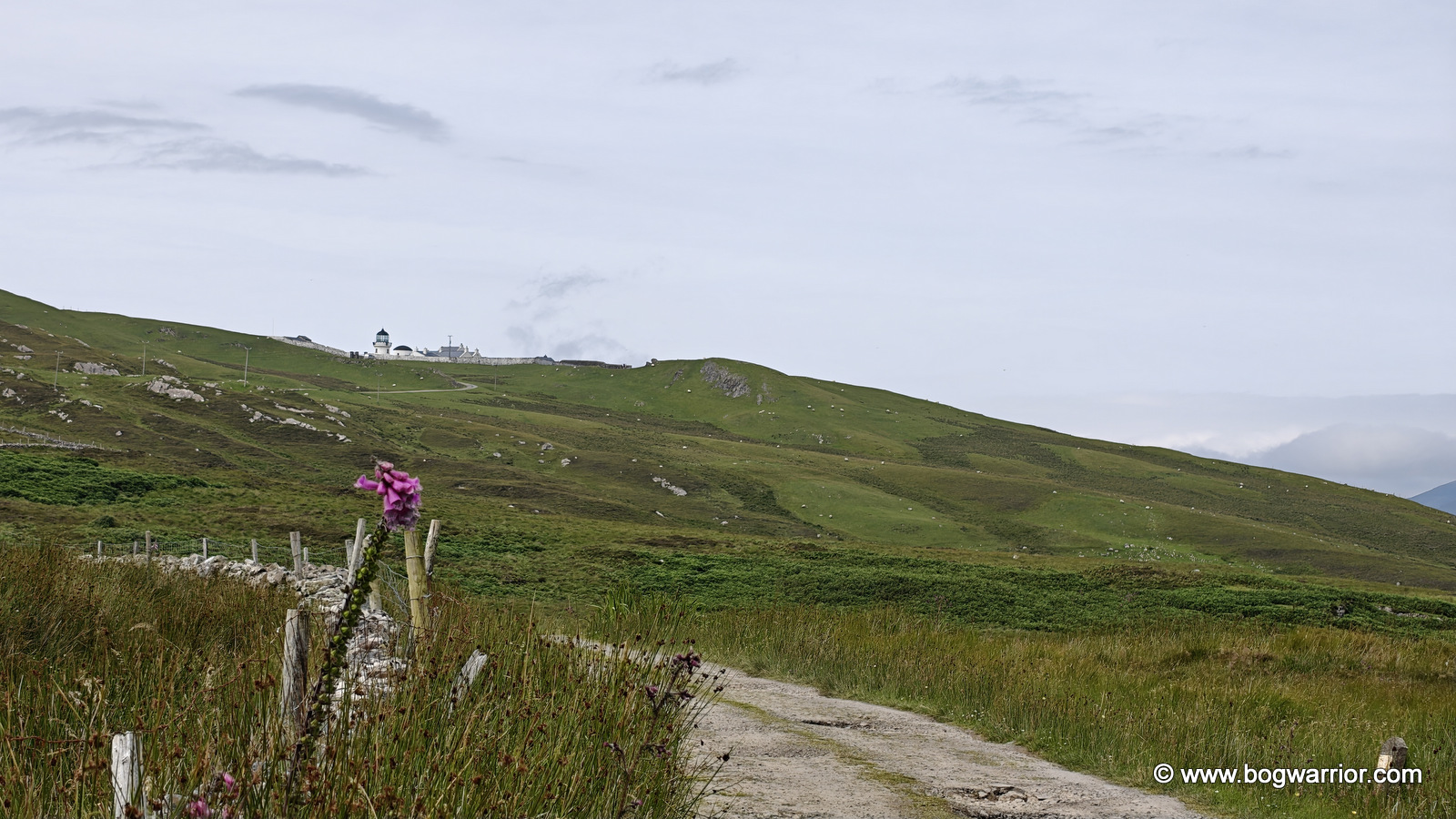
I still wanted to see the lighthouse. These days, it’s rented out to visitors who want to spend more than a busy day trip on the island. The journey from almost reaching the Napoleonic signal tower to the lighthouse involved plenty of uphill cycling, but it also came with some stunning views.
This was the sort of scenery that makes you forget you’re supposed to be watching the clock.
Unfortunately, the clock had not forgotten me.
By the time I reached the gateway leading to the lighthouse, I knew this was going to be another “not quite” visit. One look at the long and winding road leading up to it was enough to make up my mind. It was time to turn around and head back to the pier.
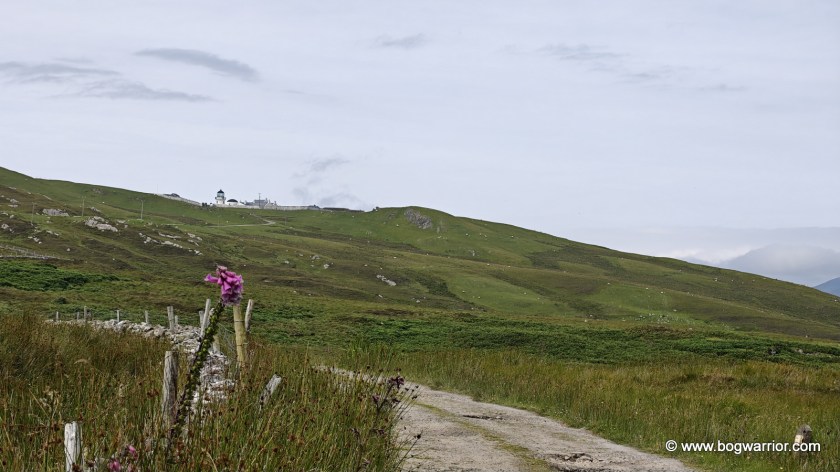
Much as I liked Clare Island, I liked the thought of getting back to my car at Roonagh Pier even more. Sometimes a day trip isn’t about seeing everything. Sometimes you have to leave a few things for the next visit.
Getting There and Getting Around
Two companies – Clare Island Ferry and O’Malley Ferries run numerous daily ferries from Roonagh Pier, which is 7 km from Louisburg, Co. Mayo. The ferry journey took roughly 20 minutes.
There is a bicycle hire place not too far from the pier, should you wish to explore on two wheels. If you’ve read this far, I’d advise against bothering to seek out the Napoleonic Tower unless you really like bogs and ruins 😁. There is a shop near the island church and school, plus a small hut on the pier. I didn’t have time to sample any food or drink in the local hostelries.
Gallery – click on an image to start the slideshow