Inis Meáin – the low key one and all the better for it

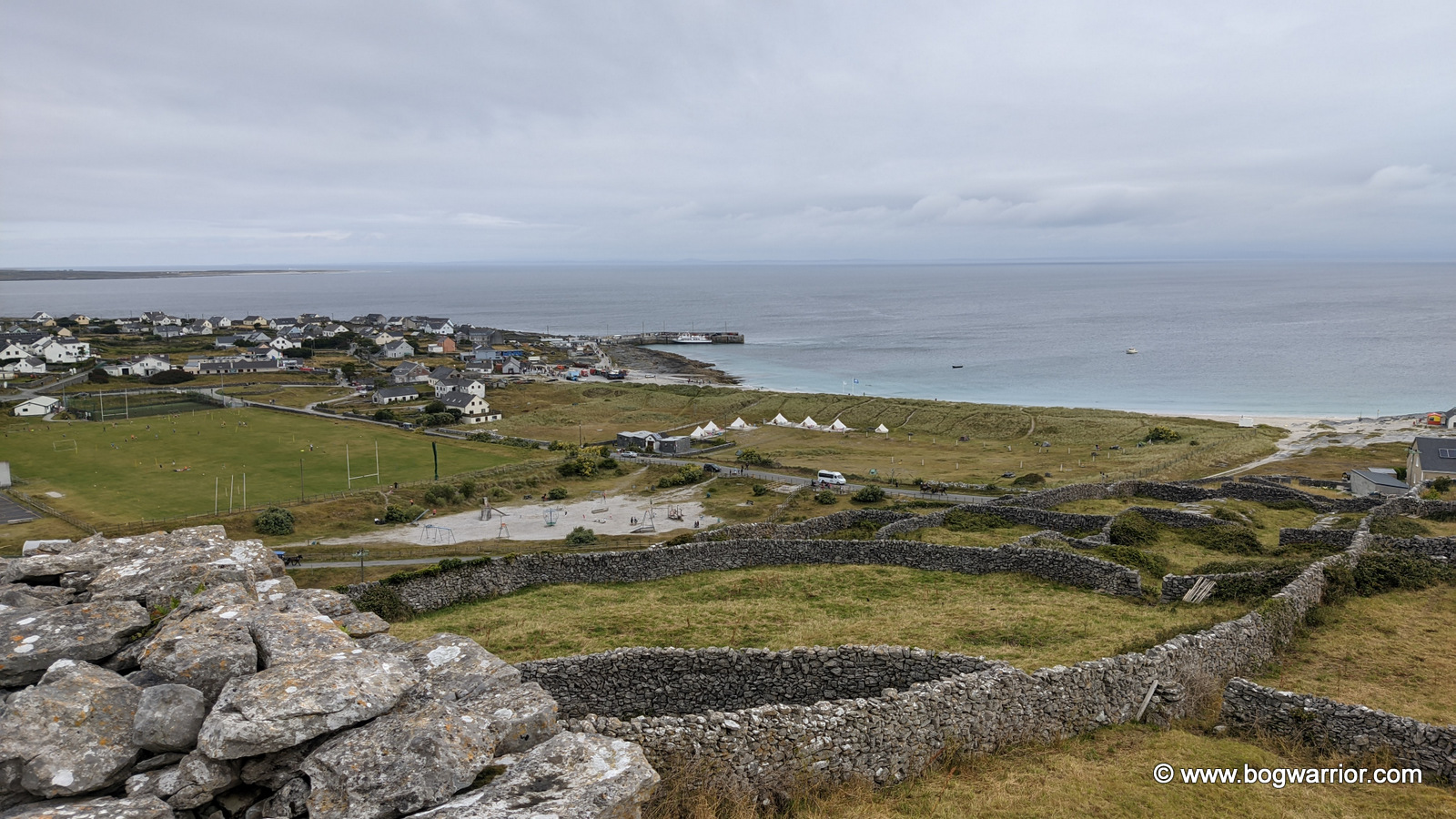
Having visited Inis Mór and Inis Oírr, it was only right that I should make a trip to the remaining one of the three Aran Islands. Inis Meáin (or Inismaan) is the least visited of the three islands, making it a very different experience from the other two.
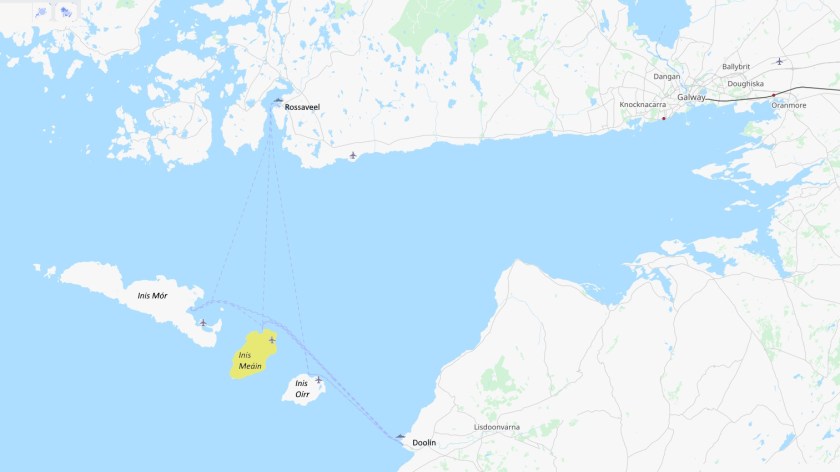
Getting Around 🚶‍♂️

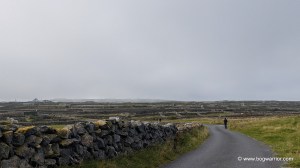
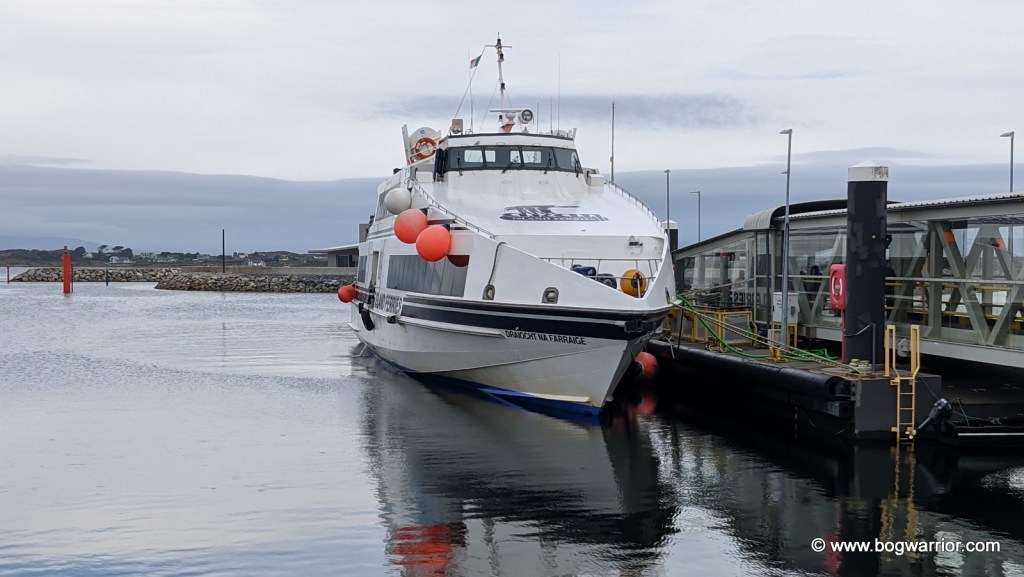
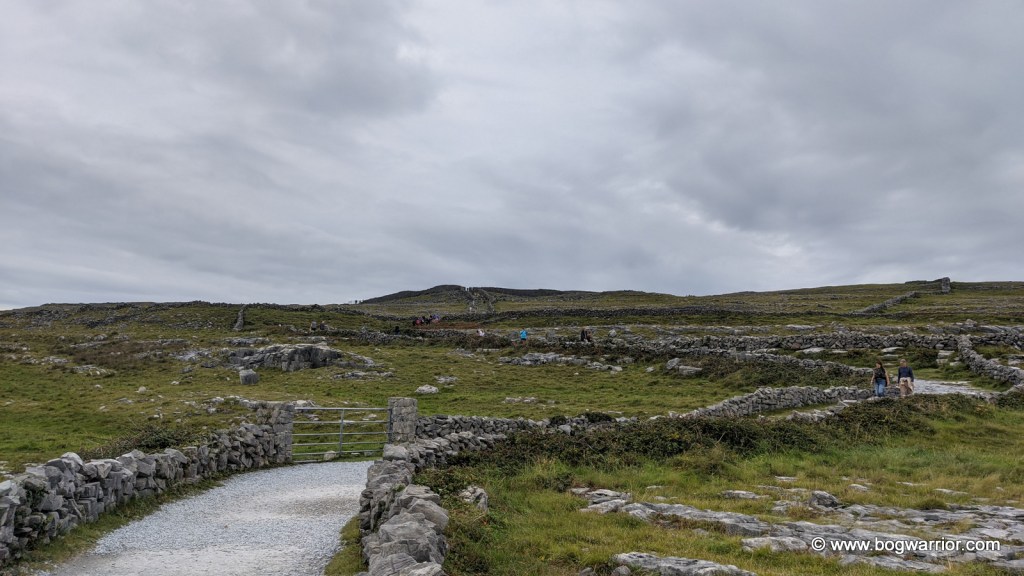
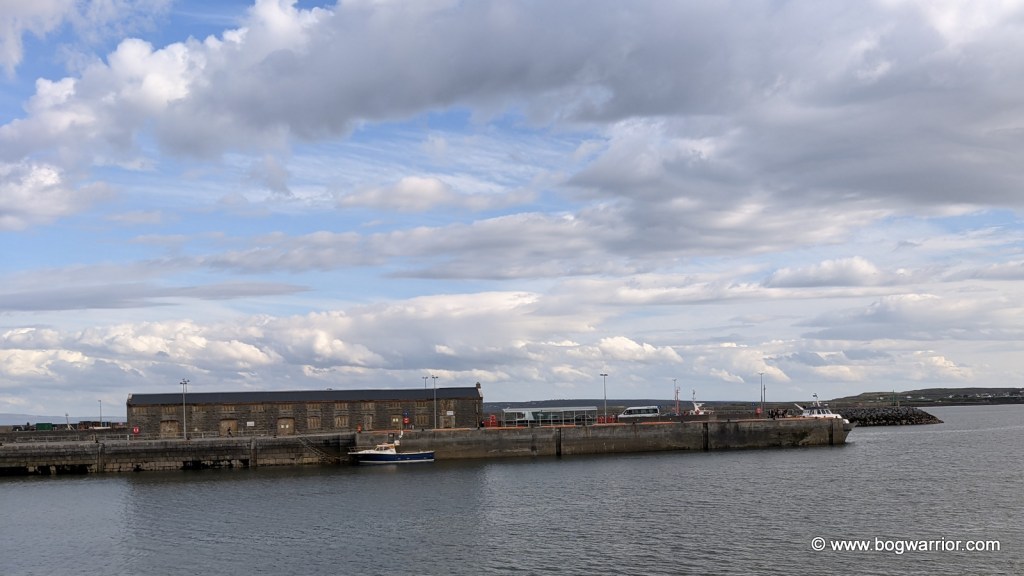
Straight away, you know things will be a little different here. For starters, there is no direct ferry – the boat which dropped us off was en route to Inis Mór and would make the same trip in reverse later on. Although the ferry was busy enough for mid-September, only a handful of people disembarked at the pier on Inis Meáin. And then…nothing! The piers on the other two islands are at the heart of their main villages and visitors are greeted straight away with the trappings of modern-day tourism. Bike hire shops, locals offering guided tours by horse or minibus, food trucks, signs for nearby shops and businesses. Here, the pier is 3km away from the main village, which is located inland. In a way, this is symbolic of the way this island works. You have to work that little bit harder to to get around but it is definitely worth it. There were no bikes to hire, perhaps the summer season was over, so walking was the only game in town.

The long walk into town

As with the two other islands, the signposting is a bit sketchy. There are some signs for loop walks but really, your life will be made easier if you have a good printed map or decent map app on your phone. I used Google Maps and found it very useful, both for finding my way around and for calculating how long it would take to walk to the various highlights. Being on Shank’s mare meant a few places on the “to visit” list were snipped out. Still, there was plenty to see on the day. More than anything, a day out on this wonderful island proved to be a wonderful way to get away from it all and to clear my head.

Clochán

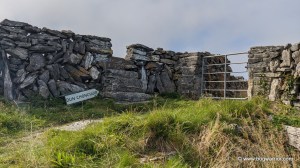
A Clochán is a dry stone hut which is built from stone and has a corbelled roof. Many of them were monastic huts and there are some dramatic examples around. The best known of these are probably the beehive huts on Skellig Michael off the south coast. Star Wars fans will recognise them from The Last Jedi. Like the other clocháns which are found in Ireland, it isn’t known when this one was built but it is many centuries old. Unfortunately, this one isn’t in good condition but the roof is still intact. As well as the little front entrance, it has a side window. You can still crawl into the hut but I chose not to – the photos online were enough to satisfy my curiosity! There is a small, very old graveyard overlooking the clochán.

Ancient monastic hut or clochán

Dun Chonchúir

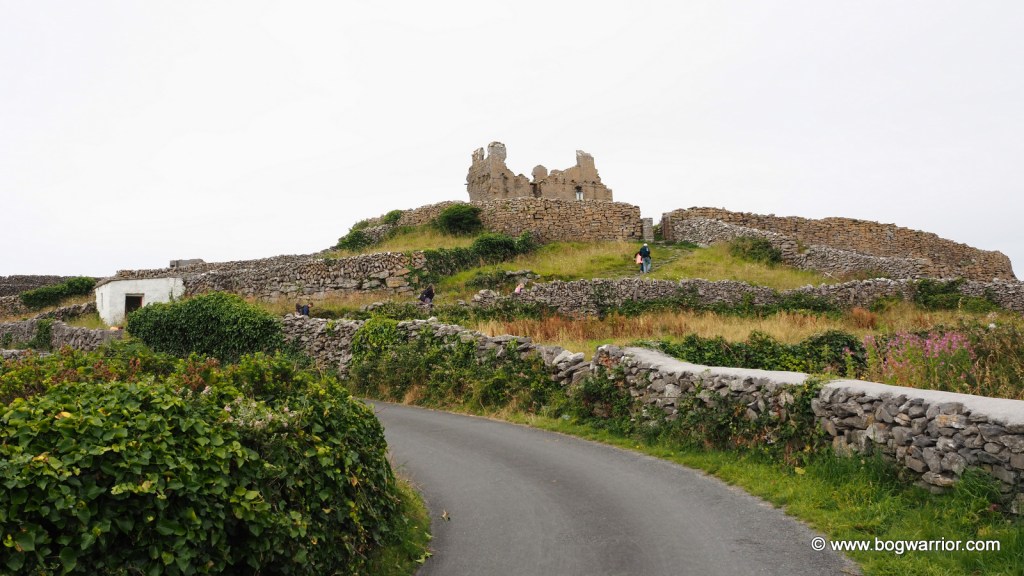
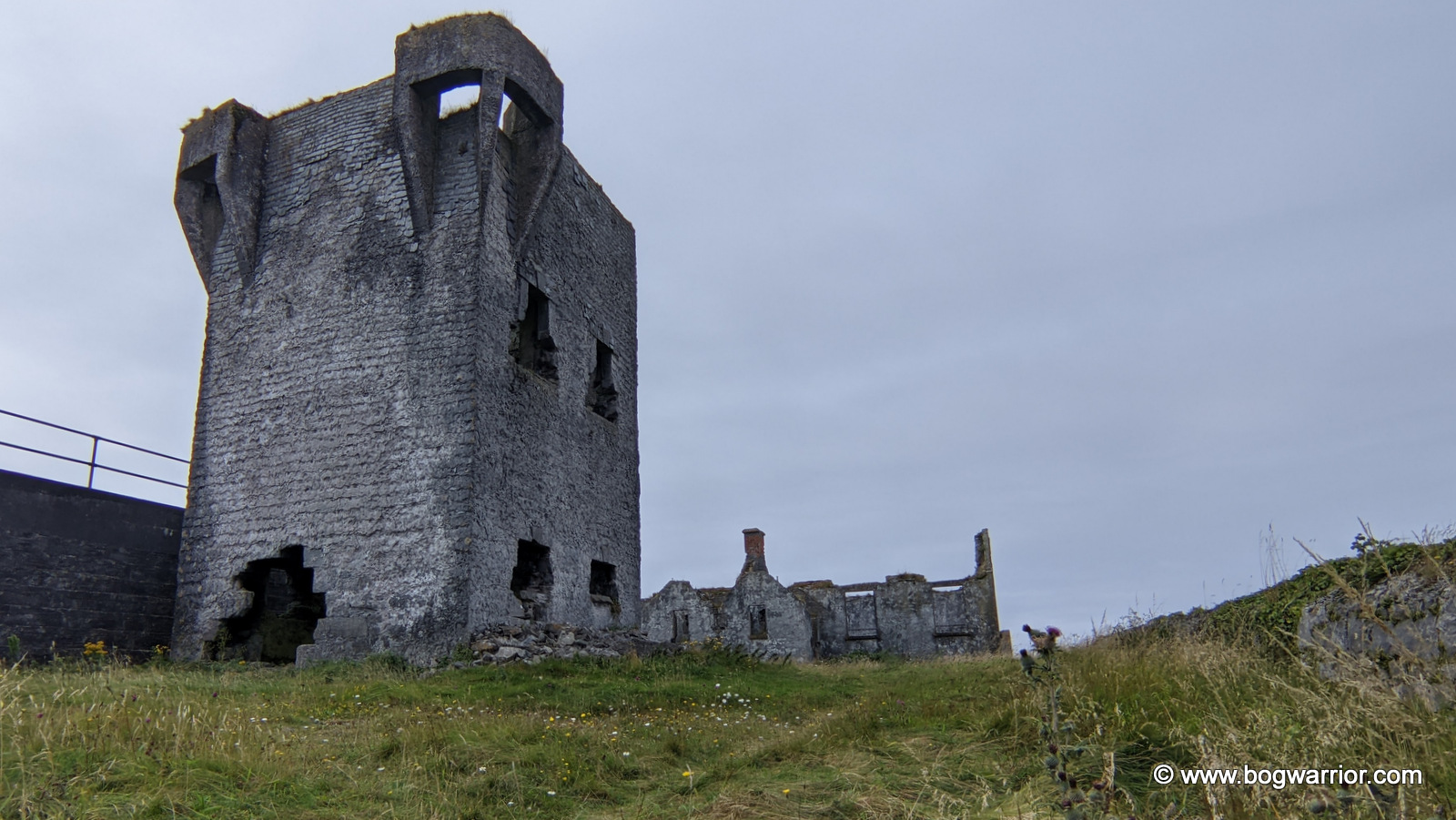
Because I was on foot, I didn’t get more than a cursory look at the outer edges of this extensive and ancient fort. I was also conscious of how much time I’d spent going to and from Dún Aongasa on Inis Mór, only to conclude that it looked far more impressive from the air… It is the largest of the stone forts on the Aran Islands and is built on the highest point of Inis Meáin. There are a few small clocháns in its inner keep which were repaired in the 19th century.

Dún Chonchúir

Séipéal Mhuire gan Smál

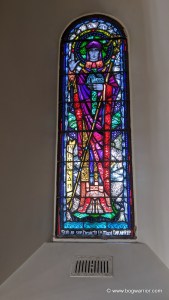
I have to admit that modern-day churches don’t do a lot for me, especially the 19th century gothic revival ones. However, the 1930s church here is lovely and worth a visit. Most of the stained glass windows are from the Harry Clarke Studio1 and they’re exquisite. The altar was crafted by James Pearse, the sculptor father of Irish revolutionaries Padraig and Willie Pearse. James died in 1900 (i.e. long before this church was built) so I assume this altar had been in an older island church before this. (Please let me know)

Teampal na Seacht Mac Rí and St. Kennerg’s Bed

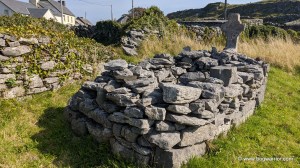
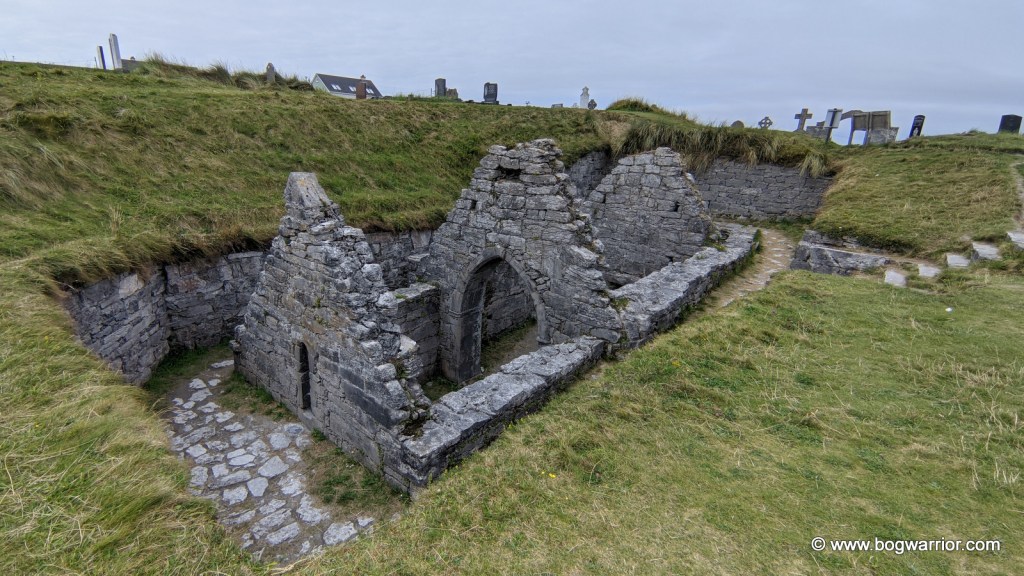
On the way into the village, I walked past the remains of Teampall na Seacht Rí and St. Kennerg’s Bed or grave which is right beside it. There isn’t much left to see of the church but the grave beside it is more striking. Kennerg was the daughter of the King of Leinster and was highly venerated at one stage.
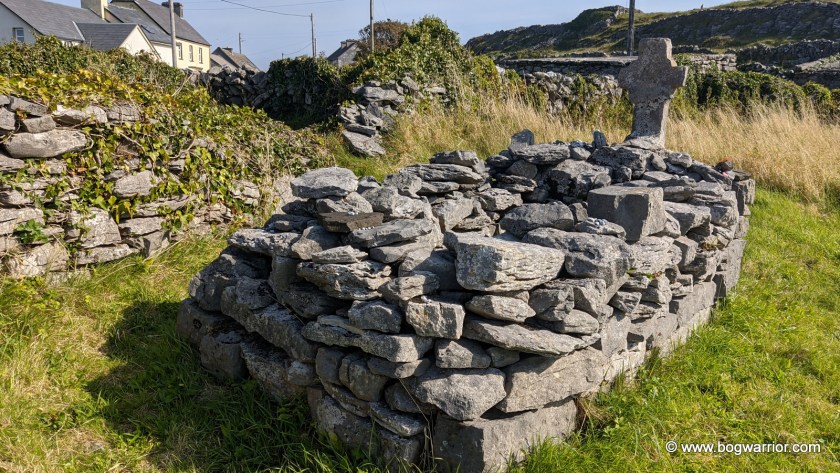
St Kennerg's Bed or grave. Stands beside the ruins of Teampall na Seacht RíSt Kennerg's Bed or grave. Stands beside the ruins of Teampall na Seacht Rí
St Kennerg’s Bed or grave. Stands beside the ruins of Teampall na Seacht Rí

Lunch

Armies and occasional bloggers don’t like to march on empty stomachs. And so, lunch was the next important milestone. Teach Ósta is the only pub on the island so being barred is not a wise move. Happily, they serve hot food and cold drinks – the chicken goujon wrap was very welcome. It was also a chance to hear the locals chattering as gaeilge because Irish is the first language here. There is a shop nearby but it was closed for lunch so I didn’t get to see what it was like. Like this pub, I believe it’s the only one on the island.

Teach Osta – the only pub in town

Teach Synge

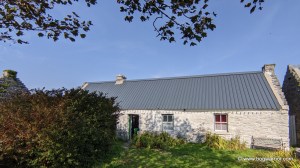
The Irish writer John Millington Synge (1871-1909) is known for his connection to the Aran Islands. His travelogue “The Aran Islands” was published in 1906. It proved to be a far less controversial work than his play “The Playboy of the Western World” (1907). When it was staged in Dublin, and later in New York, the audience rioted. Happily, visiting this old cottage where he used to holiday is a far more peaceful experience. It is still in the hands of the family who owned it in Synge’s time and it has been restored to look like it did in his time. It is hoped that the cottage can be thatched again, which will bring it back to what it looked like in Synge’s time.

Restored cottage where playwright JM Synge lived for a time

Carrowlisheen/Diarmuid and Gráinne’s Bed

The Pursuit of Diarmuid and Gráinne (or “Tóraíocht Dhiarmada agus Ghráinne” if you did Leaving Cert Irish fadó fadó) is a tale from Irish mythology. Gráinne, the daughter of the High King of Ireland, decides she can’t go through with her arranged marriage to the ageing Fionn McCumhaill (Finn McCool of Giant’s Causeway fame). Diarmuid, a hunky and younger warrior catches her eye and she magically enchants him so she can avoid marrying Fionn. Before you can say “Bye Granddad”, the pair go on the run and thus the adventure begins. The story inevitably ends in tragedy but not before the couple criss-cross Ireland. There are many prehistoric sites around Ireland which bear the name “Diarmuid and Gráinne’s Bed, including this one. It is actually a megalithic wedge tomb which is looking the worse for wear now.

One of the many Diarmuid and Grainne's Beds around Ireland. In reality it is a megalithic wedge tomb
Diarmuid and Gráinne’s Bed. Not very comfy.

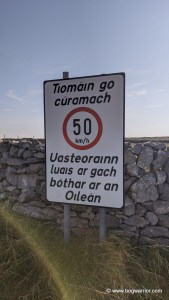
After this, I headed back to the pier to catch the ferry back to Rossaveel. The walk took me past the small airport which brings people to and from the mainland. It also gave me a chance to look at this chatty sign telling motorists to drive carefully, and that the speed limit is 50km/h on the island. After that, it was a short walk to the pier and the wait for the ferry home.
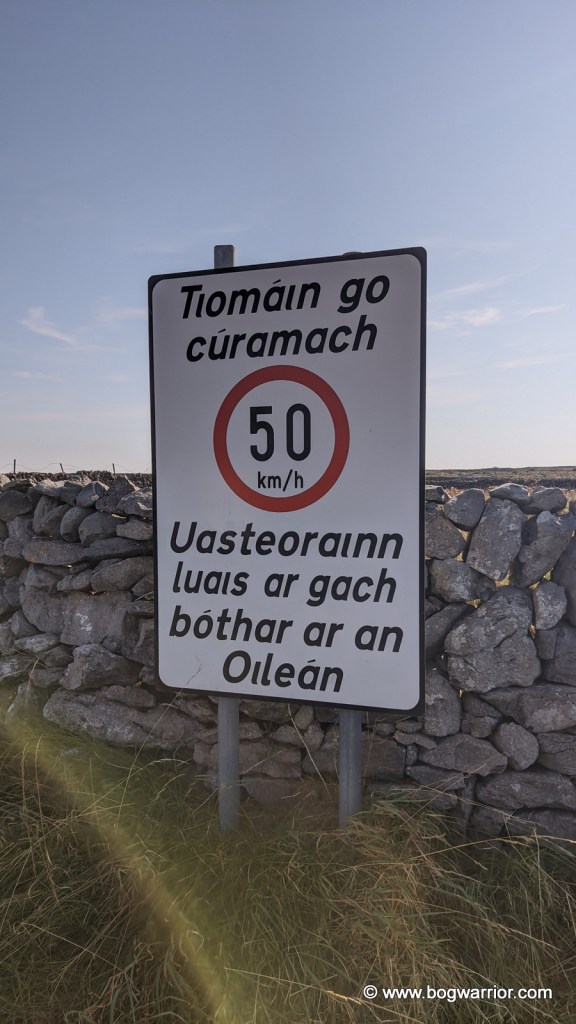
Speed Limit is 50km/h

Getting There

Inis Meáin is served all year round by ferries which leave from Rossaveel in Co. Galway or from Doolin, Co. Clare. Aran Islands Ferries operate out of Galway and you can either travel to Rossaveel Pier yourself, or catch their shuttle bus from Galway city centre. Two ferry companies sail from Doolin, Co. Clare – the Doolin Ferry Company and O’Brien’s Ferry. Aer Arann fly from Inverin in Galway if you fancy something different or like small planes.

As you will have gathered by now, a visit to Inis Meáin is a much more low-key affair than the other two islands. If you want the place almost entirely to yourself, go off-season and enjoy the solitude (in a nice way). Details on bike hire are sketchy but it would appear that during the summer season, bikes are available at the pier. It is possible to bring your own bike to the island but if you intend to do so, contact the ferry company first.


  1. Harry Clarke(1889-1931) was a renowned Irish stained-glass window artist. After his death, the studio he founded continued to produce high-quality stained glass windows. ↩︎

Inis Oírr – sunken churches and wrecked ships

In 2023 I visited Inis Mór, the largest of the three Aran Islands. You can read about that here. Anyway, in 2024 I decided to visit the other two. First up was Inis Oírr (Inisheer) which is the smallest of the three. Despite its small size, there’s plenty to see and you’ll still be back in time for the ferry. I’ve added more of the travel details at the end, if you’re still awake by then.

Getting Around 🚤✈️🚲🏇🚶‍♂️

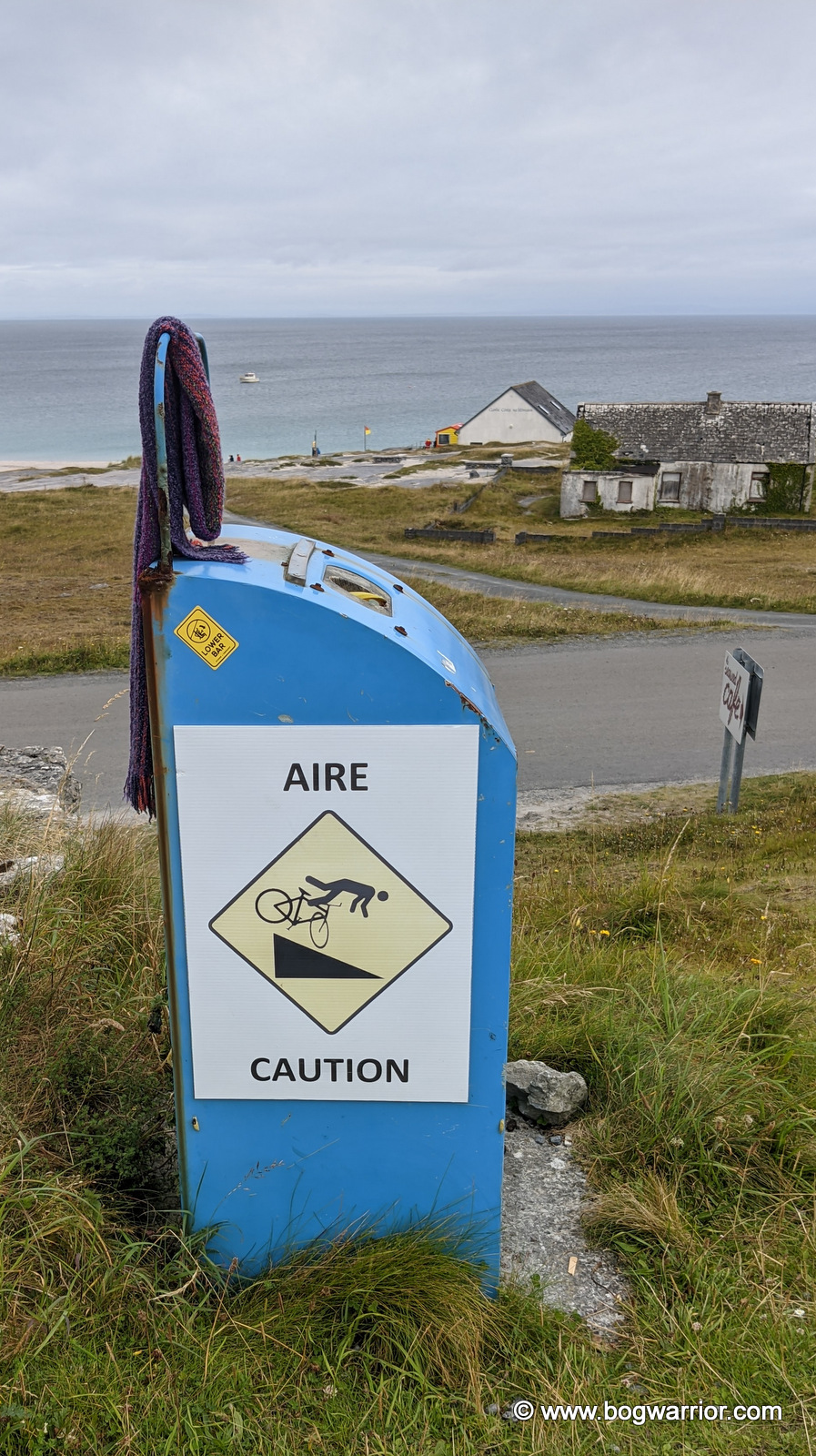
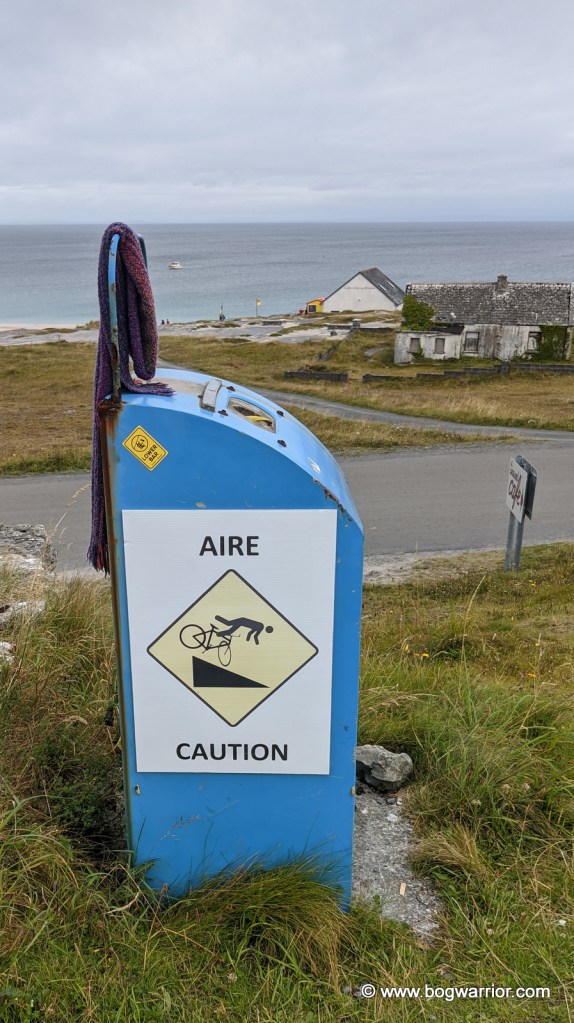
I hired a bike from one of the two hire businesses which operate near the pier. Inis Oírr is relatively flat, so even if you don’t hire a fancy e-bike you can still whizz around quite comfortably. The road surfaces are generally OK but there are uneven patches and you never know who might come around the corner. So be careful when going downhill – the language of eating concrete transcends international borders.

These warning signs also mean you can stop pedalling for a while

O’Brien’s Castle

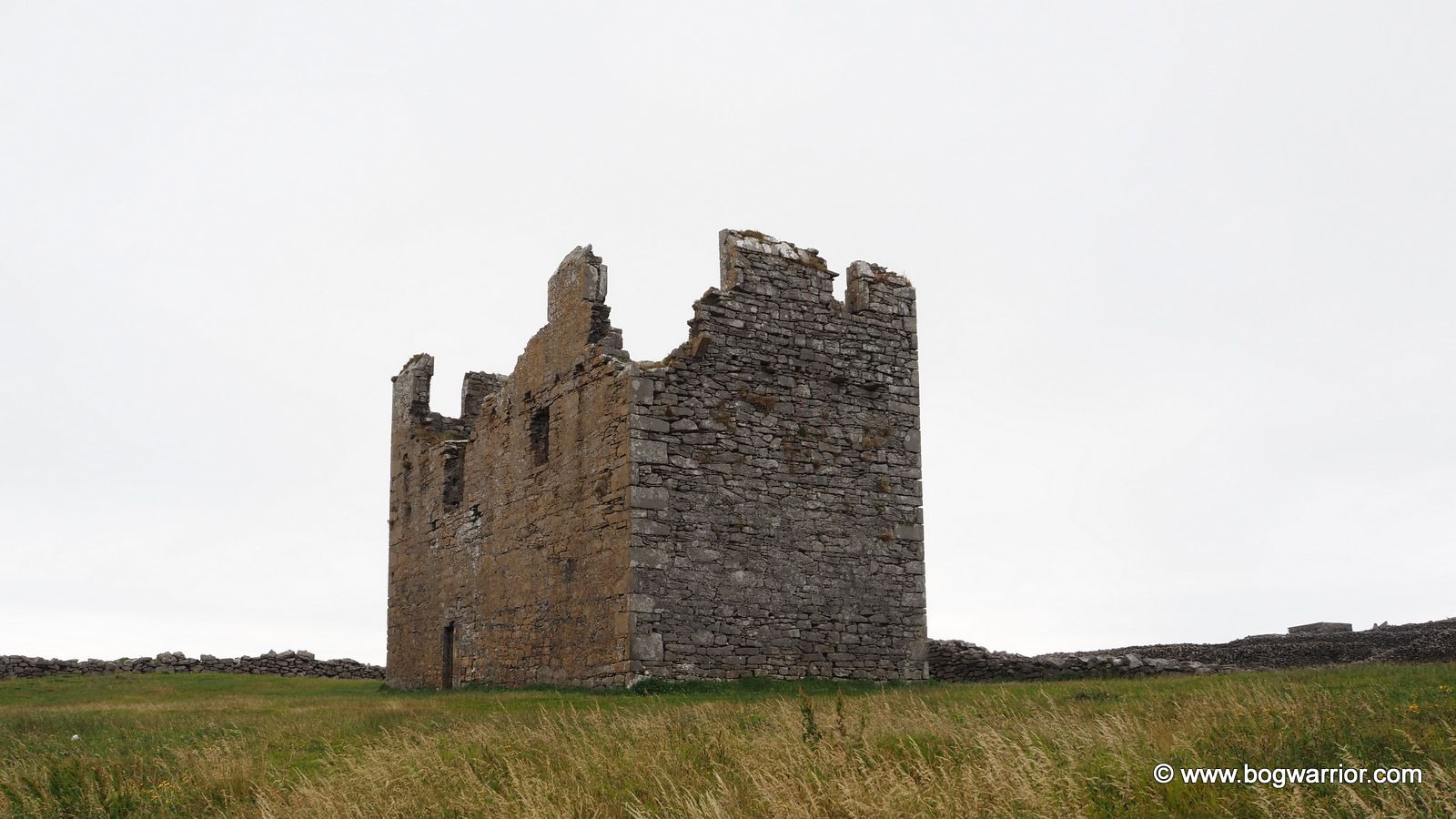
O’Brien’s Castle (aka Furmina Castle) is one of the most noticeable buildings on the island. It’s a ruined 15th-century tower house built on top of a hill. The ruins themselves are a bit ho-hum but they’re in good condition. Once upon a time, wooden stairs linked the floors but they have long gone. The view from the grounds is worth the short climb though.

O’Brien’s Castle

Further up the hill is An Túr Faire, a ruined Napoleonic signal tower. It was built in the early 19th century when it was feared that the French might attempt to invade Ireland. The grounds were locked up so this photo was taken through the gate. There are several more of these dotted around the Irish coastline.

An Túr Faire

The sunken church/aka Teampall Chaomháin

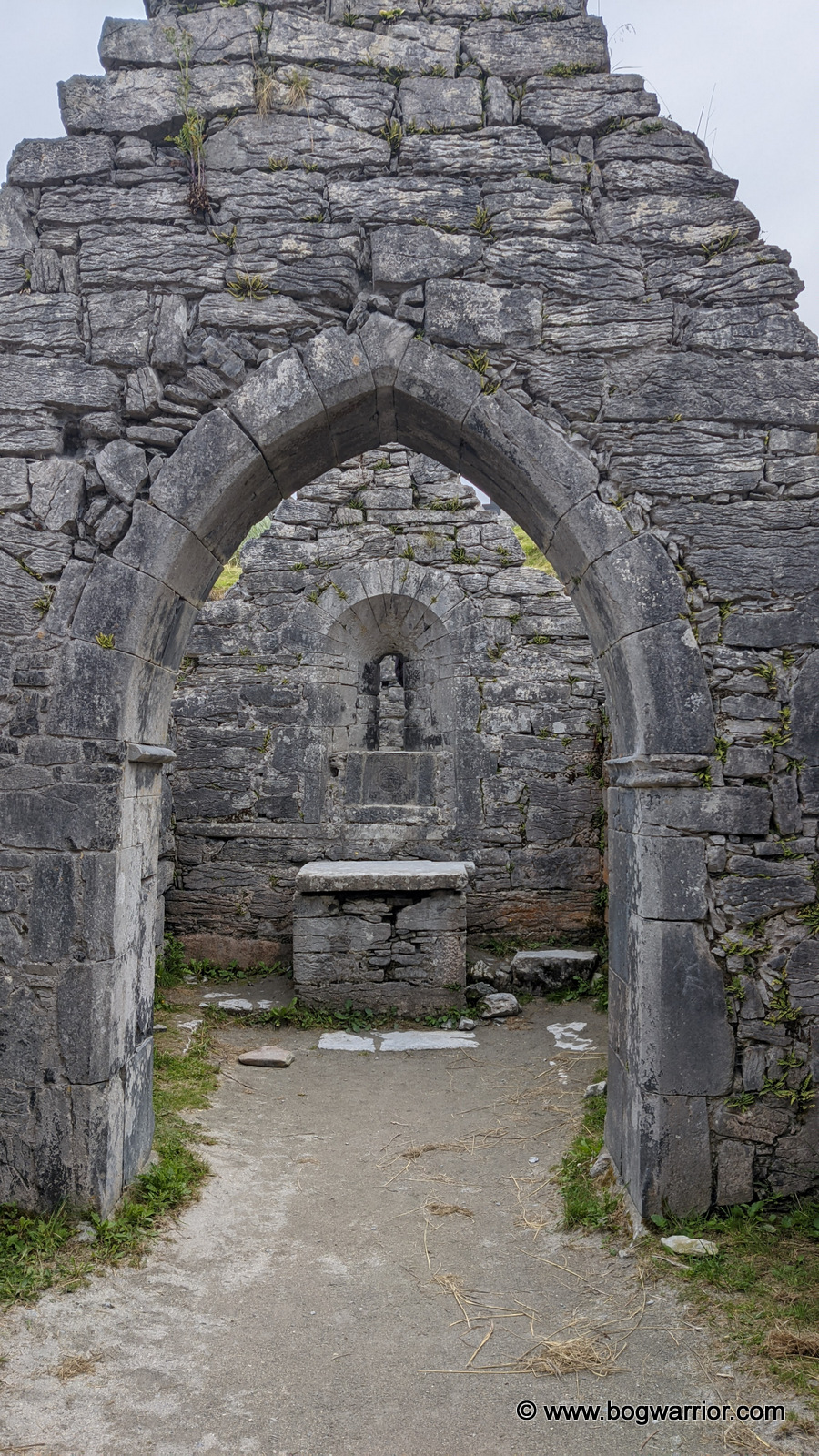
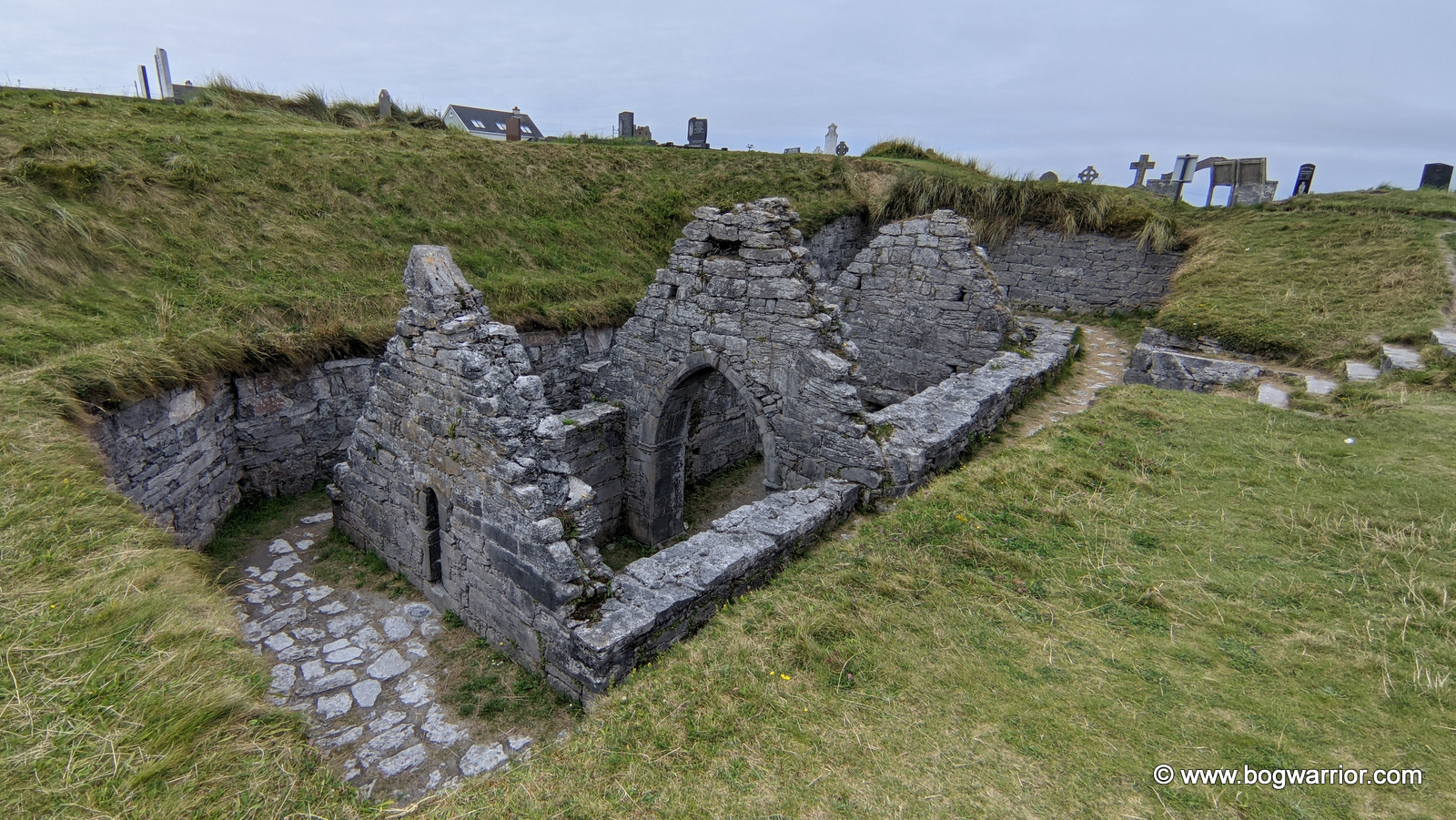
This is a ruined church found in the local cemetery. Its age is up for debate – although the OPW sign nearby indicates that it’s a 10th-century church, other sources claim otherwise. What isn’t up for debate is that this church is largely below ground level and looks like it has sunk into the ground. In times past it was buried by shifting sands from the nearby beach. There is a little roofed tomb nearby which is believed to house the remains of St. Caomhán who may have founded this church. You can walk into the church and that is an unusual experience. It is odd to be looking straight down into the ruins rather than up, and to find a church window at waist height. This may have been a larger church in times past – the chancel is what remains now.

St. Caomhán’s Church

The Plassey Shipwreck

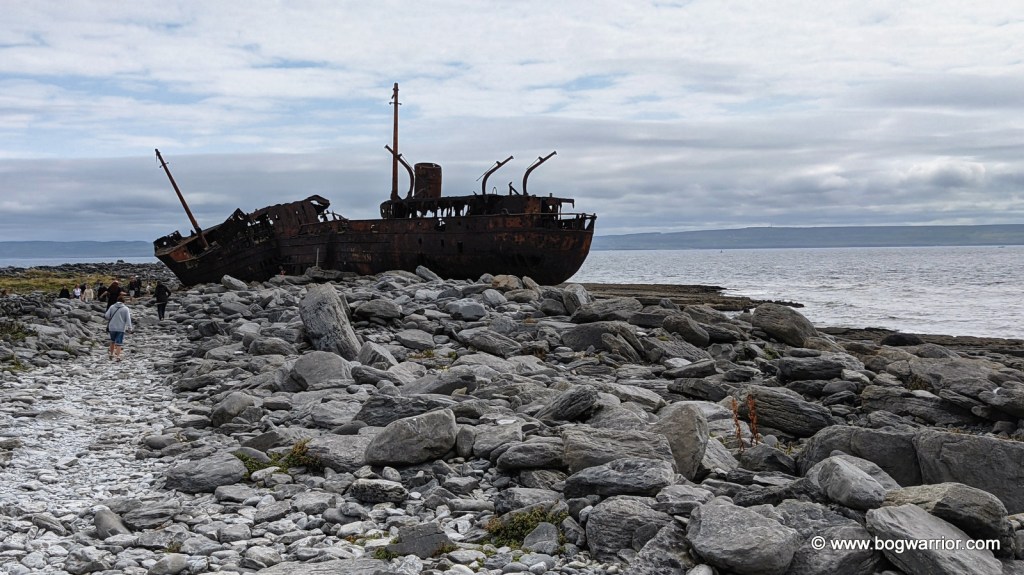
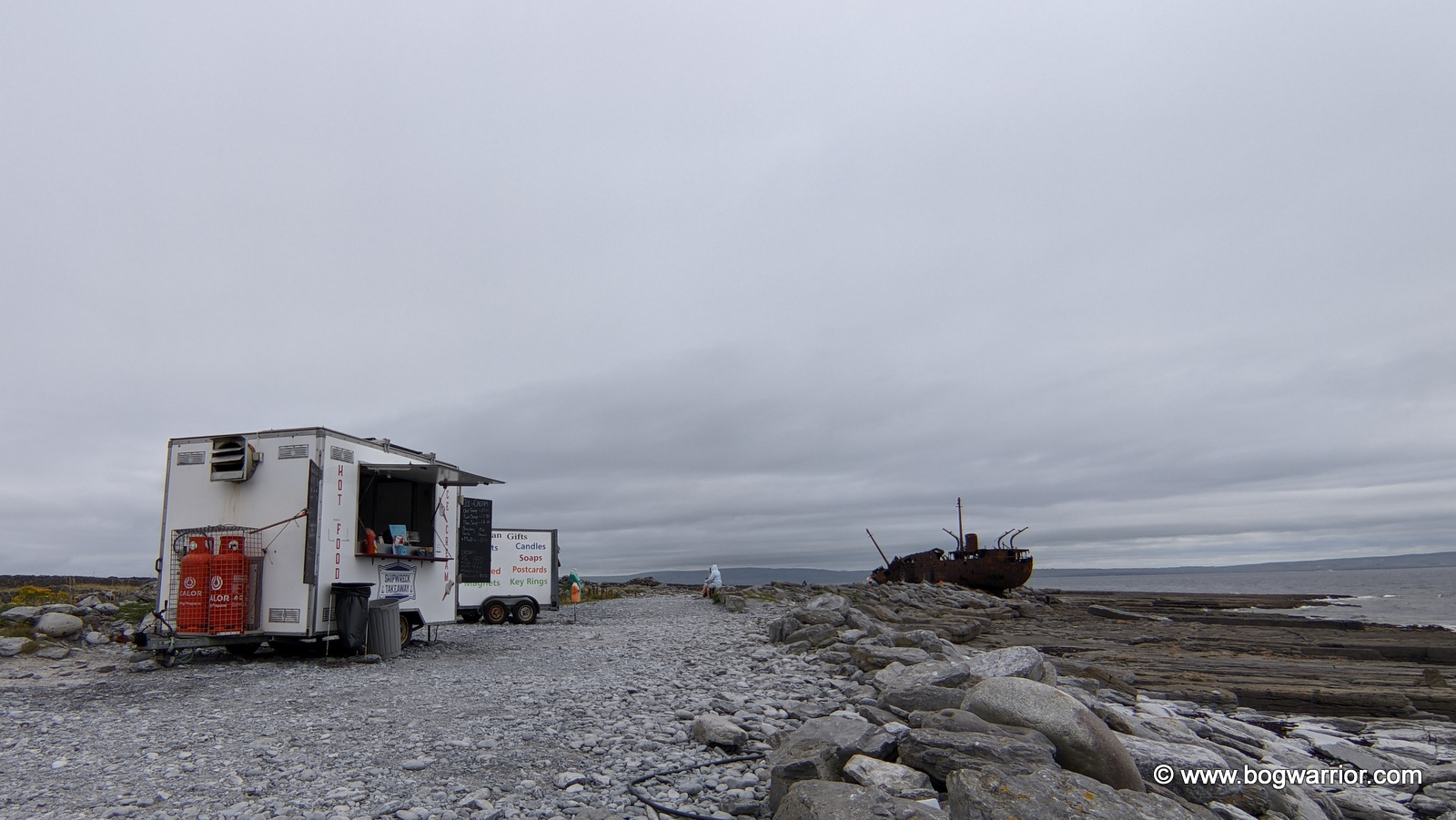
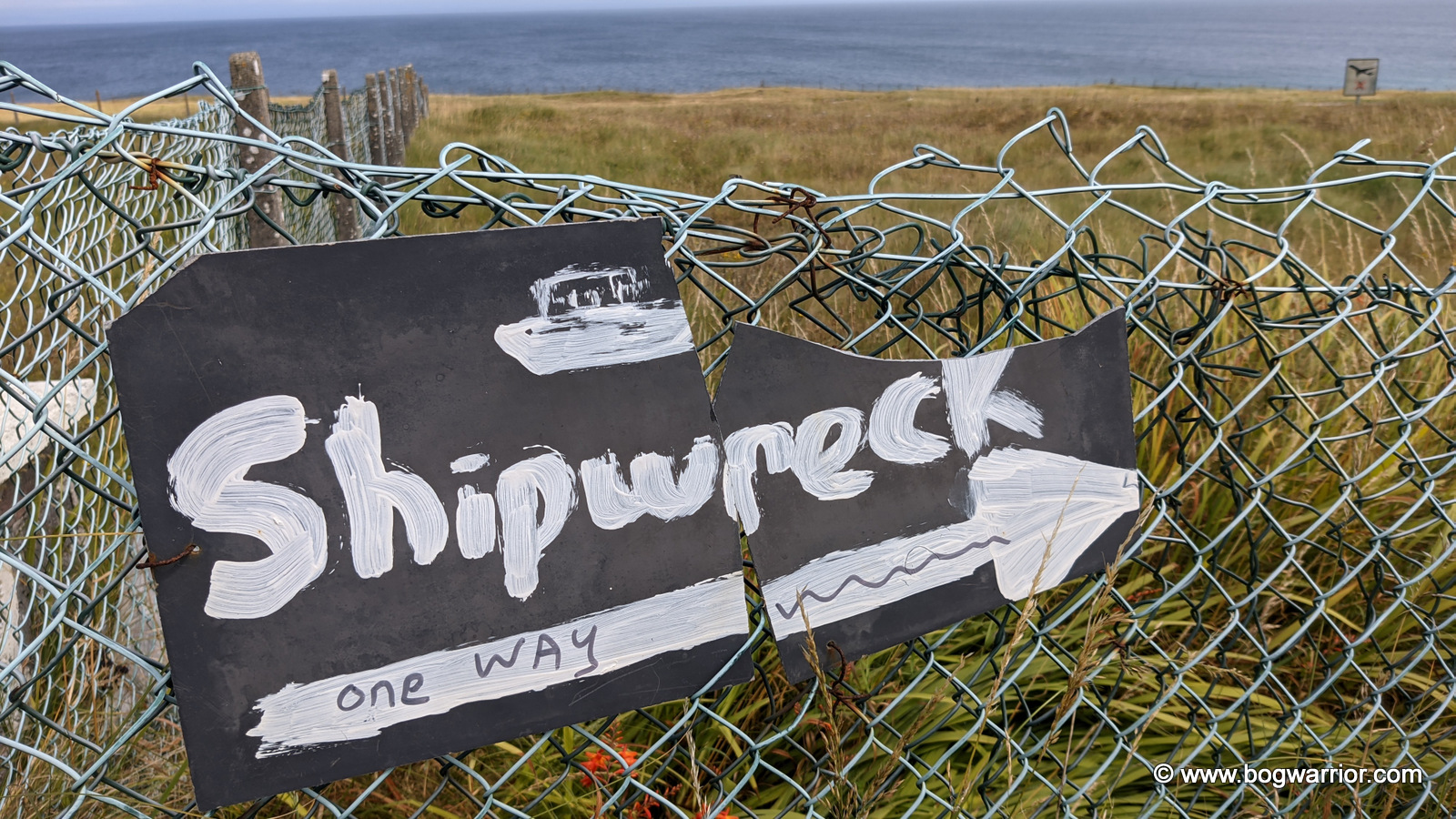
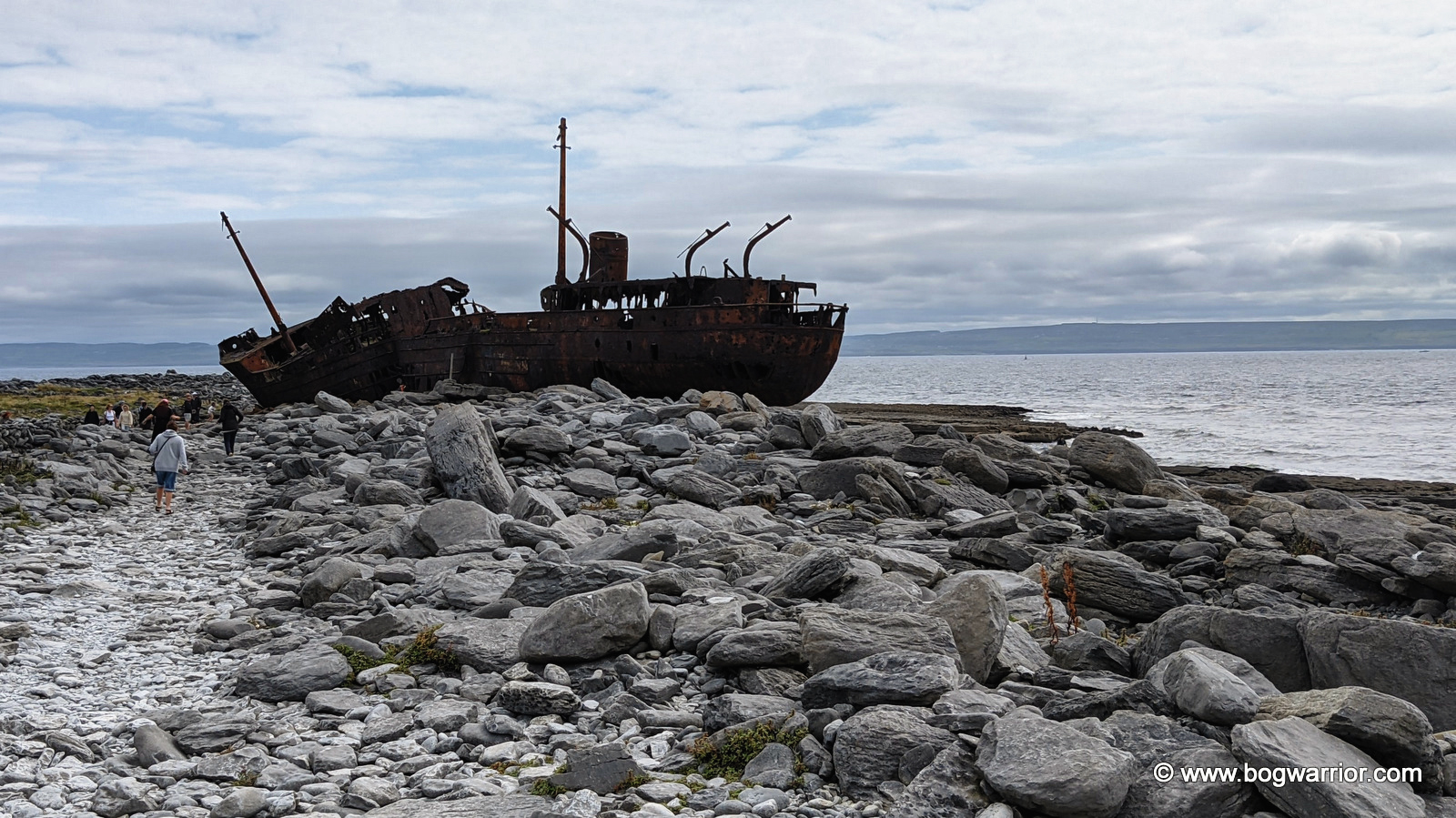
This rusting shipwreck dates all the way back to WWII. It was built in 1940 by the British Royal Navy and was originally called HMS Juliet. It served its time in the war and was later converted into a cargo vessel. It was renamed Peterjohn. In 1951 the Limerick Steamship Company purchased it and renamed it as MV Plassy/Plassey (spellings vary). It continued to operate as a cargo vessel until 8th March 1960. On that day, the ship was caught up in a severe storm and was driven up onto Finnis Rock off Inis Oírr’s coast. The crew of 11 was rescued by a group of islanders. Some weeks later, another storm hit and this one brought the Plassey onshore. It has remained here ever since, slowly deteriorating and occasionally shifting if an Atlantic storm is particularly ferocious. It became better known in the 1990s when it was featured in the opening titles of the sitcom Fr. Ted. Somebody made a sign directing visitors to the shipwreck (see gallery below) but it too is starting to succumb to the elements.

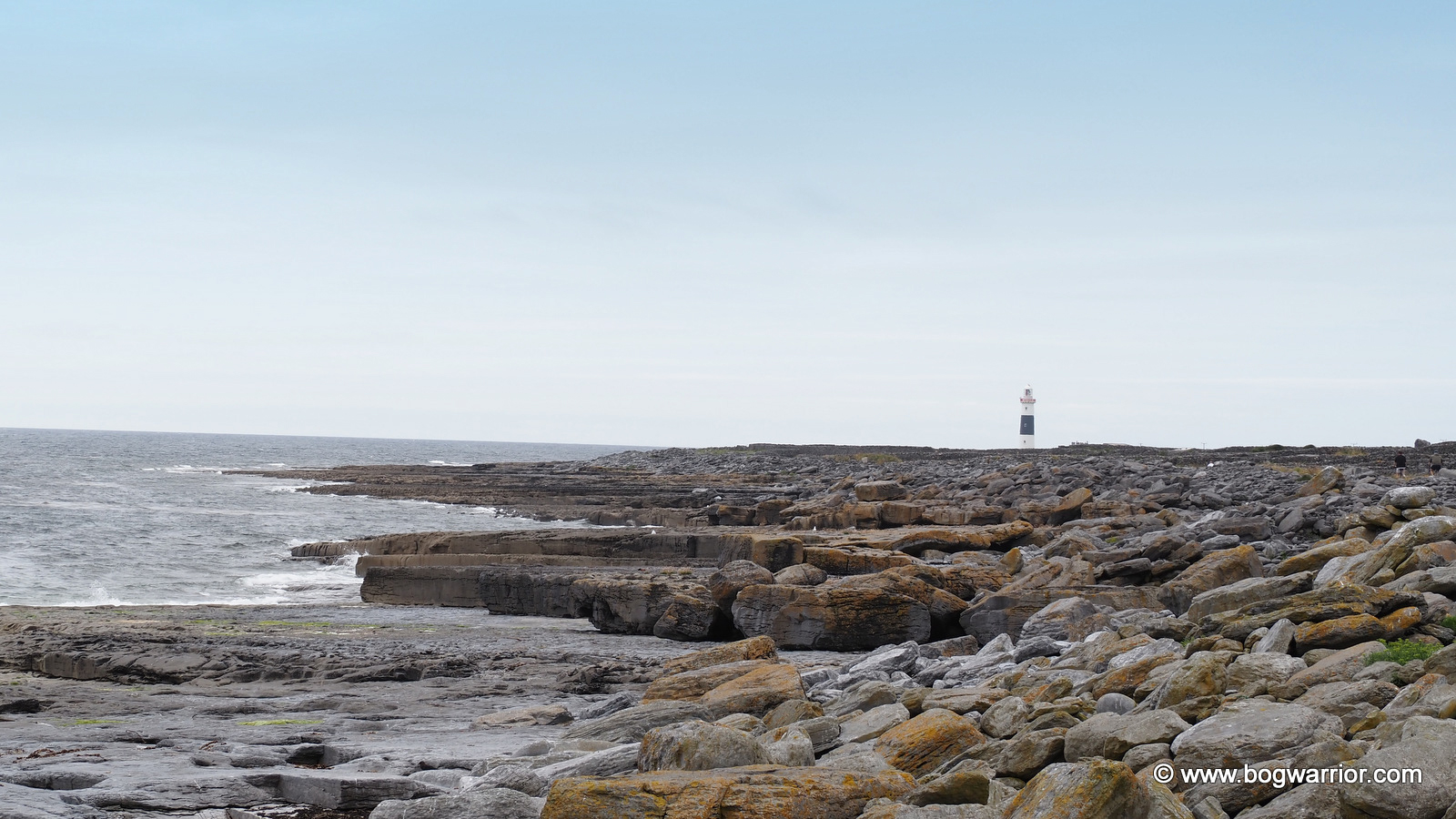
Ironically, the shipwreck isn’t too far from a lighthouse…

Eatenin’ and Drinkenin’

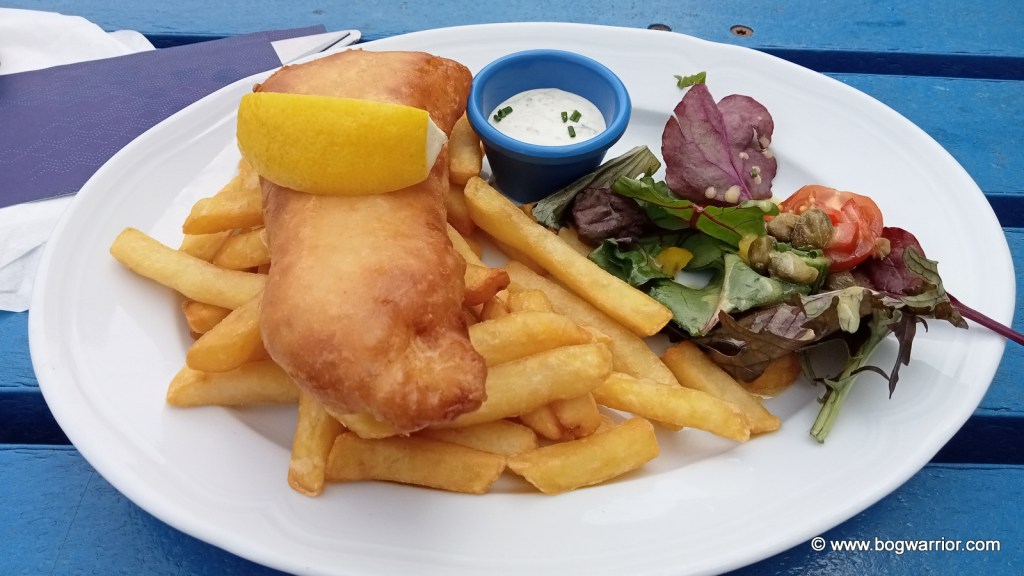
You can of course bring your own food to Inis Oírr but if you’d rather grab something on the island there is plenty of choice. There are some pubs, cafés and food trucks serving all sorts of food, snacks and drinks. I kept it simple and had some fish & chips from Tigh Ned. Other eateries are available.

Fish & Chips from Tigh Ned

If you have never been to any of the Aran Islands, I think Inis Oírr is a great place to start. It’s a small island so you should be able to tick off most if not all of the places of note in one day. The locals are friendly too, and the scenery is beautiful. You can buy Aran sweaters here too – according to online reviews, they are cheaper than what you’d pay in Dublin. All the shops and pubs seem to take card payments so there’s no need to load up on cash.

Getting There

Inis Oírr is served all year round by ferries which leave from Rossaveel in Co. Galway or from Doolin, Co. Clare. Aran Islands Ferries operate out of Galway and you can either travel to Rossaveel Pier yourself, or catch their shuttle bus from Galway city centre. Two ferry companies sail from Doolin, Co. Clare – the Doolin Ferry Company and O’Brien’s Ferry. Aer Arann fly from Inverin in Galway if you fancy something different.

Inis Oírr can be explored on foot but most people hire a bike from Joyce Bike Hire or Rothaí Inis Oírr. Both hire out all sorts of bikes from e-bikes to tandems to dog buggies. If you fancy something less energetic, you can hire a local to bring you around the island by horse and cart, or by minibus.

Gallery.

Click on a picture to launch

Inis Mór – the one with the big fort and the mad swimming pool

In 2023 I decided to visit Inis Mór (aka Inishmore), which is the largest of the three Aran Islands. In 2024 I went on to visit the other two, which I will write about soon.

The Aran Islands is a group of three islands off the west coast of Ireland. To many people, they are associated with Aran knitwear. These are distinctive, chunky woollen jumpers and cardigans traditionally made for fishermen and other natives of these islands. Because they’re out in the Atlantic, they’ve developed their own distinctive feel and identity. There is far more to these three islands than woolly jumpers, as you’ll see if you read on 😁 I’ll elaborate on the specifics at the end of this post because I don’t want to become the equivalent of those recipe websites. You know the ones – all you want is the recipe so you can make something different for dinner yet you find yourself forced to scroll past 15 paragraphs of waffle about Great Grandma Alice, some family pets, the weather and a family recipe which has been handed down through 6 generations. Enough!

Getting Around 🚤✈️🚲🏇🚶‍♂️

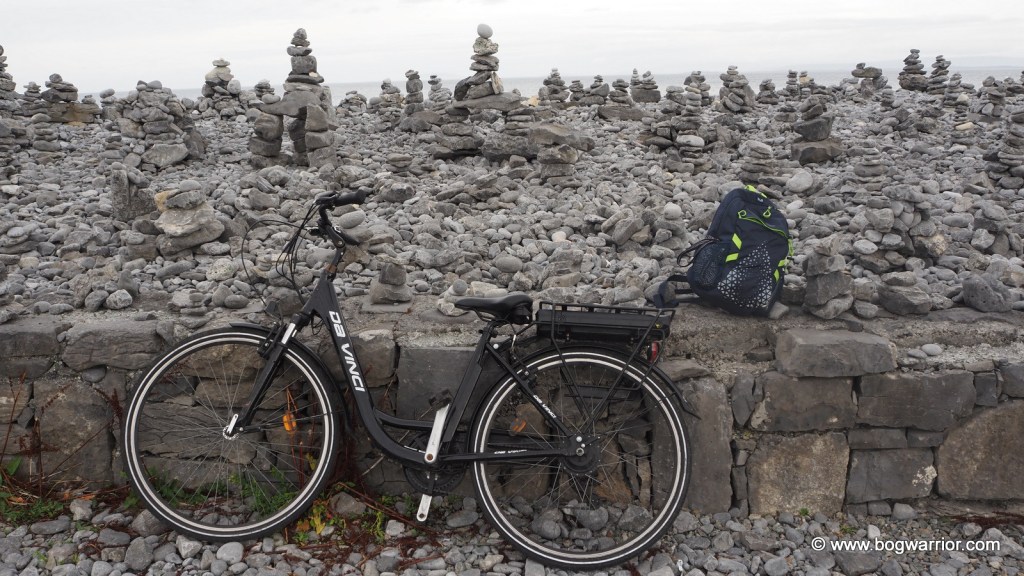
For this visit, I hired an electric bike and loved it! There are two main routes around the island and because I had this extra firepower, I chose the more challenging high road. The nice thing about travelling around all three Aran Islands is that there isn’t that much vehicular traffic, so it’s very safe. The roads can be a bit bumpy in places so watch out for that. The natives speak Irish as their first language but they have fluent English. Enjoy resurrecting your rusty Leaving Cert Irish…

Dún Aonghasa

A postcard from almost the edge

Dún Aonghasa is a prehistoric fort and probably Inis Mór’s best-known tourist attraction. It is amazing for what it is, and it looks pretty impressive from the many aerial photos you’ve undoubtedly seen. This is where I’m going to be controversial and argue that it isn’t a must-see if time is of a premium to you. I honestly think it looks more impressive from the air than when you’re on the ground. Anyway, there is a small visitor centre which has lots of information, then an 800m walk up to the fort. This takes you over some rough ground, which proved to be a challenge to the flip-flop-wearing people I spotted. The fort itself consists of 3 dry-stone ramparts and the remains of a fourth. Perhaps its most distinctive feature is where it stops abruptly at the edge of a sheer cliff. One misstep and into the Atlantic you go. Not that it stopped the many people who wanted to take a selfie. The views are nice though.

The Wormhole/Poll na bPéist

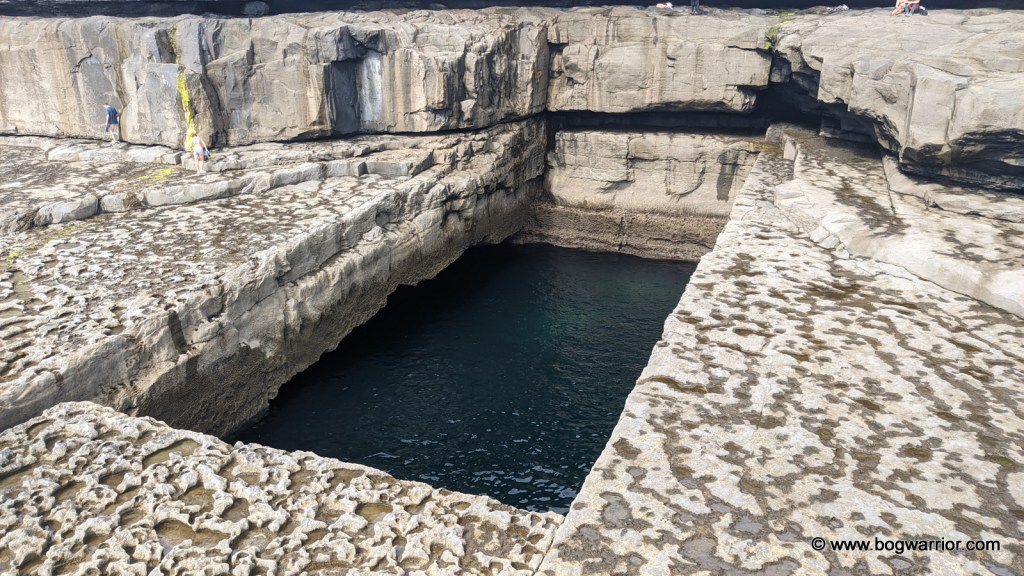
Somebody goes diving

This was my favourite part of the day. The Wormhole is a naturally-occurring blow-hole which is 25m long and 10m wide. It’s almost a perfect rectangle which makes it even more striking. It came to prominence when Red Bull held diving competitions here in 2014-2017. There are videos on YouTube if you want to watch lunatics at work! There were no TV crews or diving rigs to be seen when I visited but it made it no less spectacular. Several people dived into the water while I was there.

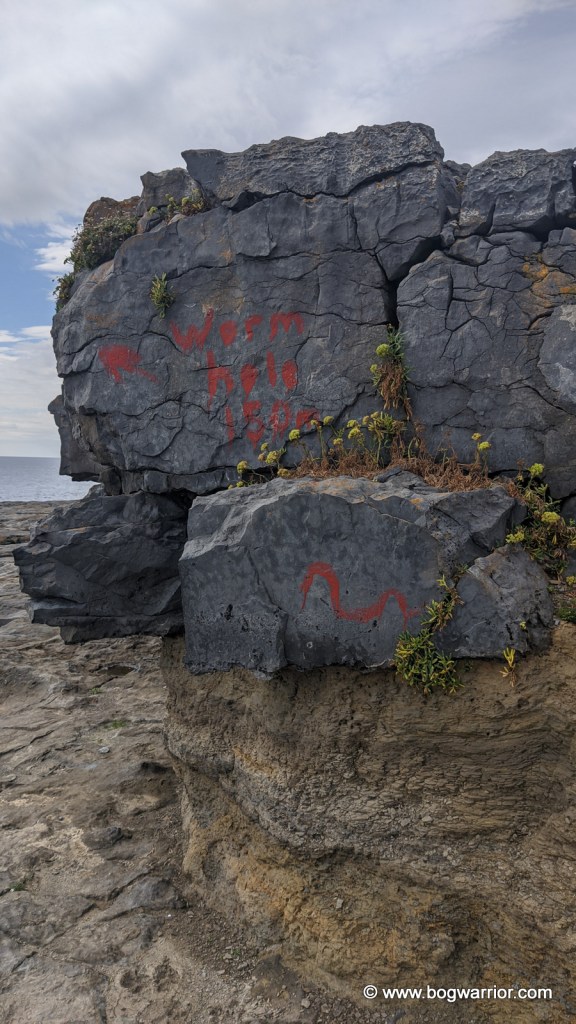
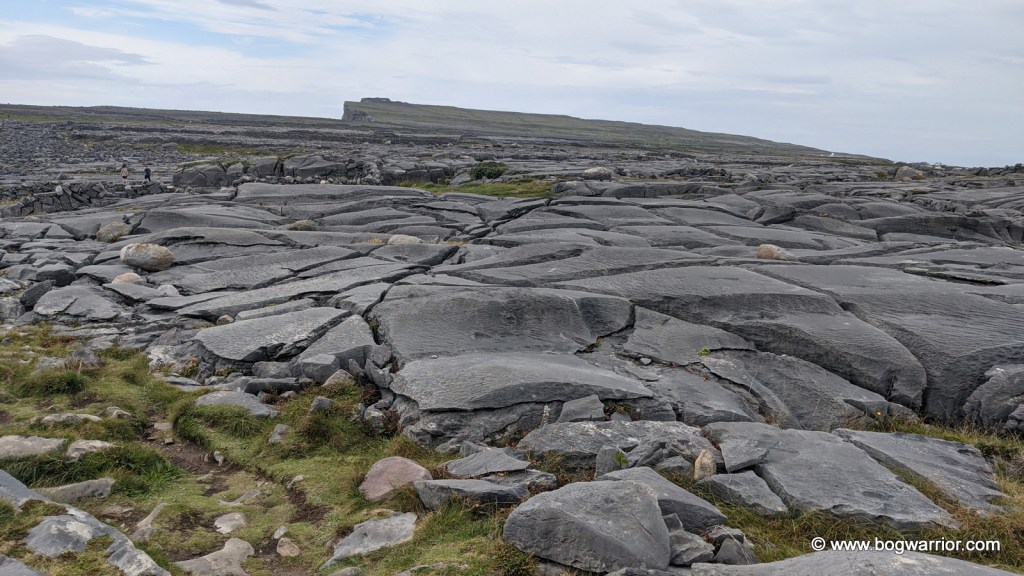
The walk out to the wormhole can be a bit tricky so I strongly advise you to read and read again the directions for how to get there. We took the scenic route which turned out to be a bit of a time-sink, though it did take us across a spectacular karst limestone landscape. A kind soul used a paintbrush and red paint to give directions to the Wormhole. Should you decide to try and find this amazing place, they will quickly become your favourite person.

Kilronan

Kilronan is the main village on the island and where you’ll start and end your journey. It has shops of all sorts, including ones selling the inevitable Aran Sweaters. It also has a Spar supermarket which looks to be reasonably large. Because there was a ferry to be caught, I didn’t get to see as many of the highlights of the island as I’d like to have. This, naturally, is a reason to return.

Modern twists on a traditional design

Getting There

All three islands can be reached by ferry or by air. Aran Islands Ferries in Galway runs regular ferries from Rossaveel in Connemara. They have a shuttle bus which brings people from Galway City centre out to the ferry. Alternatively, you can travel directly to Rossaveel and depart from there. On this occasion, I took the Galway shuttle bus/ferry combo.

Two ferry companies operate out of Doolin, County Clare: Doolin Ferry Company and O’Brien’s Ferry.

There are airstrips and small airports on all three Aran Islands. These are serviced by Aer Arann, which flies out of Inverin Airport in Galway. The flights are quite short so this may suit some people more.

Getting Around

As you might have guessed by now, you won’t be bringing your own car to Inis Mór. You can walk, of course, but there are other options. You can hire a mini-bus or a guided tour by pony and trap. These can be pre-booked, though in my experience there always seemed to be people offering these to people disembarking from the ferry.

Bikes for Hire on Inis Mór

Aran Islands Bike Hire , which is located just off the pier in Kilronan, has a good selection of bikes on hand. As well as regular bikes and the aforementioned e-bikes, they hire out buggies and tandems.

Other advice

Google Maps is your friend. Even though there is very little Google Streetview coverage of the Aran Islands, the directions to the various places still work fine. Signposting on Inis Mór is patchy so definitely don’t rely on that.

Inis Mór is too large to get around in one day so take a look at a map and decide what you want to see this time around. You won’t get to see everything if you’re on a day trip.

The shops and pubs all take plastic, so you don’t have to load up on cash before you leave.

Wear sensible footwear if you want to do any exploring at all.

Derrigimlagh Bog – Be Not Here Now

Derrigimlagh is a large expanse of blanket bog, halfway between Clifden and Ballyconneely in County Galway. Perhaps because of its location so close to the Atlantic coast, it has played host to two significant events in 20th-century history. One by accident, the other by design.


Marconi’s Wireless Station (1907)

On 12th December 1901, the world’s first Transatlantic wireless message was sent from Poldhu, Cornwall to an abandoned hospital in St. John’s, Newfoundland. The man receiving the message was the person who had created the technology behind it – one Guglielmo Marconi. After this early success, Marconi began the search for a site more suitable for a commercial operation. He finally settled on Derrigimlagh Bog which was 7km from Clifden, Co. Galway in Ireland. There were several reasons for choosing Derrigimlagh. It was close to the Atlantic Ocean on Ireland’s west coast, there was no shortage of land to build what was needed and there were ample natural resources onsite. The peat bog and the lake would supply enough fuel and water to keep everything running smoothly. The radio station began operating in 1907, transmitting messages to its sister station 3,000km away in Glace Bay, Nova Scotia.

AI colourised photo of the site 1

The radio station at Derrigimlagh was quite an extensive complex. The antenna system stretched out for more than half a kilometre and consisted of 8 masts, each 6m high. A power station was built onsite with six steam-powered generators in the building – three were always in operation, with the other three as backup. A huge condenser building (106m x 23m) was built to store the energy that had been generated and to supply enough “oomph” to get those messages across the Atlantic. (I hope my old science teacher isn’t reading this thoroughly unscientific explanation). Several other buildings were constructed onsite, including housing for workers and a social club. The station did what it said on the tin, and operated successfully for a number of years.

Digital recreation of the antennae, as seen on the BBC’s Coast 22

As the technology improved, Derrigimlagh was superseded by a more powerful station at Caernarfon in Wales. In July 1922 it was attacked by Republican forces during the War of Independence and some of the buildings were damaged. That proved to be the death knell for the station. It was closed and the contents sold off.

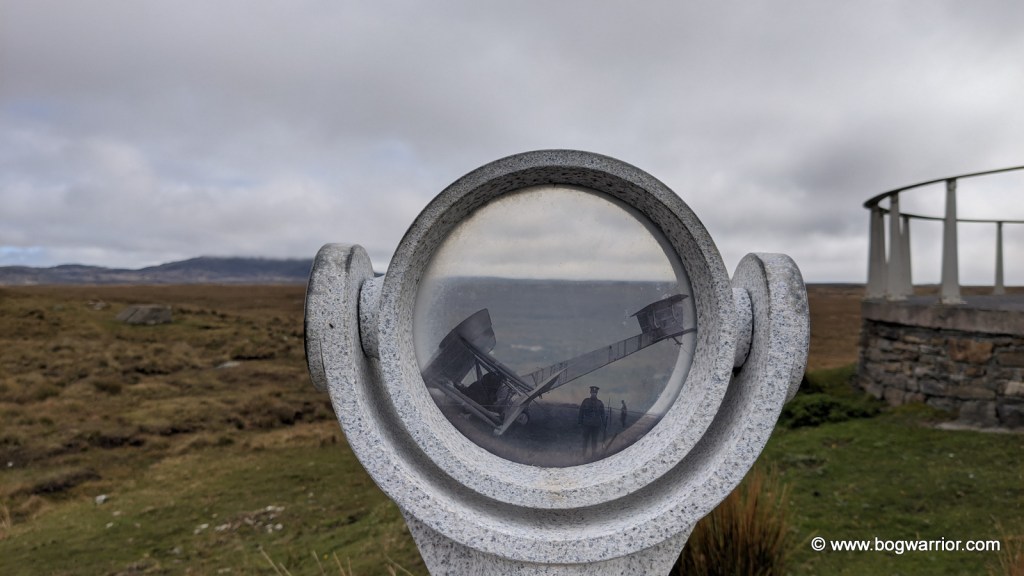
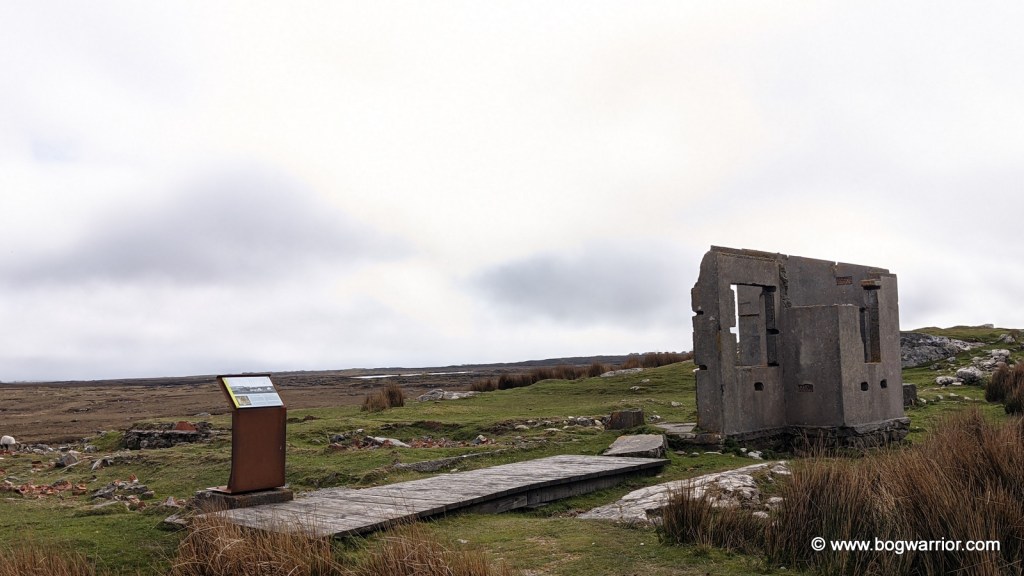
All of this means that despite the significance of this site, and the extent of what used to be here, visitors could easily go for a long walk and return to their cars oblivious. Happily, lots of work has been done to remedy this. Along with pathways and boardwalks, the site is dotted with information stops, photoscopes and helpful signs. All of these definitely help to make you understand how large and unique this site once was. It’s so frustrating that there isn’t even one building standing any more. All we have are tantalising glances of foundations, a few fragments of wall, loose bricks and concrete bases. The photoscopes in particular are a welcome addition because you can look through them and see old photos against the current landscape.

In 2010, a smaller version of the station was recreated for the BBC series Coast. If you’re interested, the episode can be seen here (scroll on to 9:26)

Alcock & Brown’s Soft Landing

On Saturday 14th June 1919, two British pilots – Captain John Alcock and Lieutenant Arthur Whitten Brown set off from Lester’s Field, St. John’s, Newfoundland, Canada in a modified Vickers Vimy aeroplane. Both had flown aeroplanes in World War 1 but they had a slightly more peaceful mission in mind this time. The Daily Mail newspaper (yes, that one) was offering a prize of £10,000 for the first non-stop Transatlantic flight. That’s over €500,000 in today’s money, just in case you were wondering.

Their aircraft was a twin-engined bomber which had been modified for the crossing. Out went the bomb racks and in came extra fuel tanks and oil. To stay warm, both wore electrically heated clothing, Burberry overalls, fur gloves and fur-lined helmets. Alcock took the controls of the plane while Brown did the navigation.

Inevitably, the flight was incident-packed and not in a good way. 3½ hours into the journey, the plane’s wind-driven electrical generator failed. That deprived them of radio contact, their intercom and the heating. They then encountered thick fog which made navigation impossible – Alcock nearly crashed the plane into the sea after losing control of the aircraft. Now freezing cold because of the lack of heating, they encountered a snowstorm. After nearly 16 long hours in the plane, the duo finally made land again. They spotted the antenna at the Marconi station and that helped them get their bearings. Alcock landed the plane in what he thought was a nice green field. Anybody familiar with that part of Connemara would simply say “lol”. Anyway, both men emerged safe and sound from their plane. The plane itself was in reasonably good condition despite the flight but it soon began to sink into the soft ground.

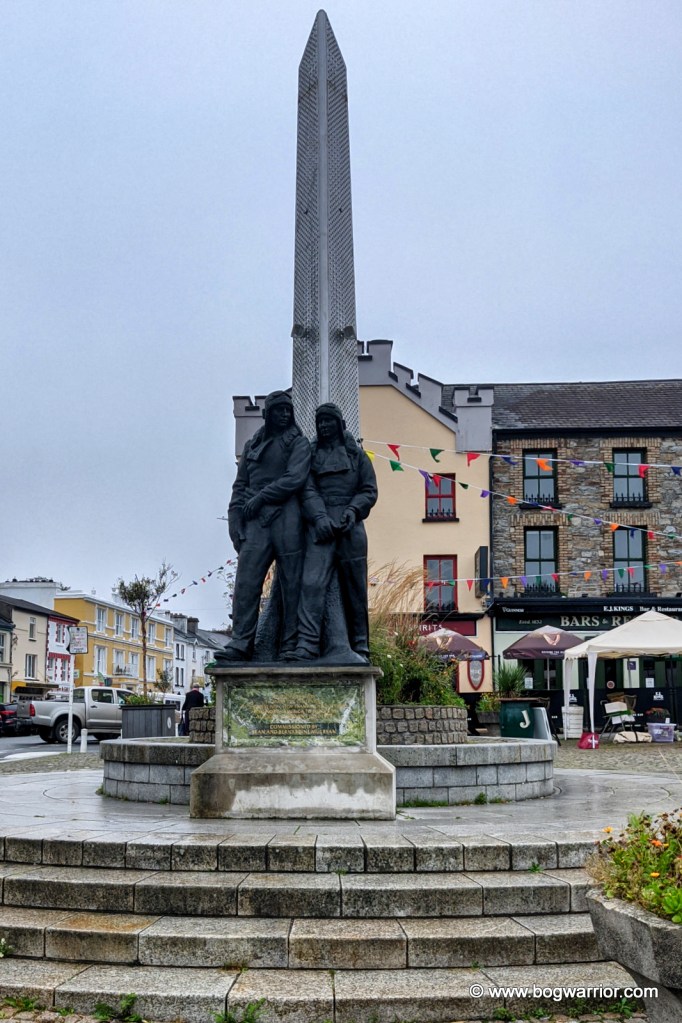
The plane was soon removed from there and can now be seen in the Science Museum in London. The spot where they landed in Derrigimlagh is now overlooked by a viewing platform. Strangely, there is a second Alcock and Brown monument in the area but it’s on the L5132 road to Errislannan.

To sum up, if you want to spend a pleasant few hours walking in the fresh air and taking in the bleak but beautiful Connemara scenery you could do worse than come here.

How to get here: Navigating to here should be marginally less arduous than Alcock & Brown’s flight across the Atlantic. Derrigimlagh Bog is on the R341 between Clifden and Ballyconneely. There is a small car park at the entrance. Needless to say, wear comfortable footwear and at the very least, bring some water with you. You’ll be out there for a while.

Footnotes

  1. Original version of this photo is from the Laurence Collection and was digitised by the National Library of Ireland ↩︎
  2. Screenshot taken from Coast, Series 5, Episode 5 “Galway to Arranmore Island” (2010) ↩︎

Roscam – Never finished?

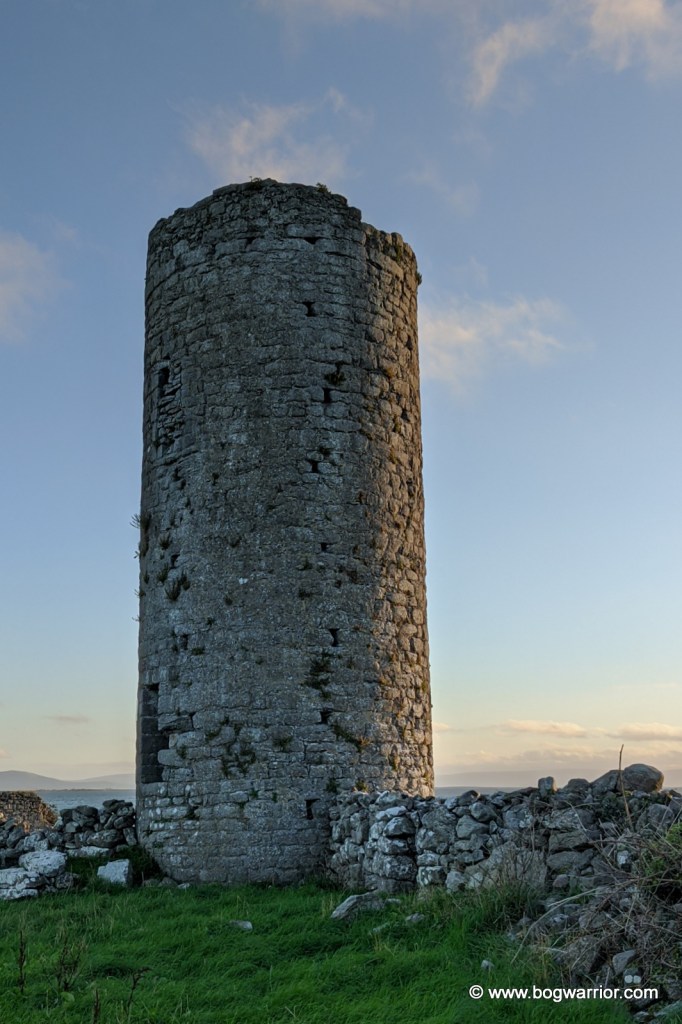
A recent trip to Galway afforded me the opportunity to “bag” another round tower. And so, I went in search of the tower at Roscam, which is on the outskirts of the city, overlooking Oranmore Bay. It’s a beautiful location, though the view is hampered somewhat by the inevitable development on the other side of the bay.

Very little is known about the monastery which once stood here. It is thought it may have been established here in the 5th century, which would make it one of the oldest monastic settlements in Ireland. It has been associated with St. Patrick (yep, that one) and with Odran, brother to St. Ciarán of Clonmacnoise. In 807, the site was attacked by those serial monastery pillagers, the Vikings. The monastery might also be where the bones of King Brión mac Echach Muigmedóin were brought to by Saint Aedus. There are question marks as to whether King Brión ever actually existed so you can make up your own mind.

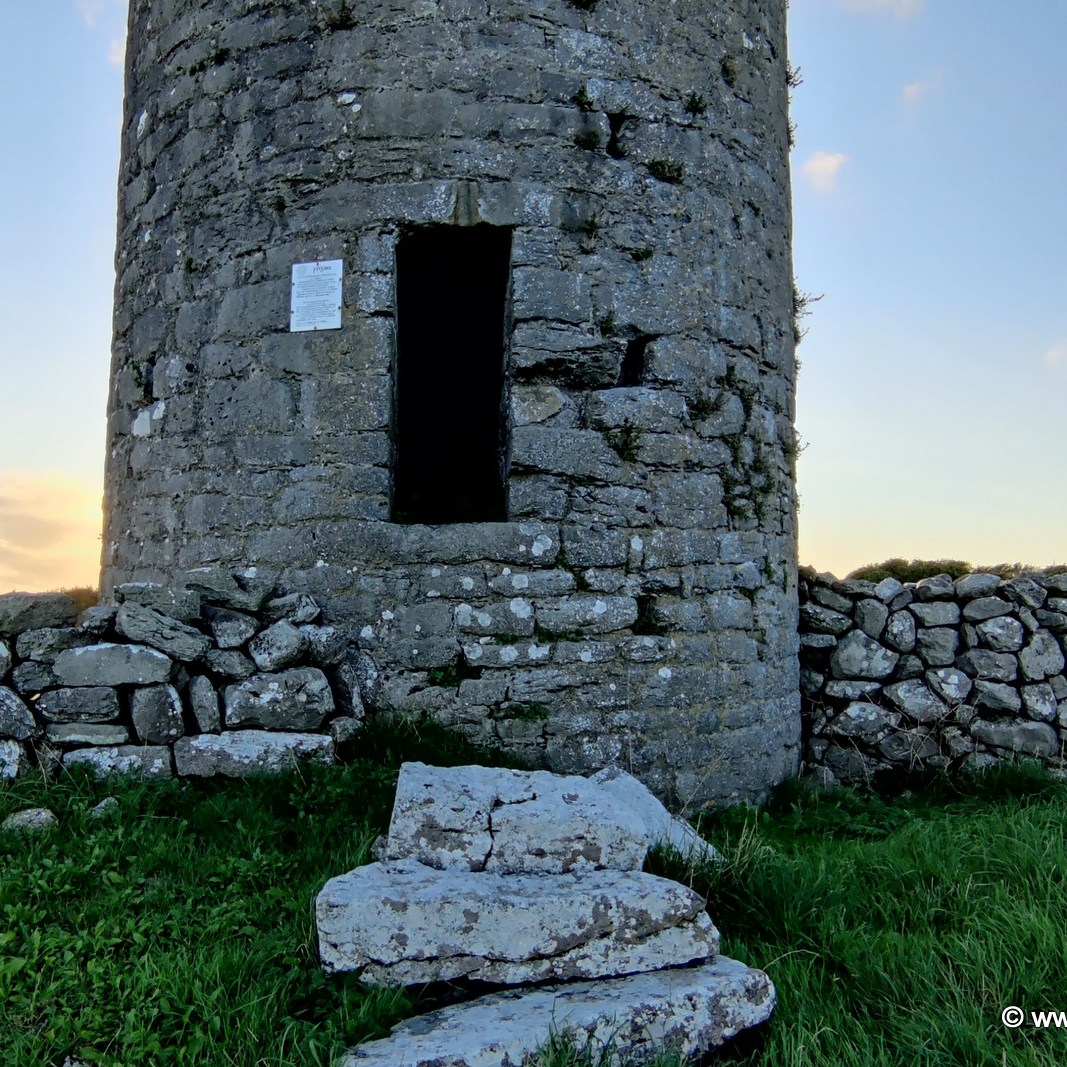
The putlock holes are still visible on the tower

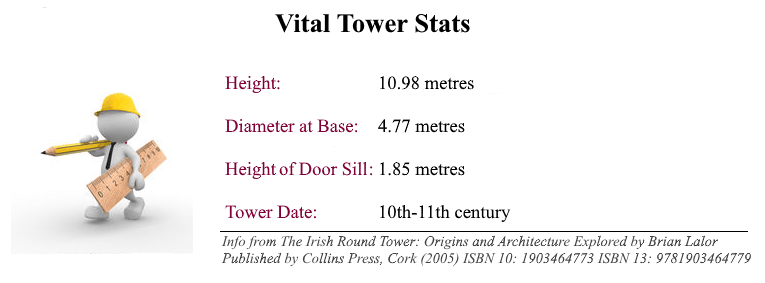
The tower stands 10.98m tall and is unusual for two reasons. One is that the lintelled doorway is quite low to the ground. The other is that the tower still has numerous putlock (or putlog) holes on its external walls. These were used to support scaffolding while the towers were being built, but were covered up afterwards. The presence of these holes in the tower raises doubts as to whether this particular one was ever finished. There is just one window in the tower, directly over the door. At some point afterwards, somebody attempted to add some height to the tower but the new stonework is not of the quality of what went before.

The church, and some company…

Close to the tower are the ruins of a medieval church. I wasn’t able to get near them because of the extensive stone walls and unclimbable gates in the area. Some of these are the remnants of ancient fortifications and they’re still doing their work effectively in 2021!

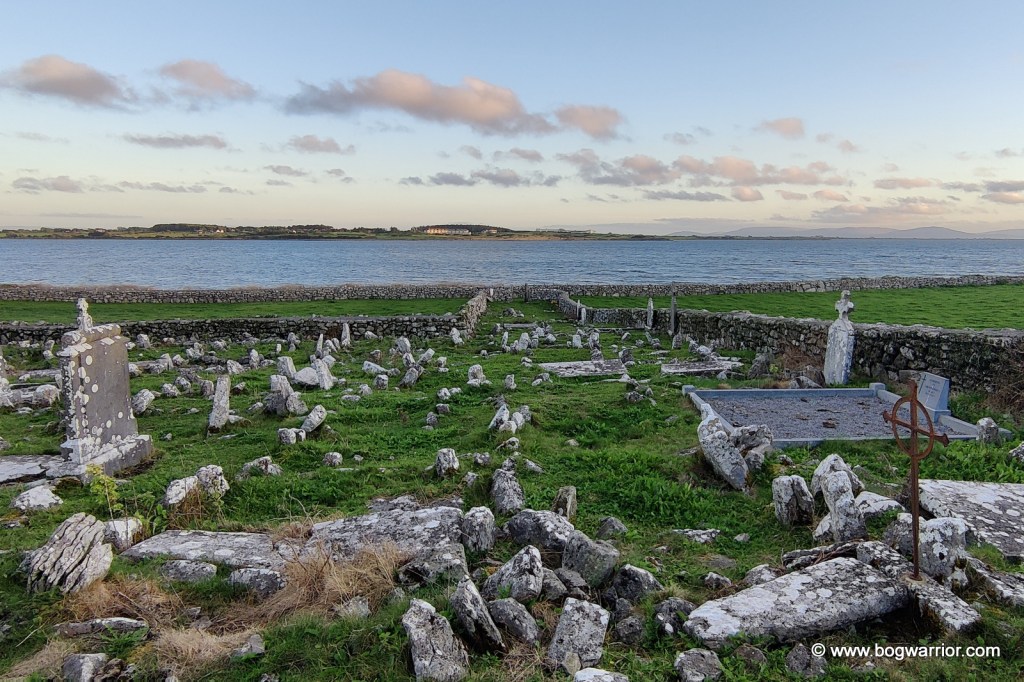
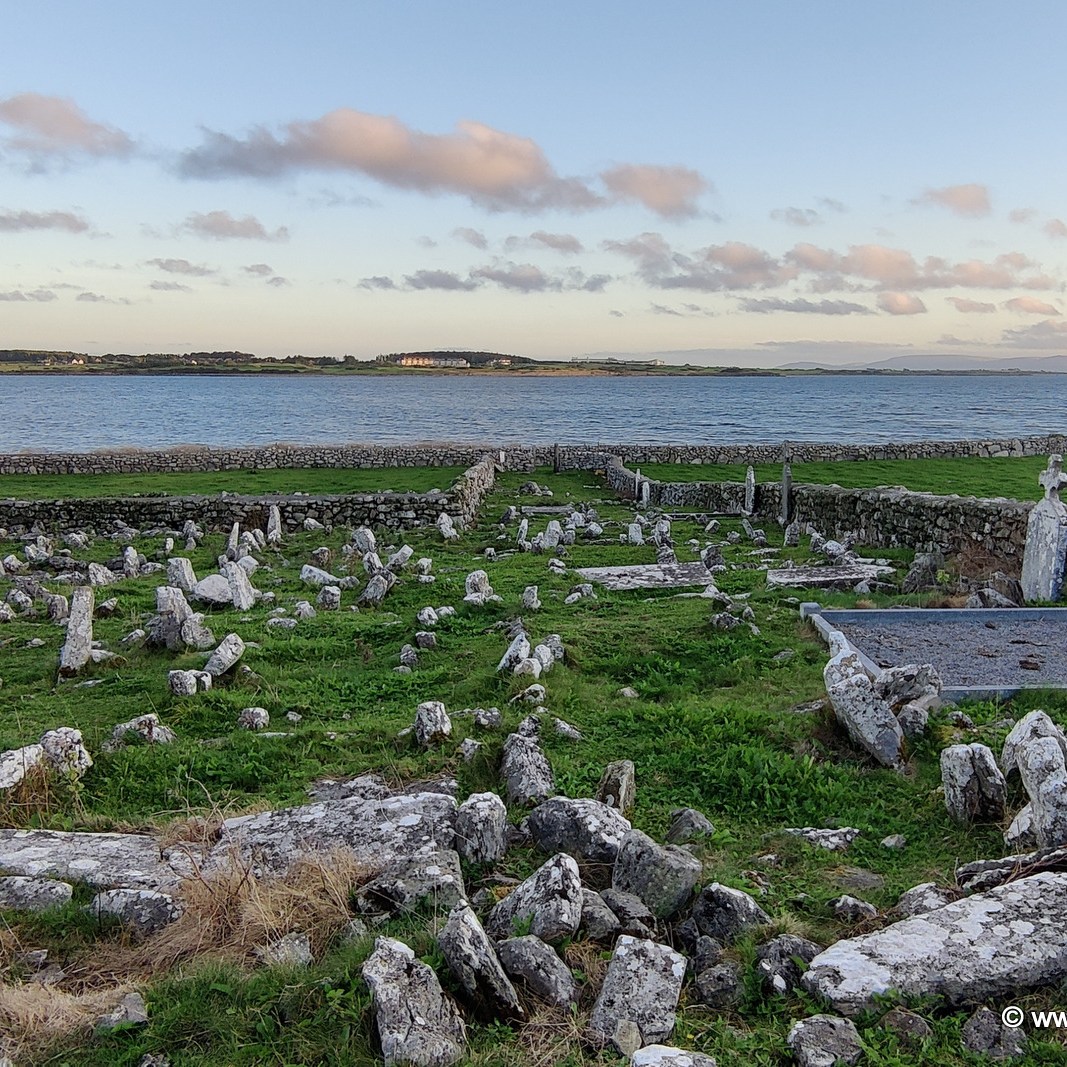
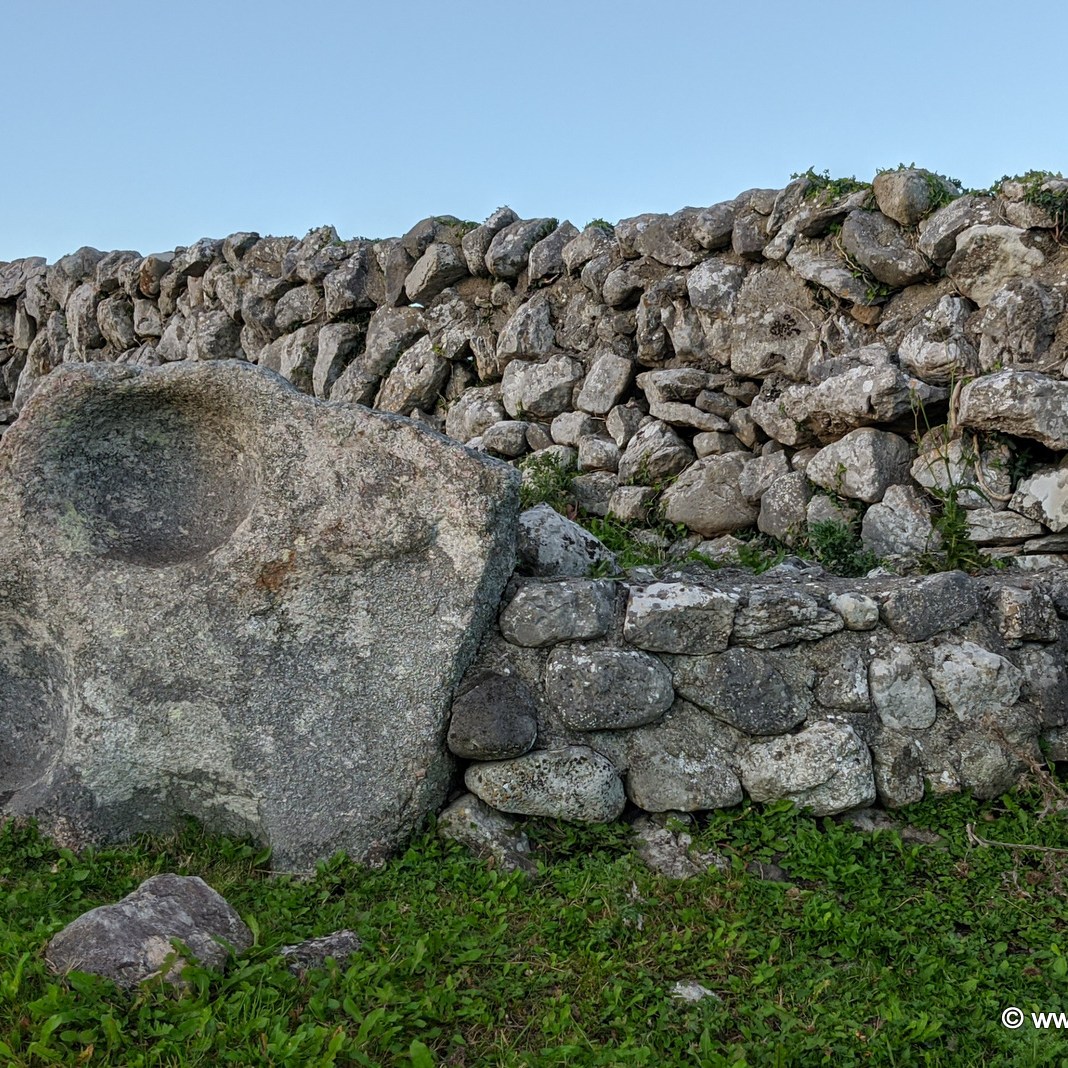
Far more interesting is the ancient graveyard which overlooks the bay. It doesn’t appear to be still in use but it looks like it was used extensively over the centuries. It’s populated with lots of broken, illegible headstones and rocks and it’s wonderful. There are two large bullaun stones in there as well, one of which is associated with St. Patrick. It seems the great snake banisher was also a dab hand at making round dents in big rocks.

One of the bullaun stones in the grave yard

By a long shot, this was the trickiest round tower to get to. For better or worse, I accessed it by driving along the Rosshill Road, then walked (carefully!) along the rocky beach that runs south of the site. Then some clambering over stone walls and navigating electric fences came into the equation. The tower is in the middle of a working farm, so naturally the animals come first.