Build it and they will come…or not

Yet again, my talent for visiting heritage sites under scaffolding does not disappoint

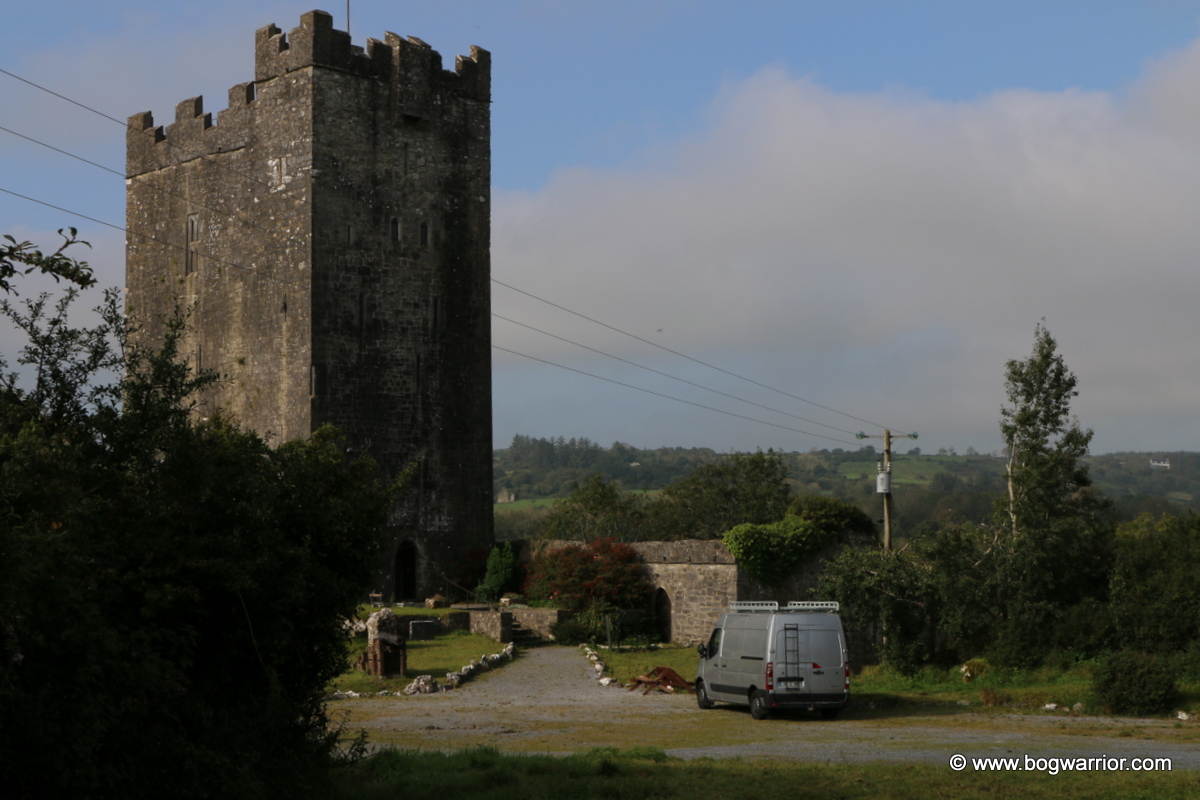
Ormond Castle in Carrick-on-Suir is a little bit different to your usual castle visit. For starters, the site isn’t obviously a castle. What catches the eye aren’t the ruins of the castle which are there, but the Elizabethan Tudor manor house built onto it. As we know, Tudor manor houses aren’t all that common in Ireland. This one could’ve been soo much more Elizabethan if only Queen Elizabeth I (i.e. Ms Elizabethan herself) had bothered to come and visit.

Anyway, let’s go back a bit in time. A castle was first built on the site in the fourteenth century. At the time it was very close to the River Suir (as depicted in a rather nice model that’s on display in the visitor centre) and was strategically important. It was originally owned by the Wall family but was given to the powerful Butler Family. James Butler would later become the first Earl of Ormond. The Butler family, incidentally, also owned Kilkenny Castle for many centuries.
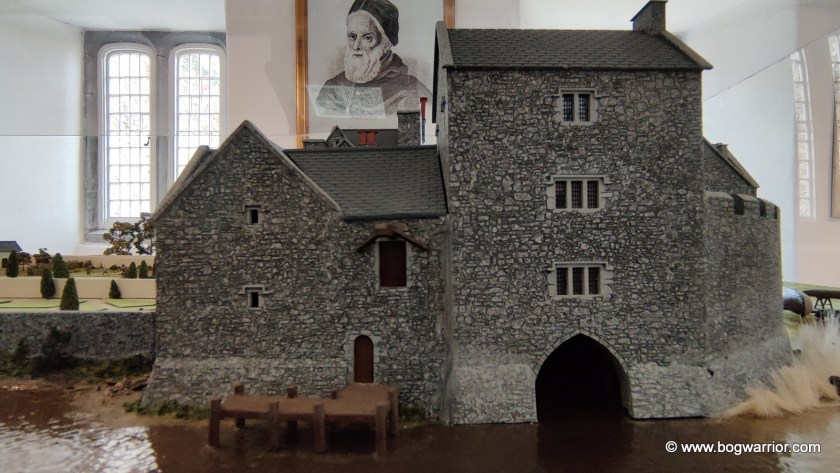
Model depicting the castle and the river

Over 200 years later, Thomas Butler, the Tenth Earl of Ormond built the Tudor manor house onto the castle. Black Tom, as he was also known, was a cousin of Queen Elizabeth I through her mother Anne Boleyn. He became close friends with Elizabeth. So close, in fact, that there were rumours they were more than good friends. Elizabeth was known to refer to him as her “Black husband”.
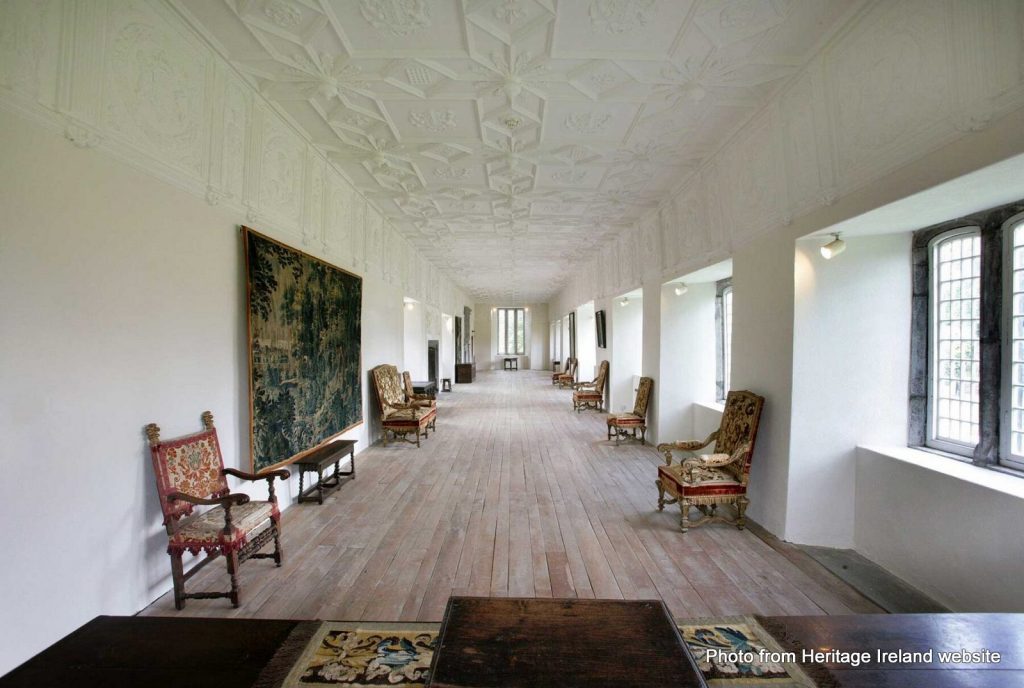
Photo from Heritage Ireland website
The Long Gallery (photo not mine)

Thomas invited Elizabeth to come visit him in Ireland and she accepted the invitation. In 1565 he built the manor house here, in preparation for her visit. As an Elizabethan-style house, it had larger windows, brick chimneys and a layout different to traditional Irish buildings. It has a beautiful long hall that has some pretty amazing stucco plasterwork on the walls and ceiling.

Sideways view of the model, showing how the manor house was built onto the castle

Disappointingly for Tom, Elizabeth was long on promises but short on action. She never did get around to visiting the manor house he had built for her.
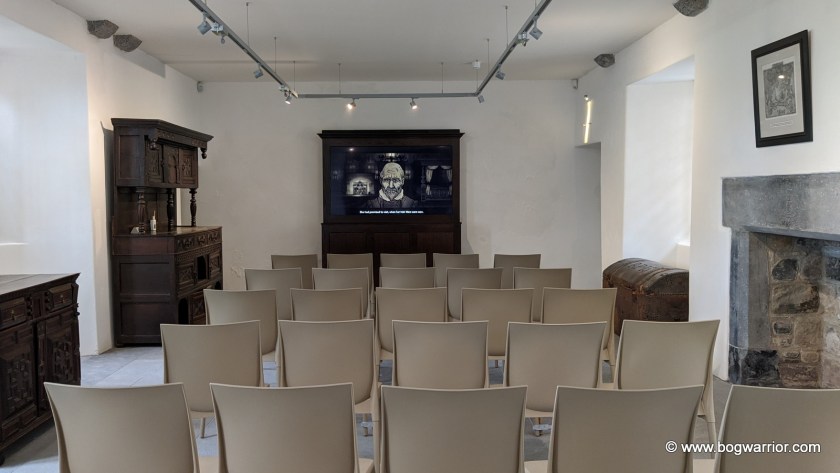
“She had promised to visit when her Irish wars were won”

In 1588 Thomas became a Knight of the Garter and in 1597 he became Lieutenant General of Ireland in 1597. He also found the time to get married 3 times and fathered at least 16 children (4 inside the marriages, 12 elsewhere). When he died in 1614, his illegitimate son Piers FitzThomas Butler of Duiske benefited most from his will. This led to rumours that Piers might’ve been a child he’d had with Elizabeth.

Over time the financial clout and power of the Butler family diminished. The house was abandoned in the late 17th century and fell into ruin. The Butlers handed the site over to the Irish state in 1947

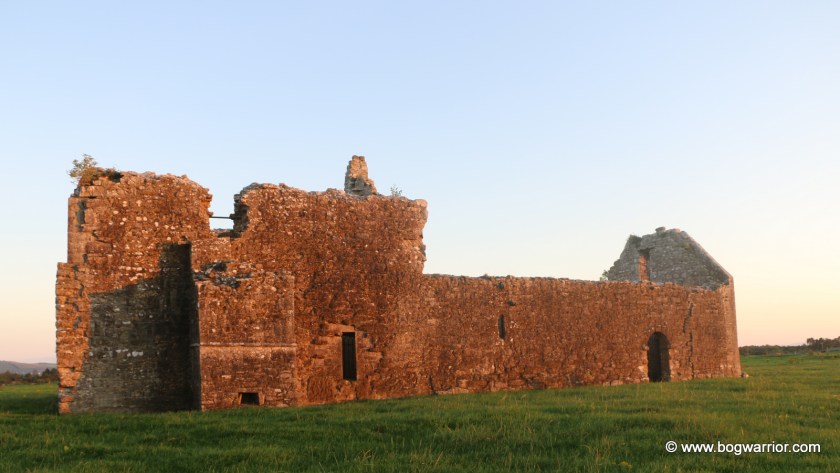
Some of the castle ruins

The castle and manor house have undergone significant restoration since then. In recent years the manor house was plastered over again. If you do a google image search, you can see plenty of photos of the manor house with its stonework exposed.

Even if Elizabeth couldn’t be bothered coming to visit, it is worth a trip if you fancy looking at something that isn’t yet another castle. There are some remnants of the castle on the site, including the tower house. The guided tour didn’t bring us in there but perhaps that may change in the future. There’s also a short film on the history of the castle and a museum with some interesting bits and bobs

Getting There

The castle closes over the winter time, so check Heritage Ireland’s website before planning your visit. As of 2024 its season is running from March-November. More details here

The castle is accessed through the park you can see on Google Streetview. Carrick on Suir is a busy town so you may not find parking right beside the castle. Astonishingly, the payment machine in the nearby council-run New Street Car Park didn’t offer a contactless card payment option. If you don’t have enough coins to hand (luckily we did) then you’re required to download an app and pre-load it with credit. That’s fine if you park in Co. Tipperary on a regular basis. If you’re on a one-time visitor then it’s daylight robbery.
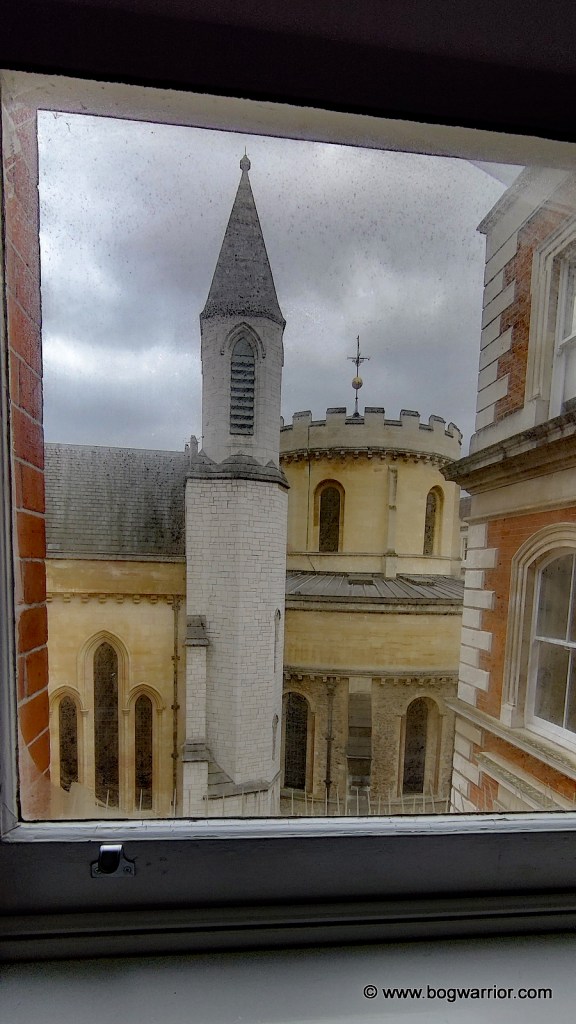
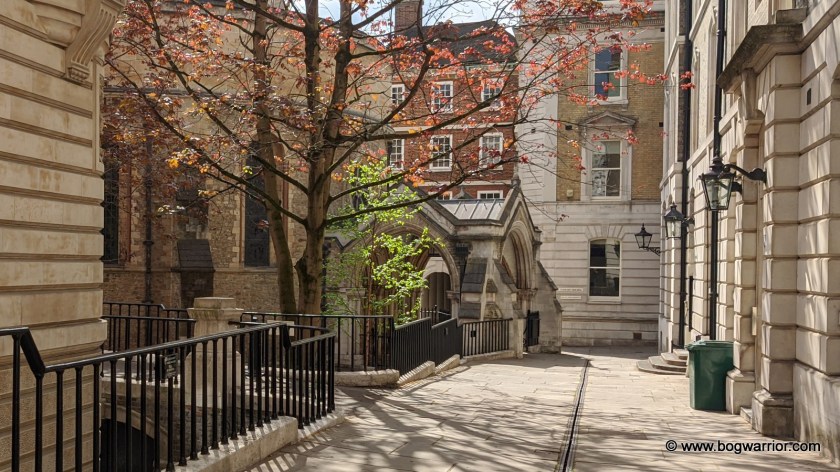
Temple Church

I haven’t posted here for a while so I have some catching up to do. The first new/old post I’ll do is about the Temple Church in London. When staying in the city last year, I had the good fortune to stay in a (then) very reasonably priced hotel that was right next door.

I knew very little about the church other than that it popped up in The Da Vinci Code which I read about 20 years ago, and that it had something to do with the Knights Templar. It turns out to be far more interesting than that and has connections to one of my favourite places in Ireland.

The church is at the end of a laneway, a short walk from Fleet Street. It’s nestled in the middle of London’s legal district and is surrounded by impressive looking office buildings and gardens. It’s also nice and peaceful which is always welcome in this part of the world.

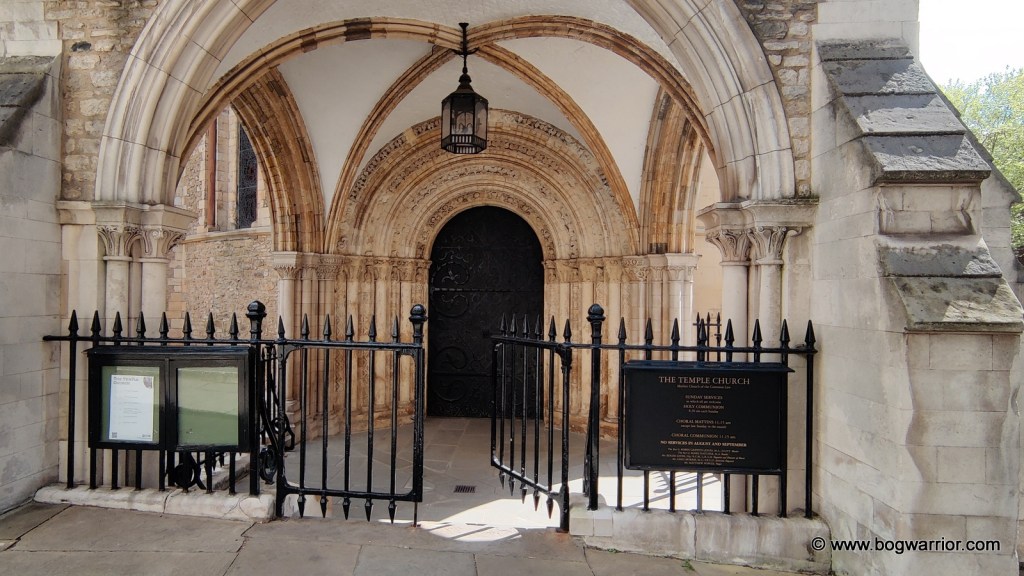
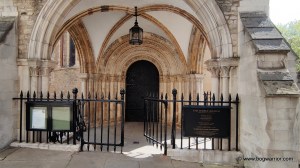
The first thing of note when you reach the church is its impressive looking West Doorway. It’s the entrance into the round part of this unusual church – more of that in a moment. Part of the decorations on the doorway include heads wearing turbans, caps and buttons. Some of these point to the interesting history of the people who built it.

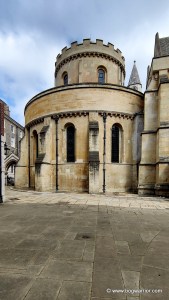
The organisation which became known as the Knights Templar was founded in 1118. One of its aims was to protect pilgrims travelling to and from Jerusalem. Although they were based in Jerusalem, in time they built a base in London. In 1162 a round church was built here, inspired by the (also round) Church of the Holy Sepulchre back in Jerusalem. A chancel was later added. The area surrounding the church became known as Temple and it became the centre of religious, political and political life in London.

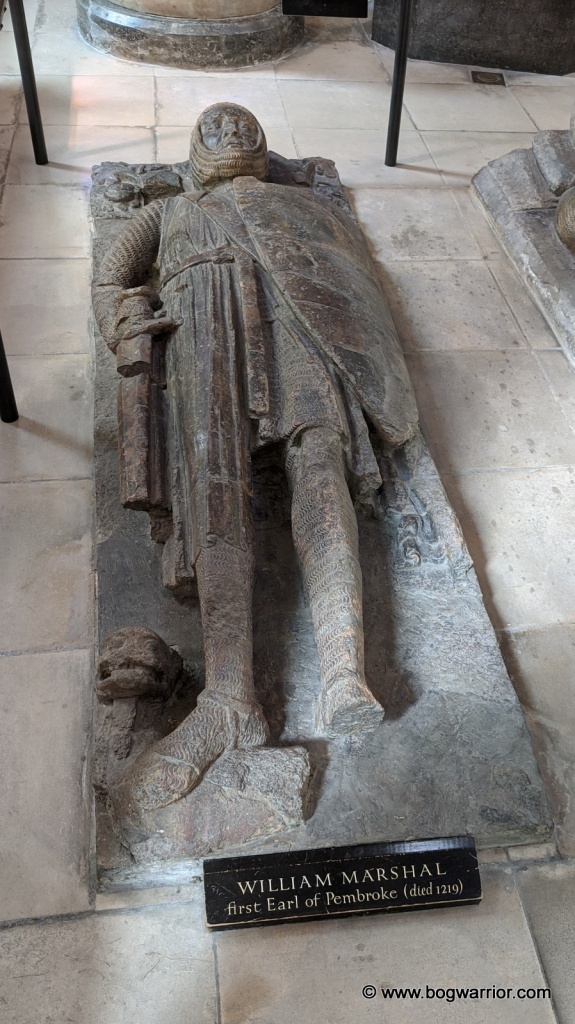
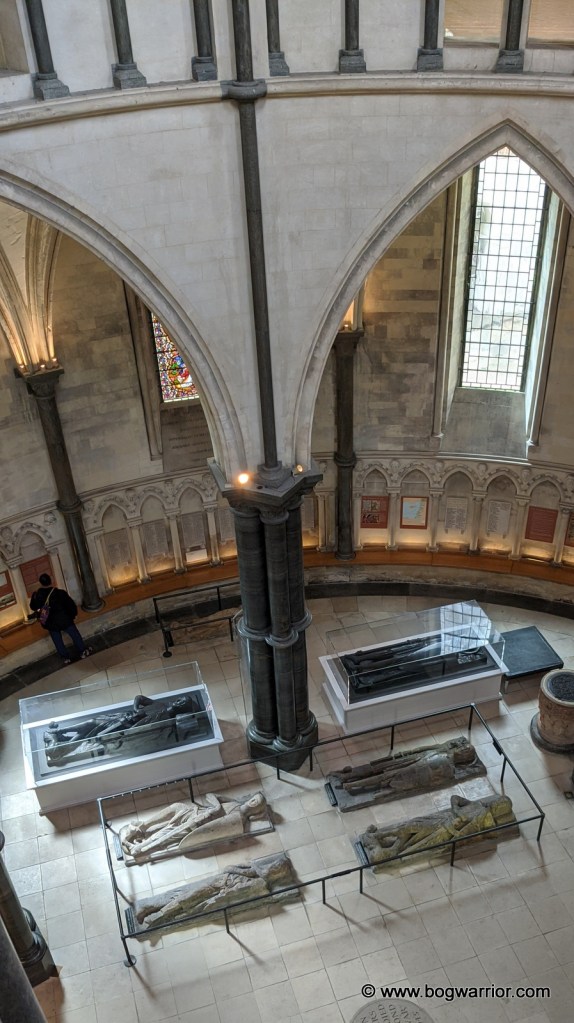
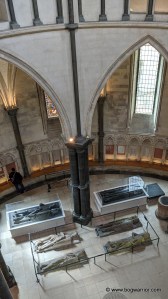
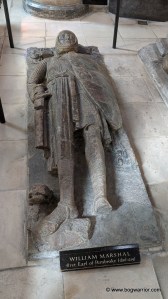
The entrance into the church is just around the corner and once inside, you’re free to roam and get a good look at the place. One of the first things to be seen in the church are 9 male effigies on the floor. The most remarkable of them all is probably that of William Marshal, the first Earl of Pembroke. He has been described as “The Best Knight that Ever Lived”. He certainly lived an eventful life and his influence extended across into Ireland. Amongst other things, he was responsible for the building of Hook Lighthouse in County Wexford 😎 William served four Kings of England and was one of the main negotiators involved in the drawing up of the Magna Carta. Indeed he was one of the signatories of it. When excavations were carried out in the church in 1842, medieval coffins were found under the floor. These are thought to have included William.

Being a tower freak, it wasn’t long before I was heading up the stairs and into the gallery. Perhaps it’s for the best that I didn’t spot any signs of the creepy tiny penitential cell that’s just off the stairs. It’s little more than the size of a broom cupboard. The story goes that an unfortunate man called Walter Bachelor was locked into the cell and left to starve to death in 1301. Is the story true? It isn’t clear but it was just one of the nefarious rumours about the Templars which were floating around at the time. On Friday 13th October 1307, King Philip IV of France and Pope Clement V moved to end the Knights Templar. King Edward II handed the church over to the order of St. John.

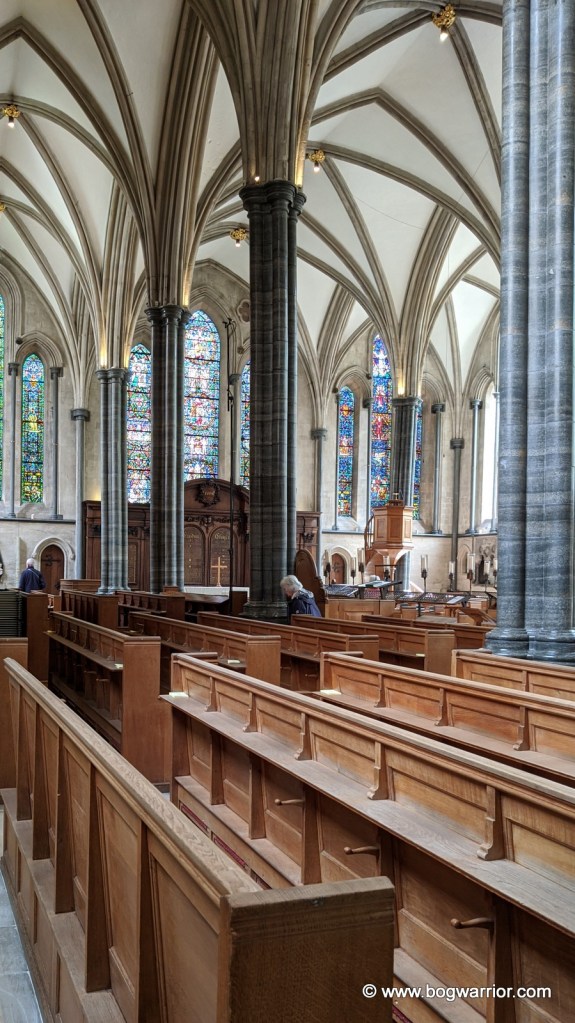
Like just about every other old building, the church was tweaked over the years. Sir Christopher Wren made some changes to it, but nothing like what the Victorians did. Their alterations weren’t universally popular. However, most of that was lost on the night of 10th May 1941 when German bombers dropped over 700 tons of explosives over London. Along with the huge cost to human life (an estimated 1,400 deaths and 2,000 injuries), huge swathes of the city were destroyed. The Temple Church, which had survived the Great Fire of London, was one of the casualties. It was badly damaged during the fire and it took 14 years for the church to be fully repaired.

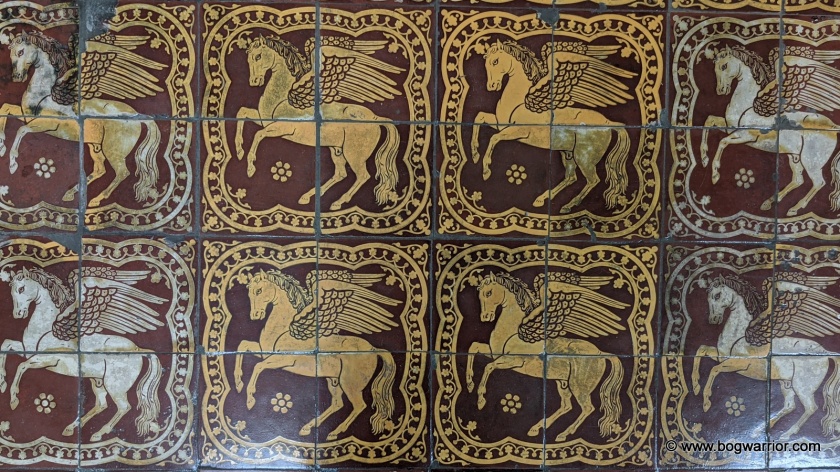
Amusingly, some of the mediaeval-inspired encaustic floor tiles which the Victorians had laid survived. These can be seen up in the gallery and they’re very striking. I also learned a new word – encaustic, encaustic…

The fire had shattered the original columns in the church, so new ones were quarried for it. The originals had been noted for their crookedness, so when they were rebuilding, they continued the tradition. It goes without saying that the fire also destroyed the original church organ. Its replacement came from an unlikely source – Glen Tanar castle in Scotland. The organ had originally been built for the castle ballroom but the acoustics in the room didn’t suit it. (As an aside, I’ve never seen so many deer antlers in the one place…). And so, the organ was gifted to the church by Lord Glentanar and it was shipped down to London. Not only did it sound much much better in its new home, it gained a reputation for being a really great organ. Much of the soundtrack to Christopher Nolan’s 2014 film Interstellar was recorded on this organ, with resident organist Roger Sayer collaborating with composer Hans Zimmer. Unfortunately, I visited on a Monday so I didn’t get to hear one of the church’s Wednesday lunchtime recitals.

Churches to visit are ten-a-penny in London but this one comes highly recommended. Even though it was badly damaged during the war, the painstaking restoration of it is superb. It’s an unusual church with an interesting, sometimes dark history. And by London admission price standards, the entrance fee is pretty reasonable (£5 at the time of writing)
Gallery – click on a thumbnail to enlarge.

Roscam – Never finished?

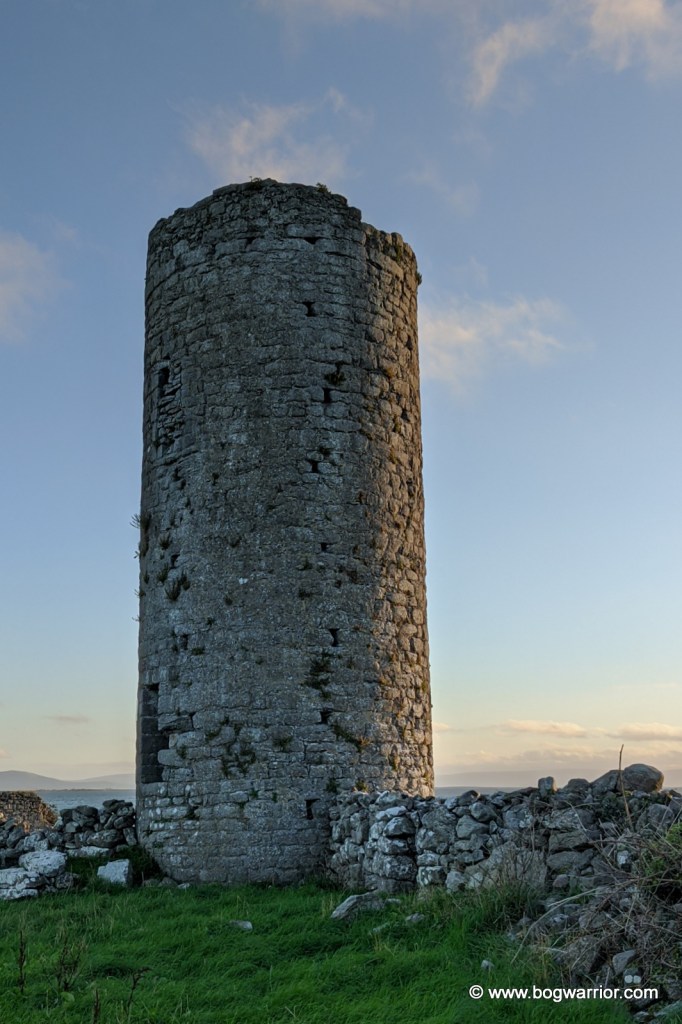
A recent trip to Galway afforded me the opportunity to “bag” another round tower. And so, I went in search of the tower at Roscam, which is on the outskirts of the city, overlooking Oranmore Bay. It’s a beautiful location, though the view is hampered somewhat by the inevitable development on the other side of the bay.
Very little is known about the monastery which once stood here. It is thought it may have been established here in the 5th century, which would make it one of the oldest monastic settlements in Ireland. It has been associated with St. Patrick (yep, that one) and with Odran, brother to St. Ciarán of Clonmacnoise. In 807, the site was attacked by those serial monastery pillagers, the Vikings. The monastery might also be where the bones of King Brión mac Echach Muigmedóin were brought to by Saint Aedus. There are question marks as to whether King Brión ever actually existed so you can make up your own mind.

The putlock holes are still visible on the tower

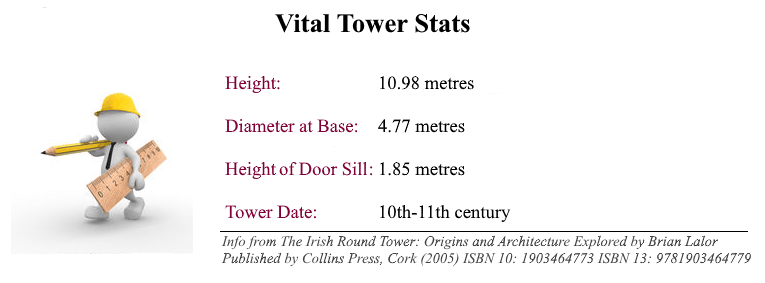
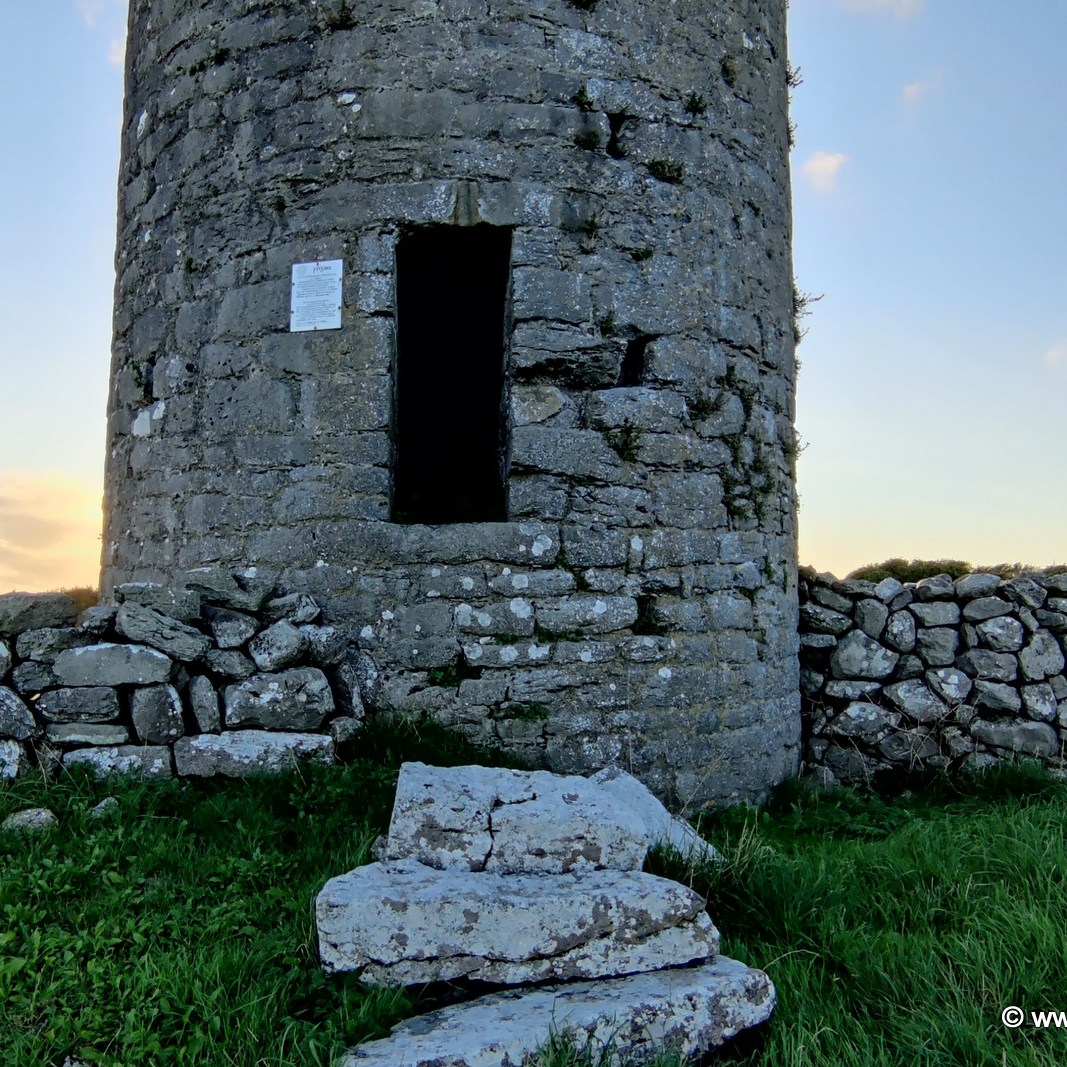
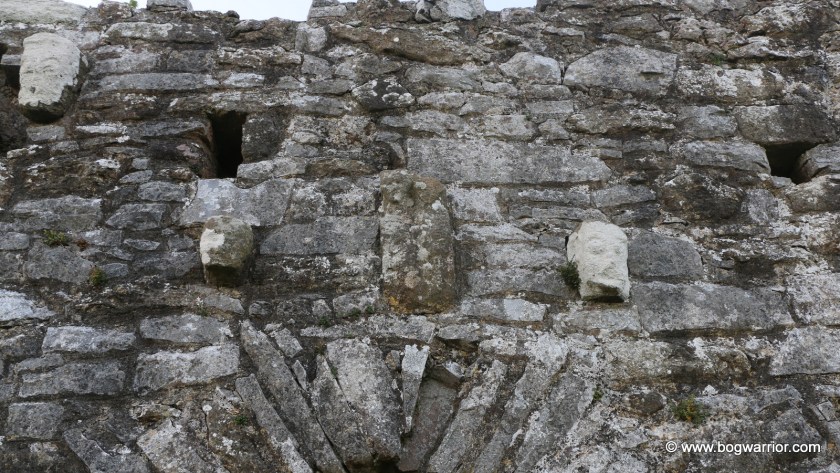
The tower stands 10.98m tall and is unusual for two reasons. One is that the lintelled doorway is quite low to the ground. The other is that the tower still has numerous putlock (or putlog) holes on its external walls. These were used to support scaffolding while the towers were being built, but were covered up afterwards. The presence of these holes in the tower raises doubts as to whether this particular one was ever finished. There is just one window in the tower, directly over the door. At some point afterwards, somebody attempted to add some height to the tower but the new stonework is not of the quality of what went before.

The church, and some company…

Close to the tower are the ruins of a medieval church. I wasn’t able to get near them because of the extensive stone walls and unclimbable gates in the area. Some of these are the remnants of ancient fortifications and they’re still doing their work effectively in 2021!

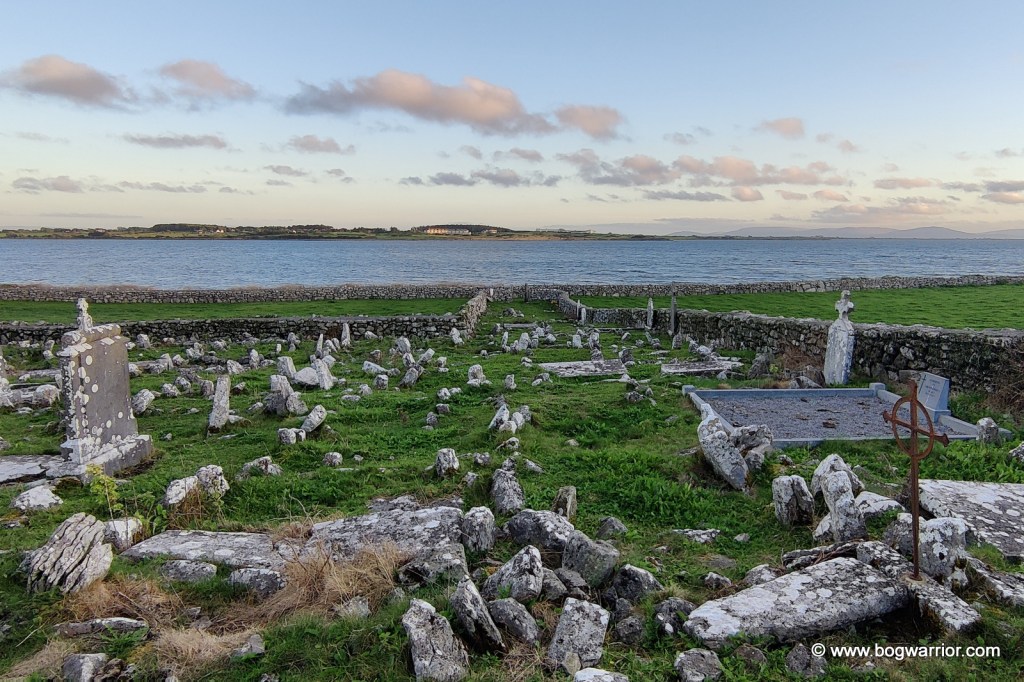
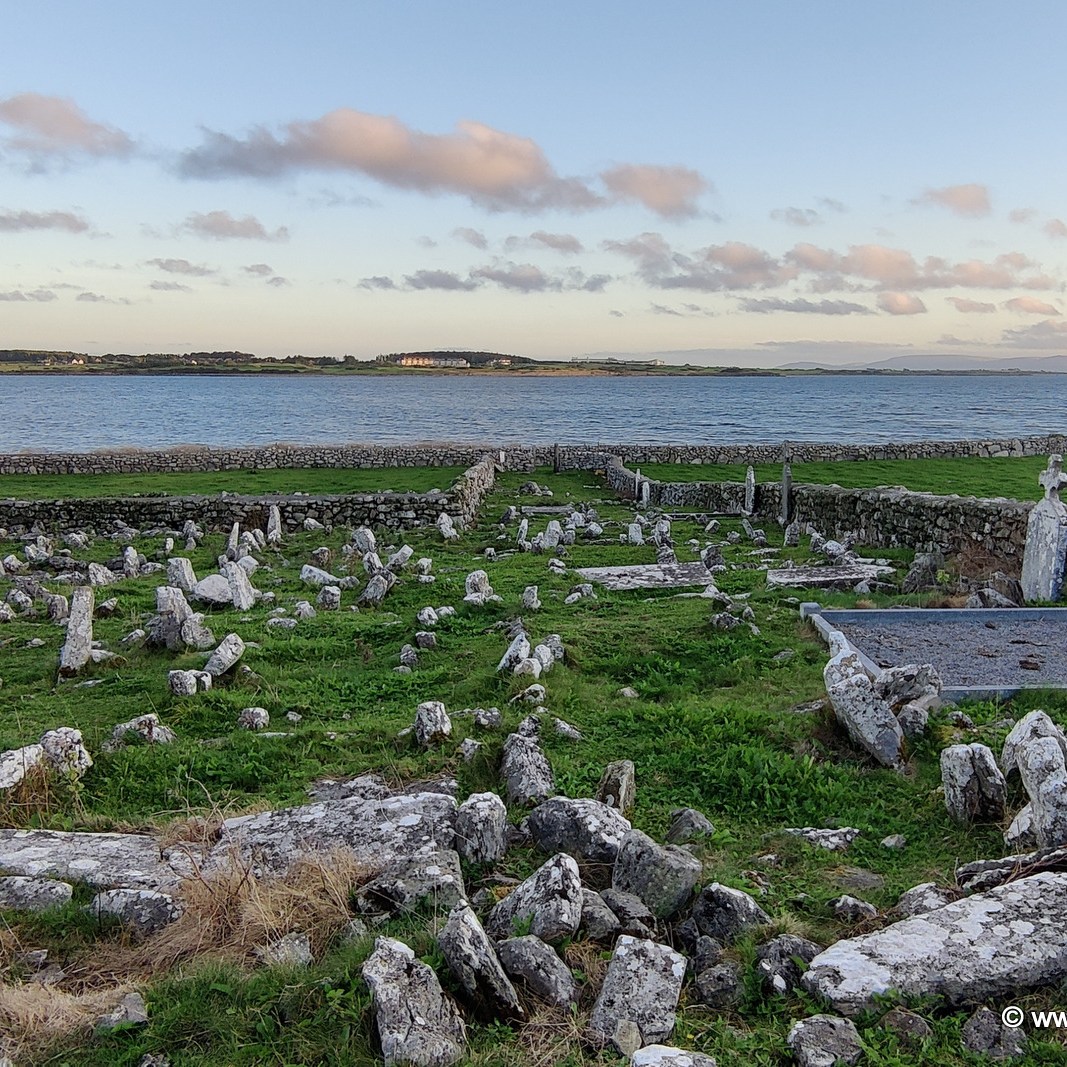
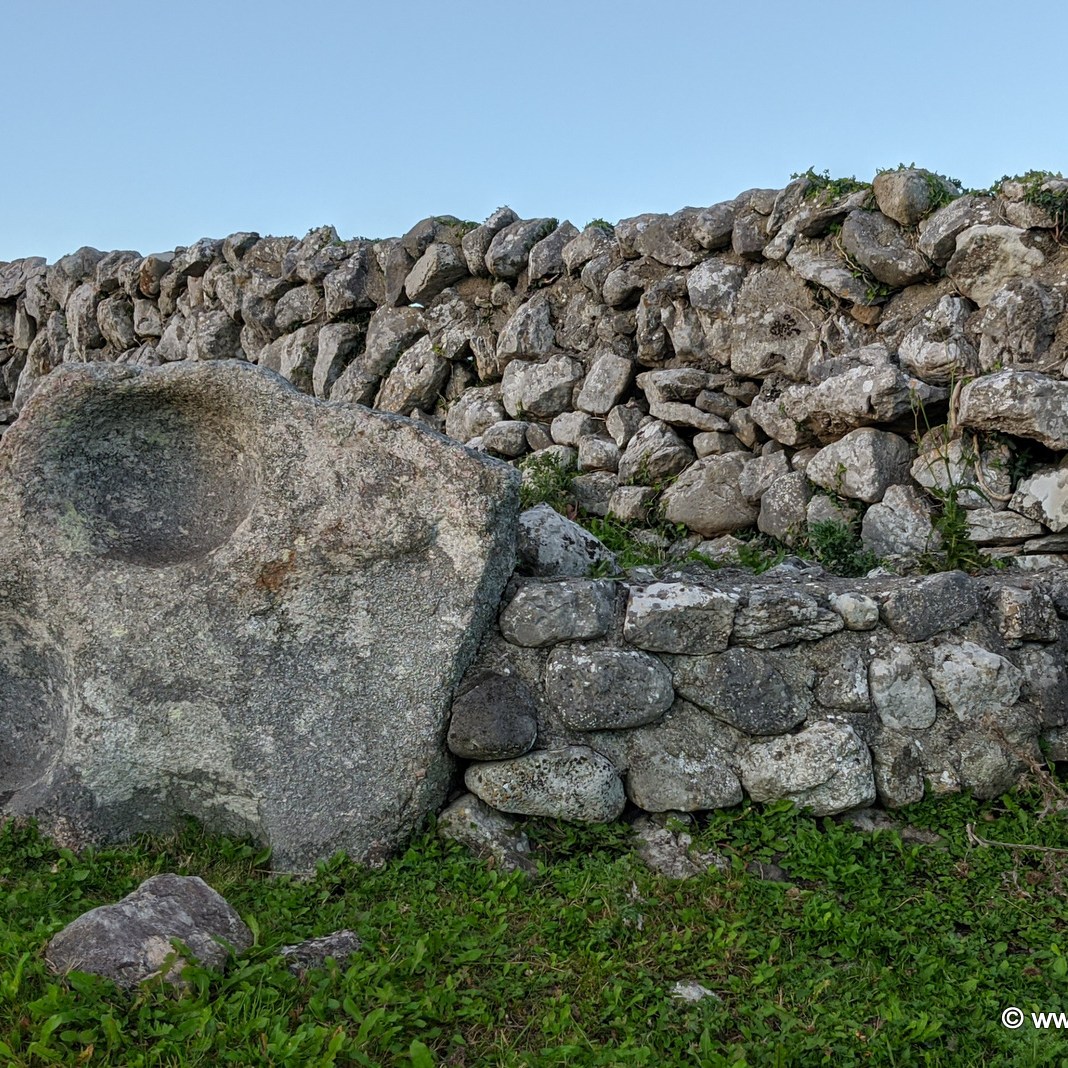
Far more interesting is the ancient graveyard which overlooks the bay. It doesn’t appear to be still in use but it looks like it was used extensively over the centuries. It’s populated with lots of broken, illegible headstones and rocks and it’s wonderful. There are two large bullaun stones in there as well, one of which is associated with St. Patrick. It seems the great snake banisher was also a dab hand at making round dents in big rocks.

One of the bullaun stones in the grave yard

By a long shot, this was the trickiest round tower to get to. For better or worse, I accessed it by driving along the Rosshill Road, then walked (carefully!) along the rocky beach that runs south of the site. Then some clambering over stone walls and navigating electric fences came into the equation. The tower is in the middle of a working farm, so naturally the animals come first.

Liathmore – New(ish) to the party

Every now and then, a new round tower gets added to the list of known towers. In 2018, some mortar from a ruined tower in the grounds of a grammar school in Derry were radiocarbon dated. It had been thought that the tower was a ruined windmill but the analysis of the mortar revealed it to be an older building. Evidence suggests it could quite likely be a round tower that had been known to have stood in the area.

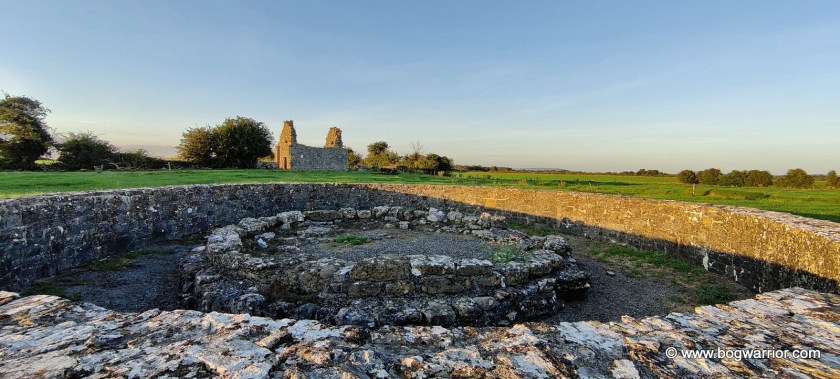
The rediscovery of the tower at Liathmore, Co. Tipperary took place nearly 50 years before this. In 1969-70 Dr. Robin E. Glasscock from Queens University, Belfast led excavations at this site. The foundations of the tower were found, along with some worked ashlars which were later used to reconstruct the base. The foundations went to a depth of 2.6 metres which is unusually deep for a round tower. As to why the tower vanished and was forgotten about, that’s anybody’s guess. Subsequent to the excavations, the Office of Public Works (OPW) reconstructed the base of the tower using the material found during the dig. The base is surrounded by a larger circular stone wall, constructed by the OPW to protect it from cattle.

The reconstructed base of Liathmore Round Tower. To its north is the smaller and older of the two churches here.

The monastery here was founded by St. Mochoemóg in the early 7th century. Tradition has it that he is buried in the larger church. And in a blurring of fact and fiction, he features in some versions of the Children of Lir story as the monk who baptised the four swans and turned them back into humans. Local folklore has it that every four years, four swans return to the area and spend a week here.

The tower base is situated almost half way between two ruined churches. Apart from these, there is evidence of a settlement which once existed here, perhaps until the 16th or 17th century. These lumps and bumps in the ground are easily visible in the area around the larger church

Aerial photo of the tower base and the two churches.

The smaller of the two is an 11th-century oratory. The larger church dates from the 12th century, though it was modified after that. Alterations made in the 15th century are quite noticeable here. There is a loft and steps that access the roof. This church has some interesting features, including some carved heads over the doorway and a Sheela-na-Gig that’s a little hard to find unless you know where to look (fnar). I visited this site on a sunny summer’s evening and wasn’t able to get a decent picture of said exhibitionist. So if you’re curious, there are pics on the “Ireland’s Síle na Gigs” website.

This site wouldn’t make it onto my “must see” list but it was a pleasant way to spend a sunny summer’s evening. The larger church in particular is interesting to look at. Because it’s a much altered building, there are random carvings set into doorways and masonry to look at inside.

Heads!

Getting There

This site is trickier to find than most of the others because it is on private farmland and isn’t signposted from the main road. The entrance to the farm, and the farm track out to the site, look a bit different to the 2009 Google Streetview imagery. Other online accounts of visiting this site mention the mud and advise wearing wellies, so I left my visit to this one until we’d had a dry spell of weather.

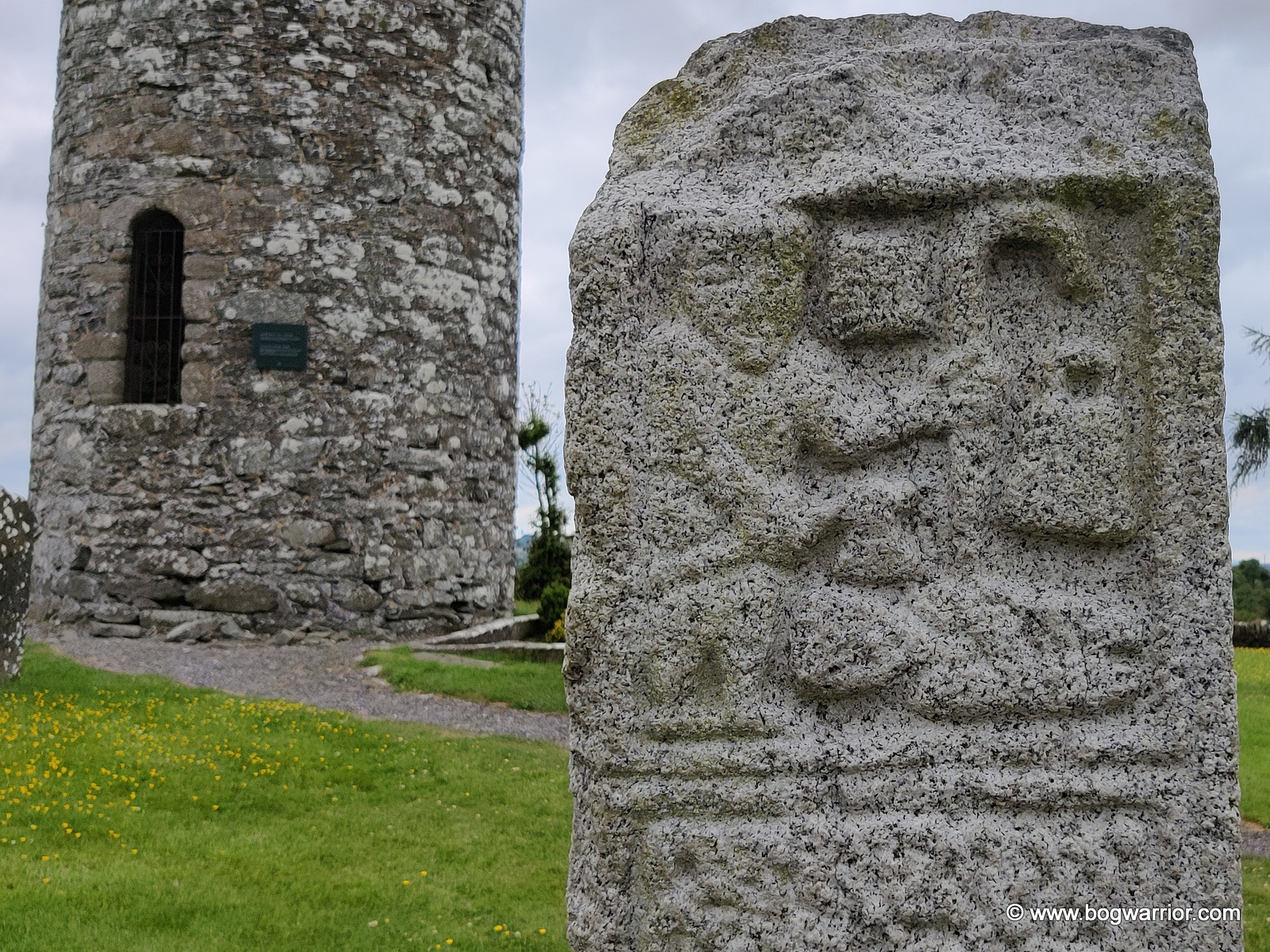
Killeshin. No round tower but…but…that doorway!

Killeshin is a small village in County Laois, just a few kilometres from Carlow town. It is also the site of former monastery, founded by either St. Comgan or St. Diarmait in the 5th century. It seems to have been a monastic site of note in its early days and was mentioned in historical literature. Little remains of this monastery now – according to the information board on the site it was mostly destroyed in 1077 AD. The only historic artefacts which are to be found there now are now are the ruins of a later church, a pretty amazing Hiberno-Romanesque doorway, and a baptismal font. But first, can I lament the demolition of its round tower in 1703? Hell, it’s my blog so I can do what I want to 🙂

The graveyard in Killeshin isn’t that large these days but until 1703, there was a round tower in the south-western corner of the graveyard. It seems to have been in pretty poor condition by that time but the worst was yet to come. The tower is recorded as having been 105 feet high (32m) and lay to the north-west of the church. It was “this was taken down in 1703 because the owner feared that it might fall on his cattle! . So in short, let me smite Colonel Wolseley who decided to demolish the tower, and add my voice of support to the Protestant Bishop of Leighlin who was “very displeased with him.”.

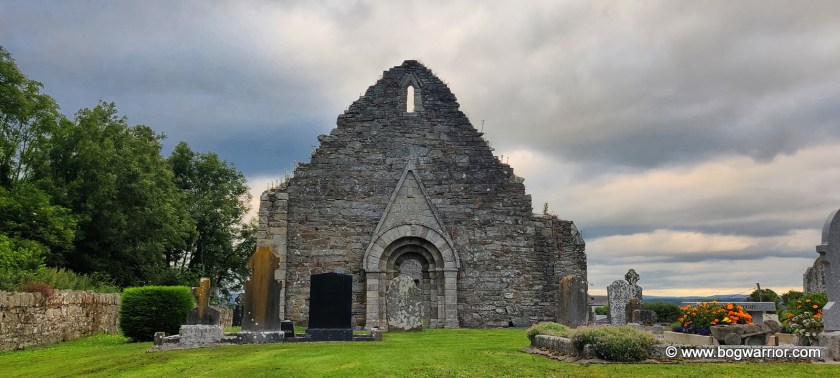
The Hiberno-Romanesque doorway in the gable end of Killeshin church

Despite this, the cemetery in Killeshin is still worth a visit if Romanesque doorways are your thing. The church ruins here are mostly from the 12th century and comprise mainly of two gable ends and plenty of fresh air in between. One of the gable ends has a window that looks out into the nice Laois countryside but it’s for the doorway that these ruins are most notable.

Part of the inscription dedicated to Diarmit MacMurrough

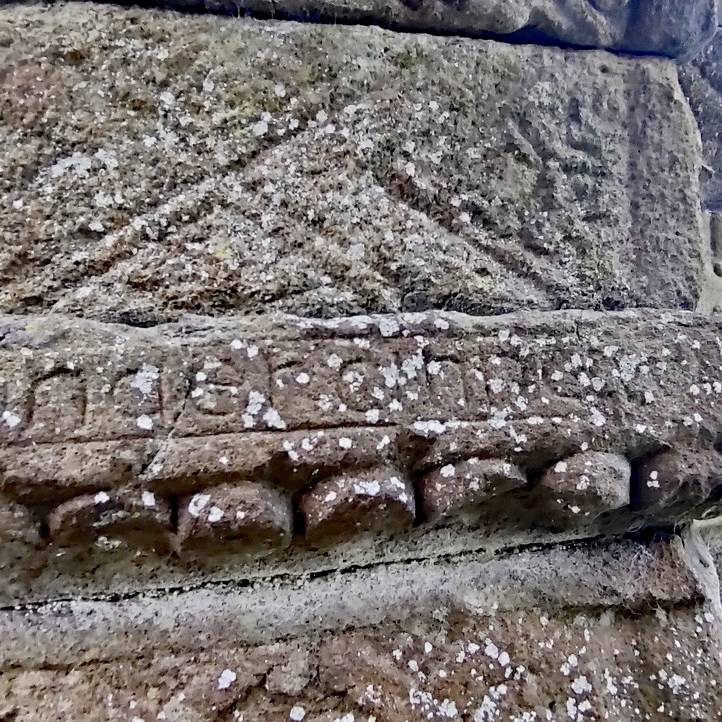
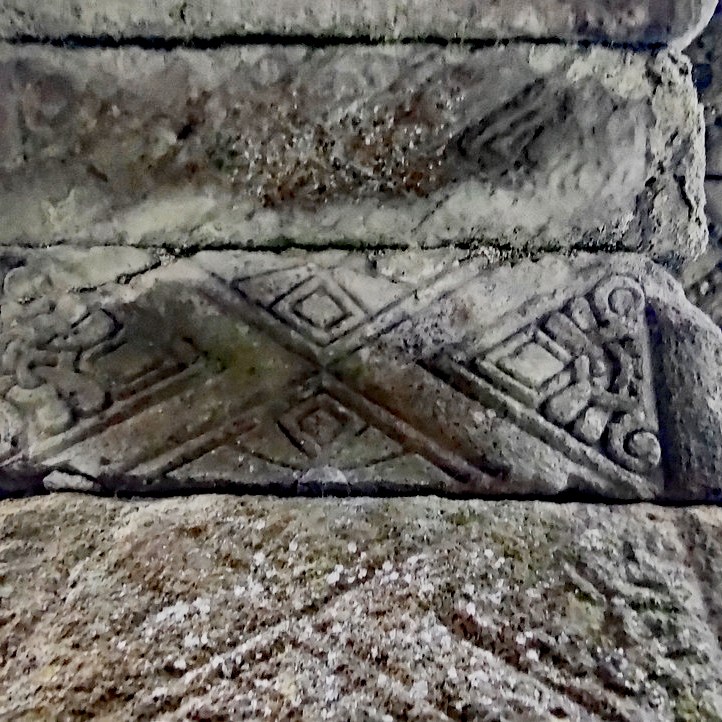
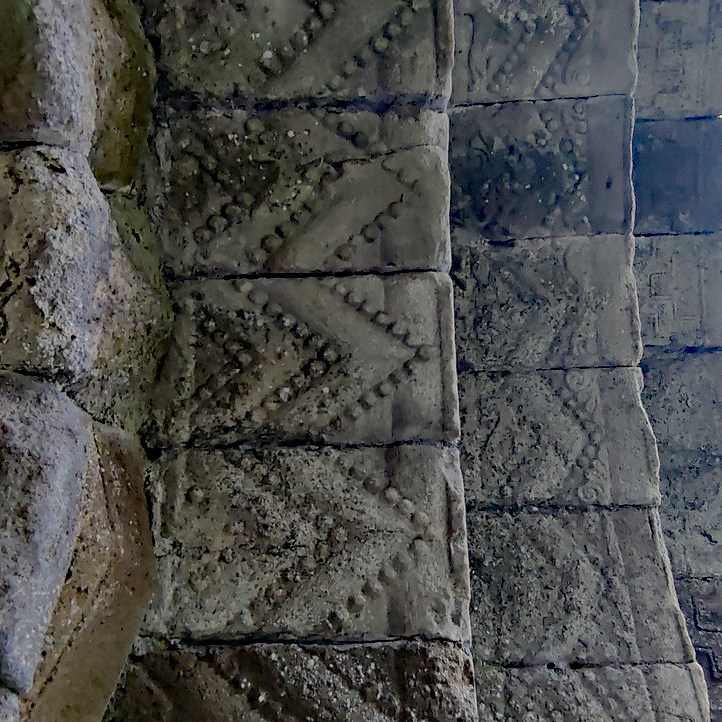
The doorway is in the unique “Hiberno-Romanesque” style and is one of the best examples to be found on the island of Ireland. To add an element of intrigue, the doorway may have been commissioned by the notorious Diarmit MacMurrough, the Irish king whose actions led to the English first coming to Ireland. There is an inscription in the doorway which reads ‘Orait do Diarmait Ri Lagen‘ or ‘a prayer for Diarmait, King of Leinster’ if your Irish is a bit rusty.

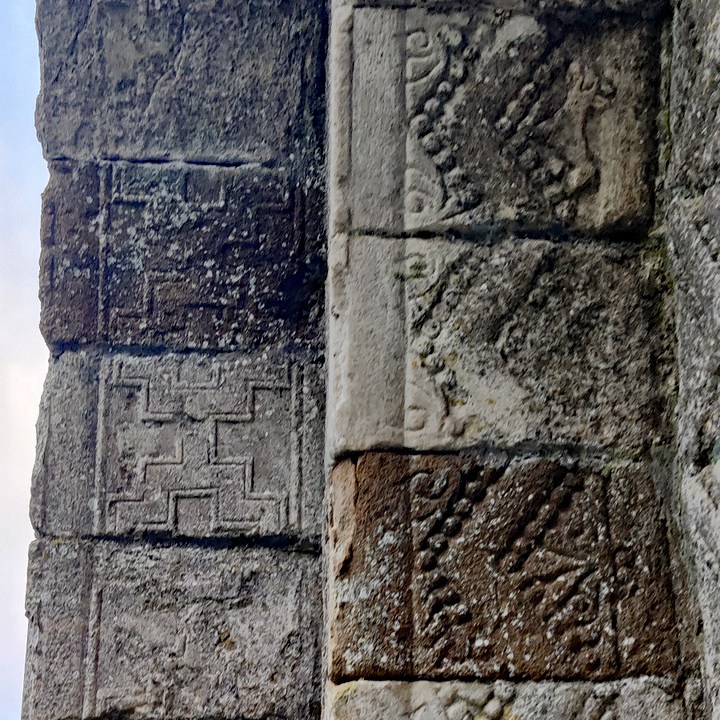
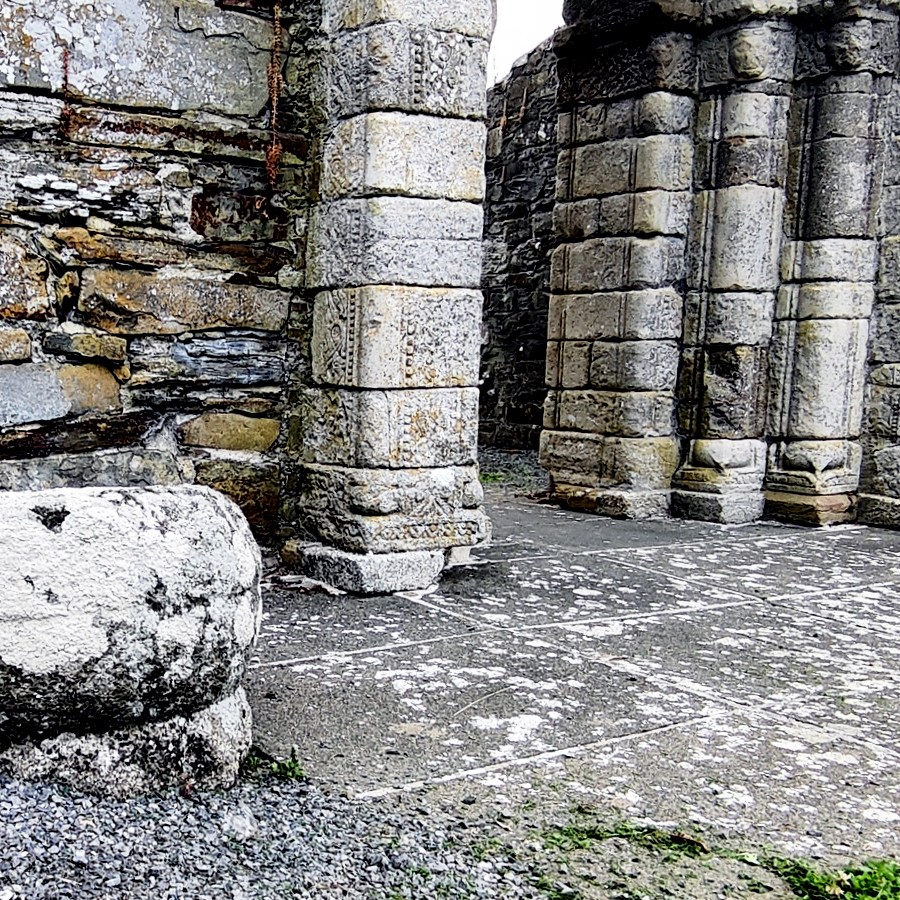
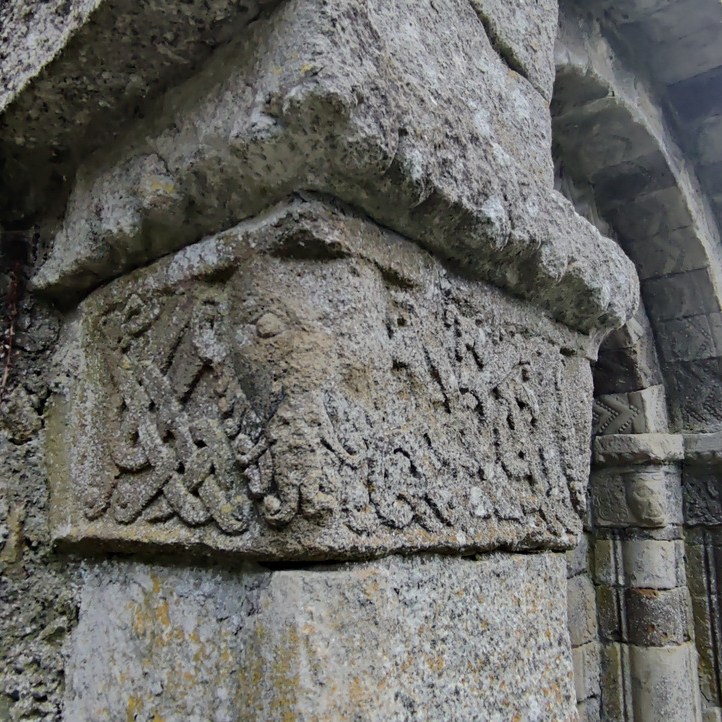
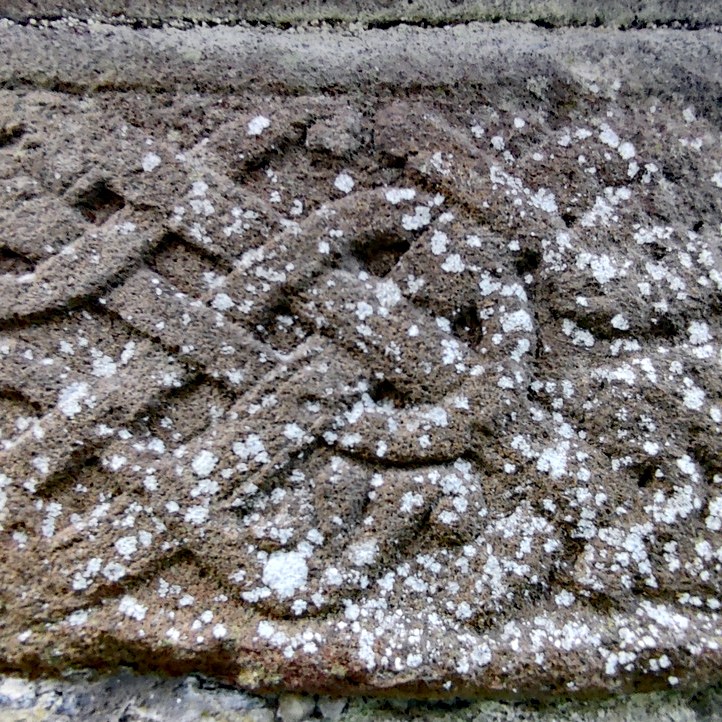
Regardless of who commissioned the doorway, it’s wonderful. It’s covered with all sorts of carvings, from written text to animal heads to all sorts of decorations. I’d go as far as to say it’s mesmerising if you have any liking for crumbly old ruins at all.

Getting There

It is an easy site to find – it is signposted and is on the side of a country road. It is a 2 minute walk from the current Killeshin Catholic church. The church’s car park is the handiest place to leave your four-wheeled means of transport. The cemetery is beautifully maintained – indeed on the evening I called in there was somebody mowing the grass.

Oughterard – Pint Sized

The original monastery at Oughterard is said to have been founded by St. Briga (aka. St Brigid). Confusingly, this isn’t the same St. Brigid who is connected with the settlement in nearby Kildare or one of the many other Brigids out there. Honestly, your head would start to spin if you try to figure all of it out. Less confusingly (and more of that in a moment), it is also the final resting place of Arthur Guinness, who founded that brewery.

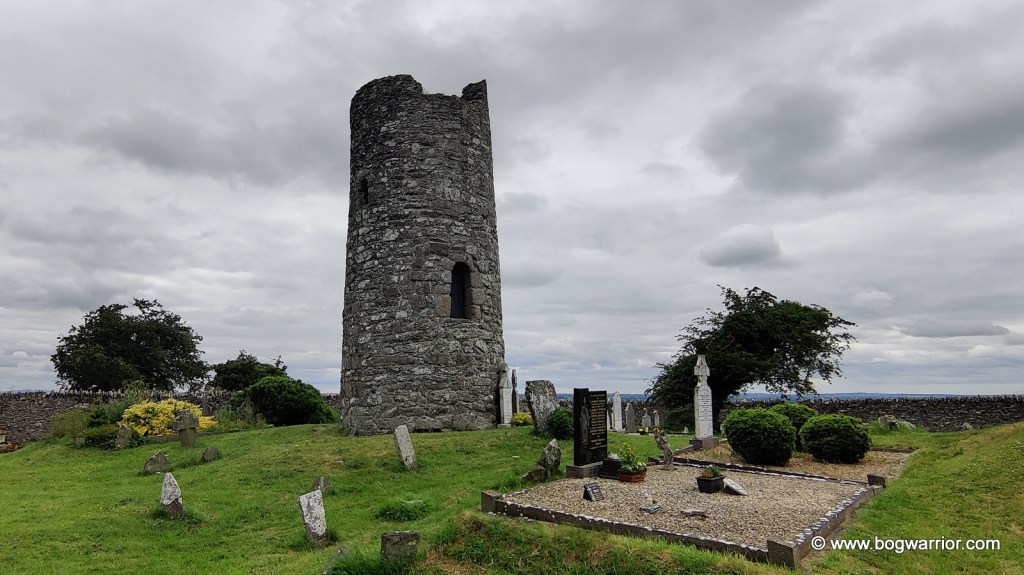
Little remains of the original monastery now, apart from the round tower. It stands at the back of a cemetery which is found at the top of a hill. Indeed, the Irish name for Oughterard is Uachtar Ard or high upper place. Like many other monasteries, it was raided by the Vikings. In the case of Oughterard, it was raided by the wonderfully named Sigtrygg Silkbeard who was a well-known Dublin-based Viking. At one point, the area was owned by Dermot MacMurrough, who’s possibly buried near another round tower

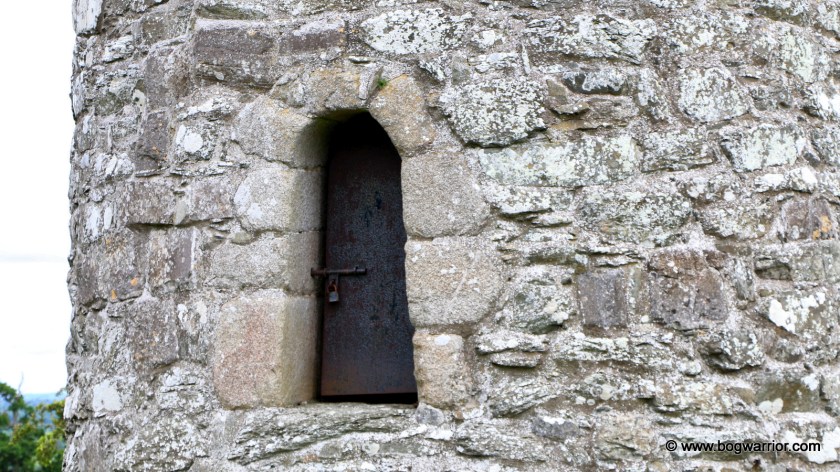
Now partially ruined, the tower here is built from shale rubble. Its doorcase is round-headed and made from granite. There is a padlocked metal door now in the doorway, ensuring that nobody’s getting in.

Close to the tower is a ruined church which dates from the 14th century. Its most striking feature, apart from the window which faces the cemetery gate, is the stairs turret which looks like it’s ready to topple over o_O Looking at other photos online, it is still possible to climb it but it wasn’t for me!
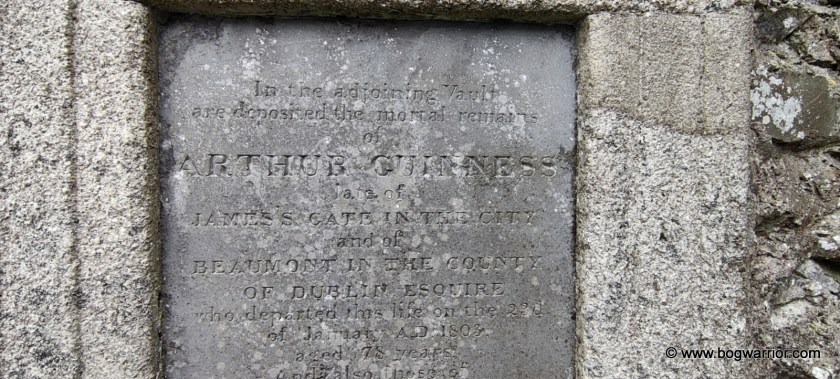
Inside the wall of the church is a plaque which begins “In the adjoining vault are deposited the mortal remains of Arthur Guinness…..” Guinness was born locally in either 1724 or 1725 – the date and place of his birth are disputed. Tradition has it that his grandfather and his father brewed ale, so it was inevitable that he’d end up continuing that line of business. After initially leasing a brewery in Leixlip, he signed a 9,000 year lease at a site in St. James’s Gate, Dublin. This is where the Guinness brewery and adjoining tourist trap continue to operate to this day.

Getting There

These days, the cemetery is marketed as part of “Arthur’s Way”, a Guinness related tourist trail run by Kildare County Council. The entrance is near a bend in a country road but there is room to park along there. It is a well-maintained site and even though there isn’t a lot here, it’s quite a pleasant place to spend a while. There are some nice views too.

Taghadoe

I went to university in Maynooth in the early 1990s and spent my time there blissfully unaware that a 2o minute bike ride out of town would’ve taken me to a round tower. Anyway, I took the opportunity to finally take a look at the round tower in Taghadoe after all these years. What’s 30 years in the lifespan of a round tower anyway?

Sorry about the overcooked looking photo – this is exactly what came out of my phone. Visiting at 8:30pm on a summer’s evening isn’t the best time for tower snaps

Very little is known about the monastic site which once stood here. Taghadoe is attributed to St. Tua (also known as St. Ultan the Silent). The only other thing known about the monastery is that one of its abbots (Folachtach of Tech-Tua, died 770AD) had previously been abbot of Clonmacnoise.

All that remains of the monastery is the tower. It stands in a small, well-kept graveyard beside a ruined 19th century church. It is built from limestone and stands 19.9 metres high. Above the round-headed doorway is what appears to be a heavily worn head. There is a similar feature in Monasterboice, some 80km away. At one point, the tower was used as a coal store of all things and doorway was cut into the wall. It was closed up in the 19th century and my untrained eye couldn’t say for sure where the doorway once was.

Taghadoe Round tower
How dairy come along and take photos of our tower

And there you have it…. There isn’t a lot to see here other than the tower. The church beside it was built in 1821 and abandoned 40 or so years later. The site surrounded by a dairy farm and fields of cattle – as a result, my visit was soundtracked to the sound of vigorous mooing and the scent of cow dung 🙂

Getting There

The tower is easy to find – it is on the side of a country road, 5km south of Maynooth. There isn’t a lot of parking around here, so be mindful of where you leave your car and don’t block any gateways.

Dysert O’Dea – wet socks!

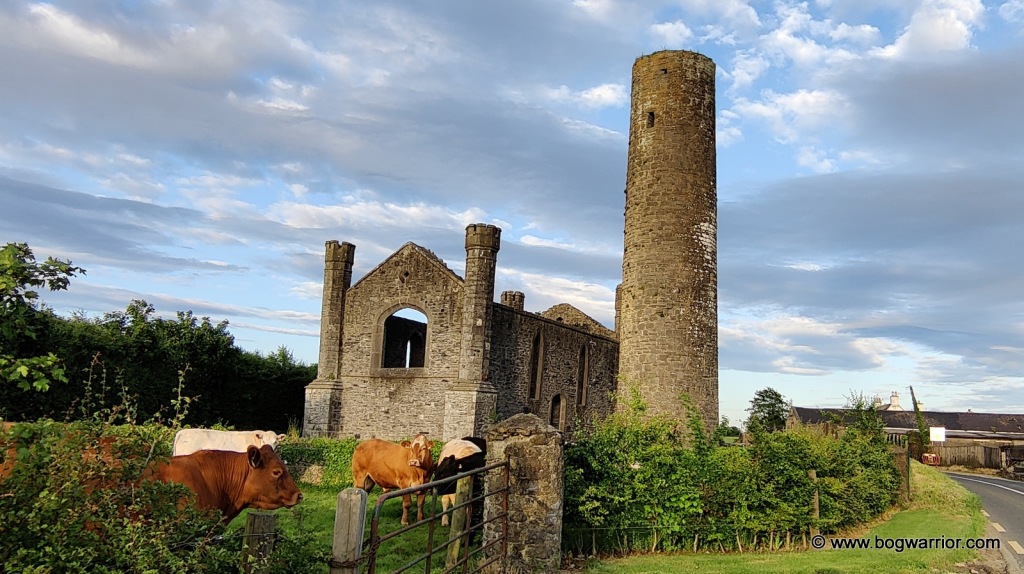
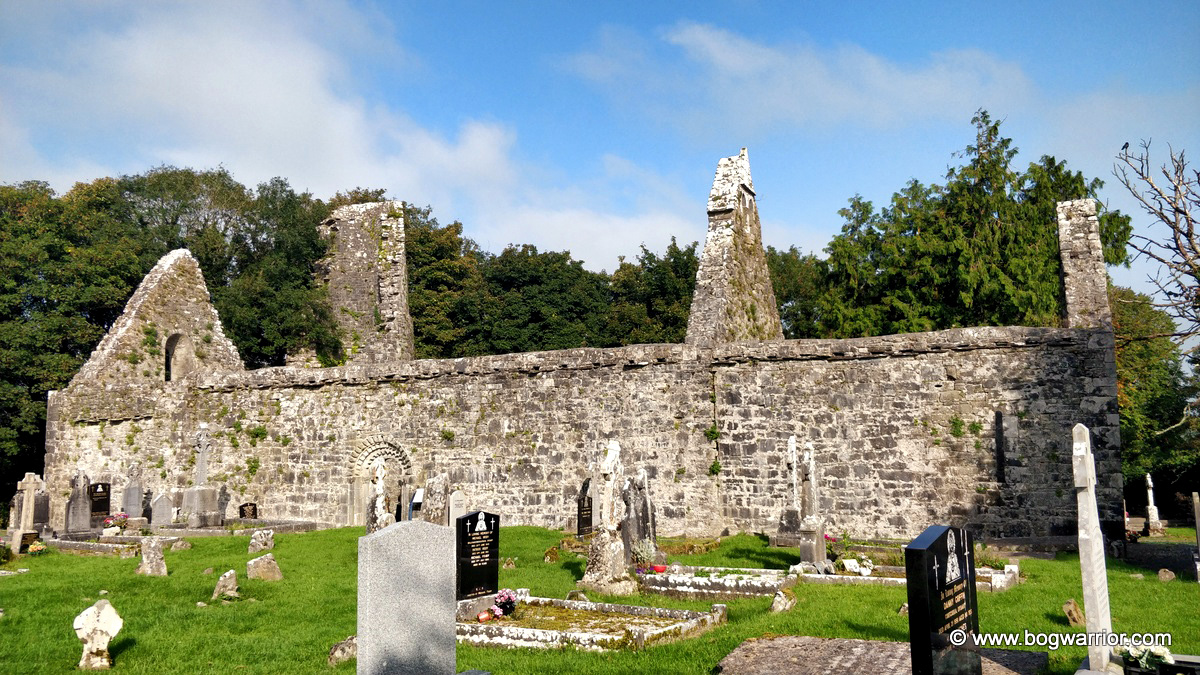
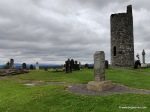
Dysert O’Dea church and round tower

For some reason, my abiding memory of my visit to Dysert O’Dea is getting my feet wet in the cemetery. I mean, why would you wear trainers into a graveyard in the middle of a spell of glorious weather in September? 😀 The things I do when struggling to come up with a heading for a blog post. Anyway, enough about my sodden feet. Let’s talk crumbly old ruins.

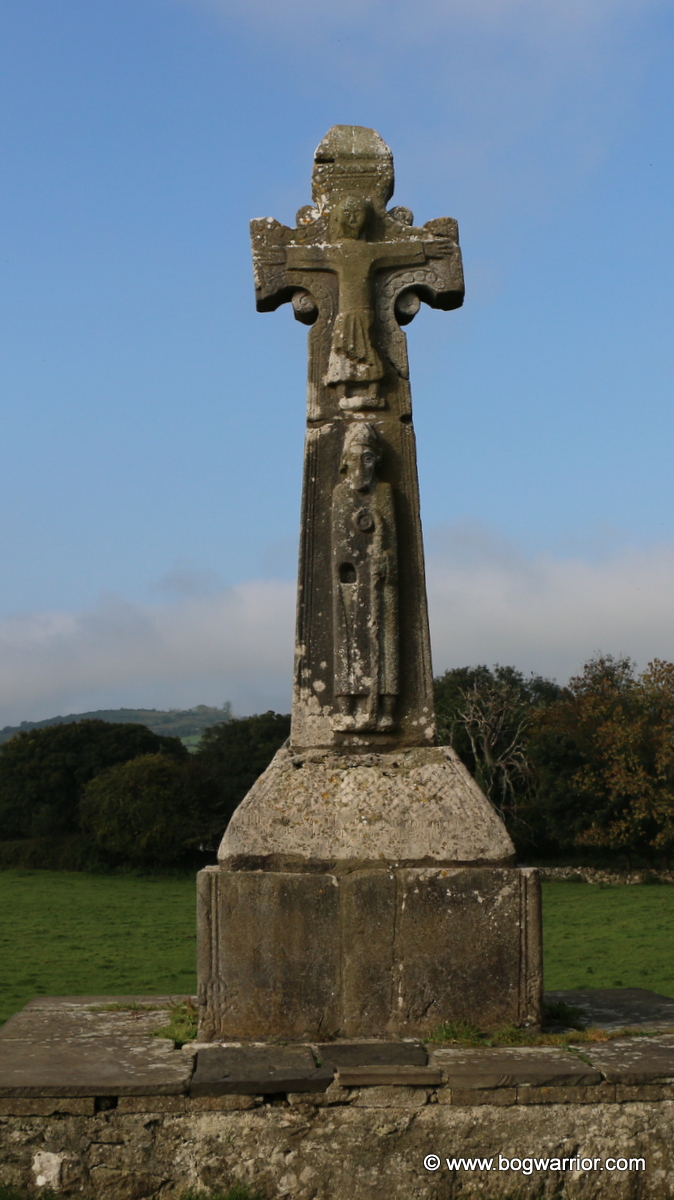
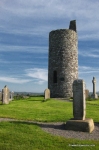
Dysert O’Dea was founded by St. Tola in the late 7th century or early 8th century. He is believed to be the bishop who appears below Jesus Christ on the nearby 12th century high cross. It isn’t clear when the monastery was abandoned but it is claimed that Oliver Cromwell’s troops torched the round tower and damaged it. Perhaps this is why there is a breach in the north-west wall of the tower.

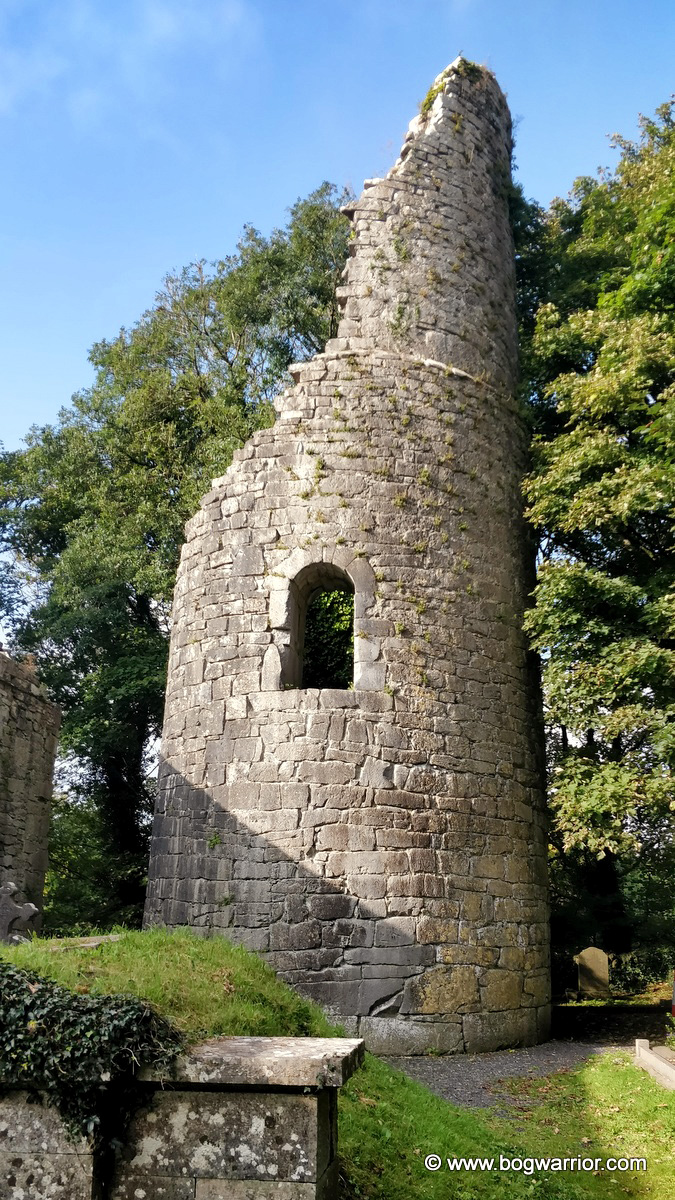
These days, the round tower and church stand in a cemetery which is still in use. The tower stands just 14.6m high now, though it looks like there may have been battlements added to the top at some point. There are also the remnants of a window which was added later. Its base has the largest diameter of any of the round towers, though it’s unclear how tall the tower ever was.

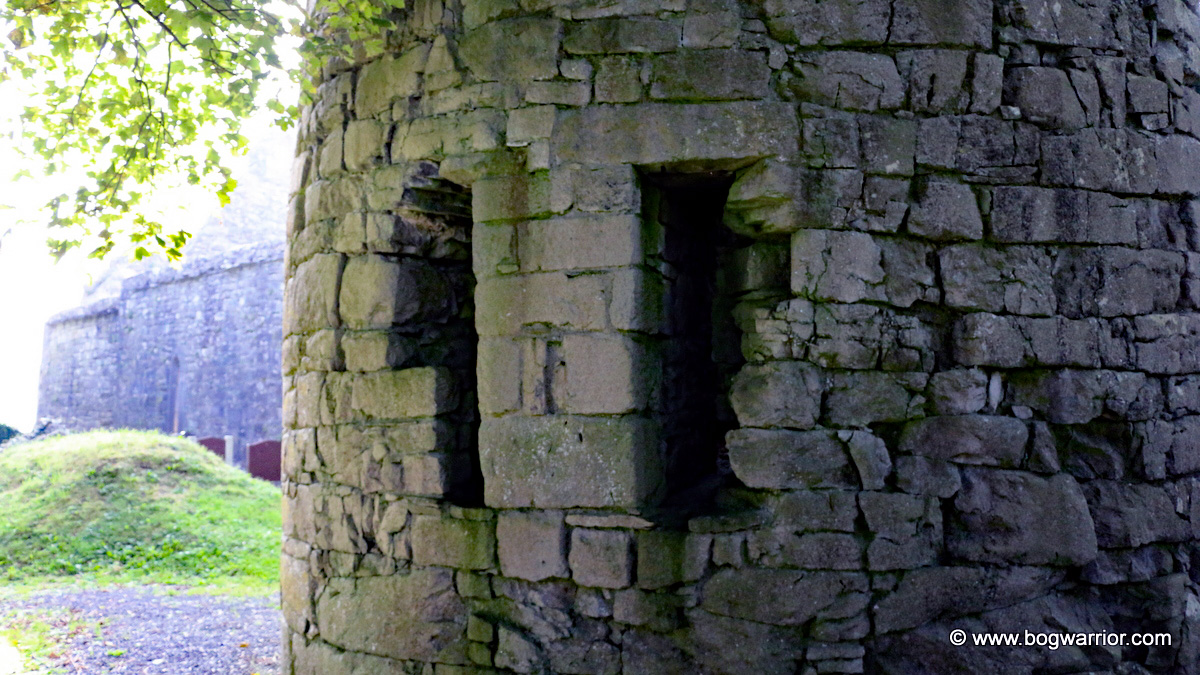
Breach in the wall

On the north-west side of the tower is evidence of fire damage to the tower. There is also a breach in the wall, now supported by a column. It’s not known if this is as a result of the fire or the remnants of a doorway added later on. Either way, it’s not what one would expect to see just around the corner from the doorway. If around the corner is “a thing” on round towers…

The tower stands very close to the ruins of St. Tola’s church. The church itself dates mostly from the 12th and 13th century and is quite substantial in size. Its most striking feature is the Romanesque doorway in its south wall. I didn’t know this was here at all so what a nice surprise it was to see this.

The doorway was originally in the west wall but was moved here. It is believed to have been carved in the 12th century and has 19 heads on the top row – 12 human, 7 animal. The rest of the doorway mostly consists of geometric patterns and it’s stunning. I came here for the round tower but the doorway was my favourite feature

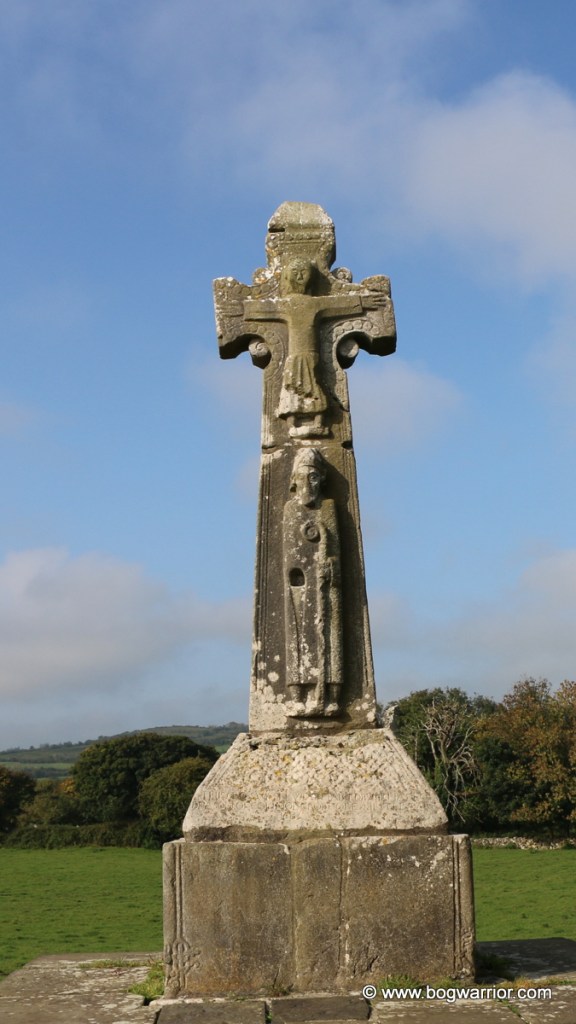
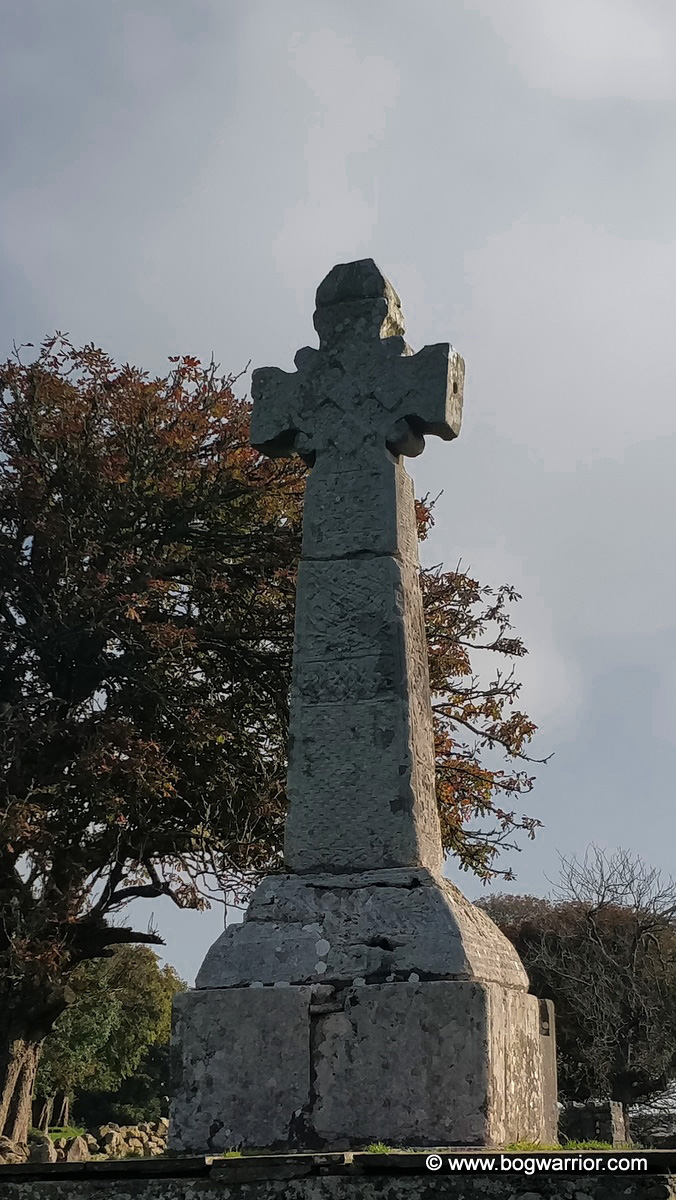
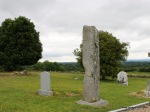
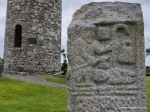
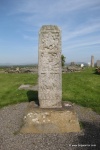
In the field behind the church and round tower is an unusual looking high cross. St Tola’s High Cross, known locally as the White Cross, stands in the middle of a very ordinary looking farmer’s field. According to another website I read, there can be a bull in the field. Thankfully, there were no ill-tempered bovines to be seen so I was able to admire the cross at my leisure.

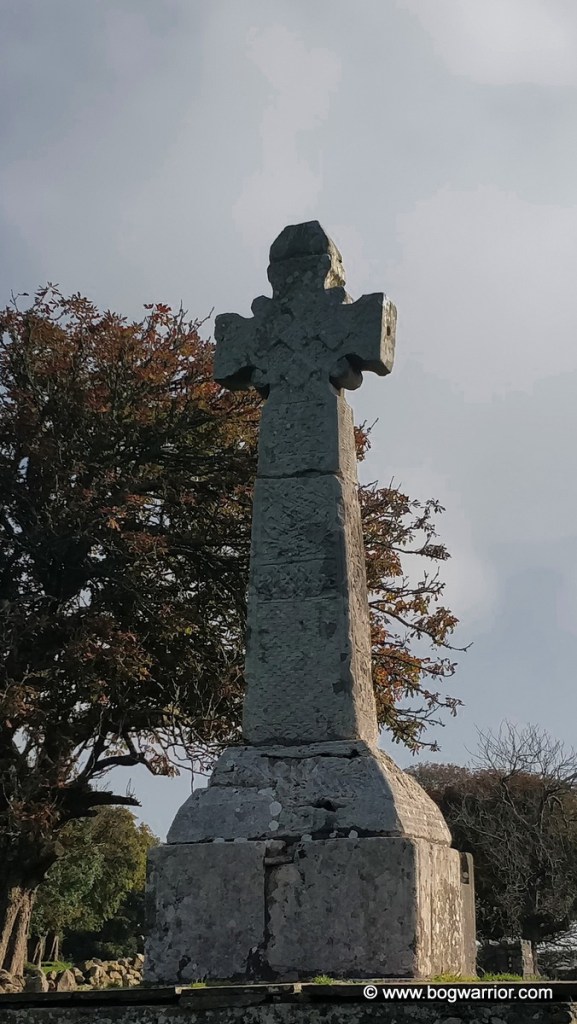
It is believed that this high cross stands close to where it would’ve originally been erected. The base it now stands on looks like it originated elsewhere so we’re now looking at some historical upcycling. Still, it and the plinth underneath give the cross quite a bit of height and keep it safe from livestock. The top figure on the cross is Jesus Christ and it is thought that the bishop underneath is St. Tola, the monastery’s founder. There is a hole where his right hand should be. It is believed that a now missing piece would have been inserted into it. According to separate inscriptions on the base the cross has been repaired and re-erected twice – 1683 and 1871.

The less decorated side of the cross

Way back in 1908, a Plaster of Paris copy of this cross was made as part of an exhibition of high crosses. I was lucky enough to see this copy back in 2011 and was surprised at the time by its unusual appearance. It was really nice to finally see it in person, even if it was to be found in slightly surprising surroundings.

The church, round tower and high cross are very close to Dysert O’Dea Castle. It’s open during the summer but was closed up on the day of my visit. Weekdays in mid-September during a global pandemic probably keeps the crowds away! What was there was worth visiting, sodden socks and all.

Dysert O’Dea Castle.

Still, following the signposts for the castle was the better way to visit the site. There are two routes which will bring you to the monastic site. This route is probably more direct but if you like your car, you might not fancy parking it on the narrow country road for long. The last leg of the road to the castle is pretty rural (to say the least) but there is more room to safely park your car. The field with St. Tola’s Cross is close by and then it’s just a matter of climbing a stile into the churchyard.

Date of Visit: 18th September 2020

Old Kilcullen – a dwarfed dwarf?

The monastery at Old Kilcullen is said to have been founded by St. Patrick and left in the care of Mac Táil (Son of the Adze) who he ordained. It is built on top of a hill 2km outside the town of Kilcullen and overlooks some nice rolling countryside. It is also 500m south-east of the Dún Áilinne  hill fort which was a significant neolithic site. Perhaps something is to be read into an early Christian site being founded so near a pagan one?

Kilcullen

If you have been reading any of these round tower posts, it will come as little surprise to learn that the monastery was raided by Vikings in the 10th century. It was burned again in 1114.

kilcullen_outside_wall

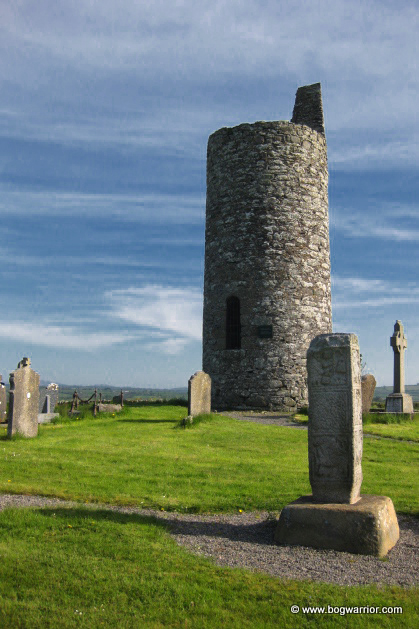
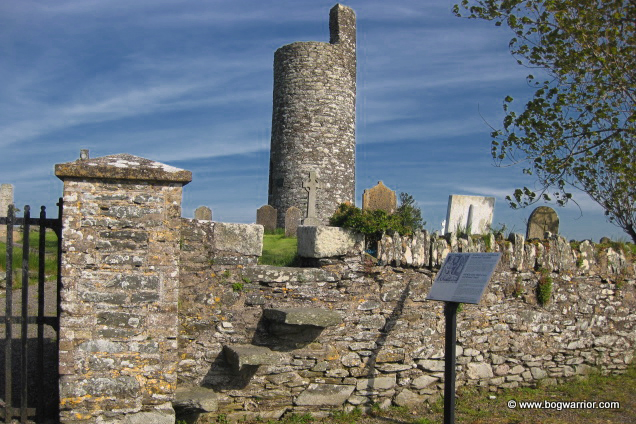
Little remains of the monastery, apart from the tower, the ruins of a 12th-century church and the remnants of 2 high crosses. The tower now stands just 11m high but was taller until 1798. Just like the round tower at Roscrea, it was damaged during the 1798 rebellion. It lost some of its height but not to the extent that the Roscrea tower did.  It is believed that this one wasn’t all that tall to begin with. Old drawings and records suggest the tower had no cap but had 4 windows on what would have been its bell floor. This is unusual in the world of round towers but not unique. The towers at Dromiskin, Co. Louth and on Tory Island off the Co. Donegal coast are not that tall either.

Old Kilcullen Round Tower 2021 (23)

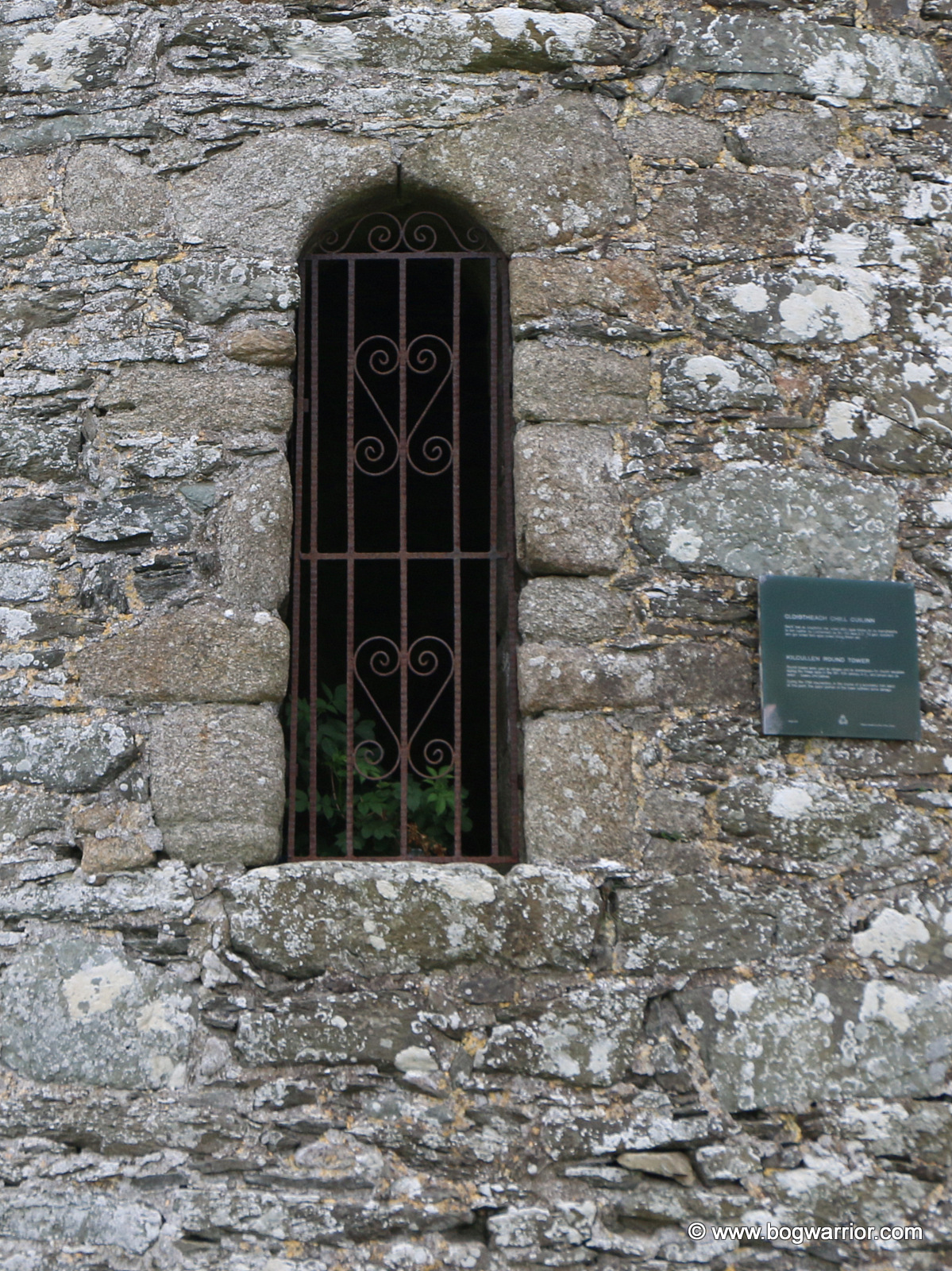
The doorway into the tower is quite low too (the door sill is just 1.8 m from the ground) but this is because the ground around it has risen over the centuries. Until the 1990s, it was possible to access the tower but there is now a metal grille in the doorway. Still, it is nice to take a closer look at a doorway that is almost at eye level.

Kilcullen doorway 2021

Apart from the tower and the partial high crosses, there isn’t a lot to see here. I’d rate this as one for round tower completists. If you want to see one round tower in Kildare, go for the one in Kildare town. Not only is it complete, it’s climbable!
kilcullen_tower_stats

Getting there. The tower is situated 2km outside Kilcullen, not too far from the motorway or the town. The site is easy to find and there is parking outside the graveyard.


Tower visits May 2009/June 2021

Fertagh – the tall, thin one

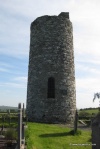
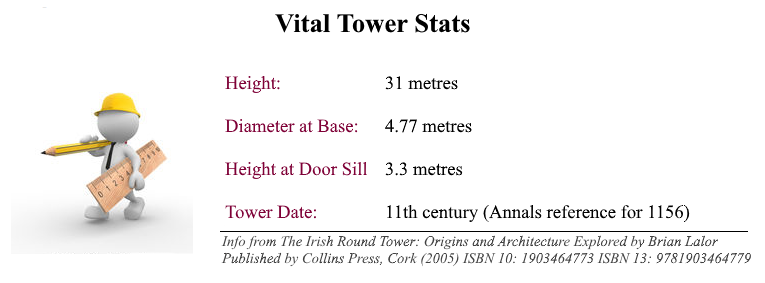
Fertagh or Grangefertagh, is about 4km from the village of Johnstown, Co. Kilkenny. It’s easy to spot from a distance because it is rather tall. It is a shame that only a small fragment of its cap remains because if it was rebuilt, it would become the tallest round tower in Ireland. Maybe somebody needs to sort that out! 😀
Fertagh (7)

According to the OPW information here, the monastery was probably founded in the 5th or 6th century by St. Kieran of Saighir. This is the same saint who founded the monatery at Seir Kieran. Like just about every other monastery in Ireland, it found itself under attack at various times. It is recorded that the Vikings tried to raid it in 861 but were repelled by Cerbhall of Ossory, who was a powerful King at that time. Indeed, it is suggested that no Vikings raided monasteries in Kilkenny at that time because they did not relish the thoughts of tangling with him. Cerbhall was long gone when the monastery was well and truly raided and burned in 1156. It is said that the tower was burned by the High King of Ireland, Muirchertach MacLochlainn, with the monastery’s lector inside it…

Fertagh (3)

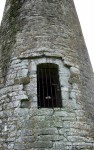
The original doorway into the tower was badly damaged around 1800 when a local farmer decided that the stones from it would protect his property from fire. The doorway was repaired at a later date but it is still easy to see the damage that was done by this local.

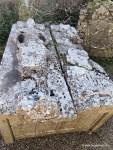
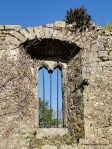
Also in the cemetery are the ruined remains of a 13th century church. It remained in use until the 1780s. In the 19th century, its west doorway and east window were removed and are now to be found in Johnstown Church of Ireland. The Catholic Church got its baptismal font and a representation of the Crucifixion. Later still, part of the church was converted into a handball alley. Still, after all of that there still is something left to look at. Inside the church’s side chapel is a tomb, believed to be the final resting place of a king called Seán Mac Giolla Phádraig. Alongside the effigy of the late king is one of a woman. This is believed to be his wife Nóirín Ní Mórdha.

Fertagh 2021 (36)

Fertagh 2021 (40)

Getting there

The tower is easy to find – it is in a small cemetery on a narrow country lane. There aren’t many places to park a car though, as you can see from Google Streetview.

Tower Height 31 metres. Diameter at Base 4.77 metres Height at Door Sill 3.3 metres. Date 11th Century

Date of Visit: 16th March 2008

Click on a thumbnail to view the gallery